
Succession Planting for Beginners: How to Grow More Food in Less Space
If you have a small vegetable garden, you may think the only way to grow more food is to add another raised bed.
Not necessarily.
Succession planting lets you make better use of the growing space you already have by planning what comes after each crop. Instead of treating your garden as something you plant once and leave until the season ends, you can plan a sequence of crops so that one planting follows another when space becomes available.
This can be especially useful for small-space vegetable gardening and raised beds, where every section of growing space matters.
In this guide, you'll learn what succession planting means, how it works, how to plan it in a small garden, and the common mistakes beginners should avoid.
What Is Succession Planting?
Succession planting is a garden-planning method where you use the same growing space for multiple plantings over time.
The basic idea is:
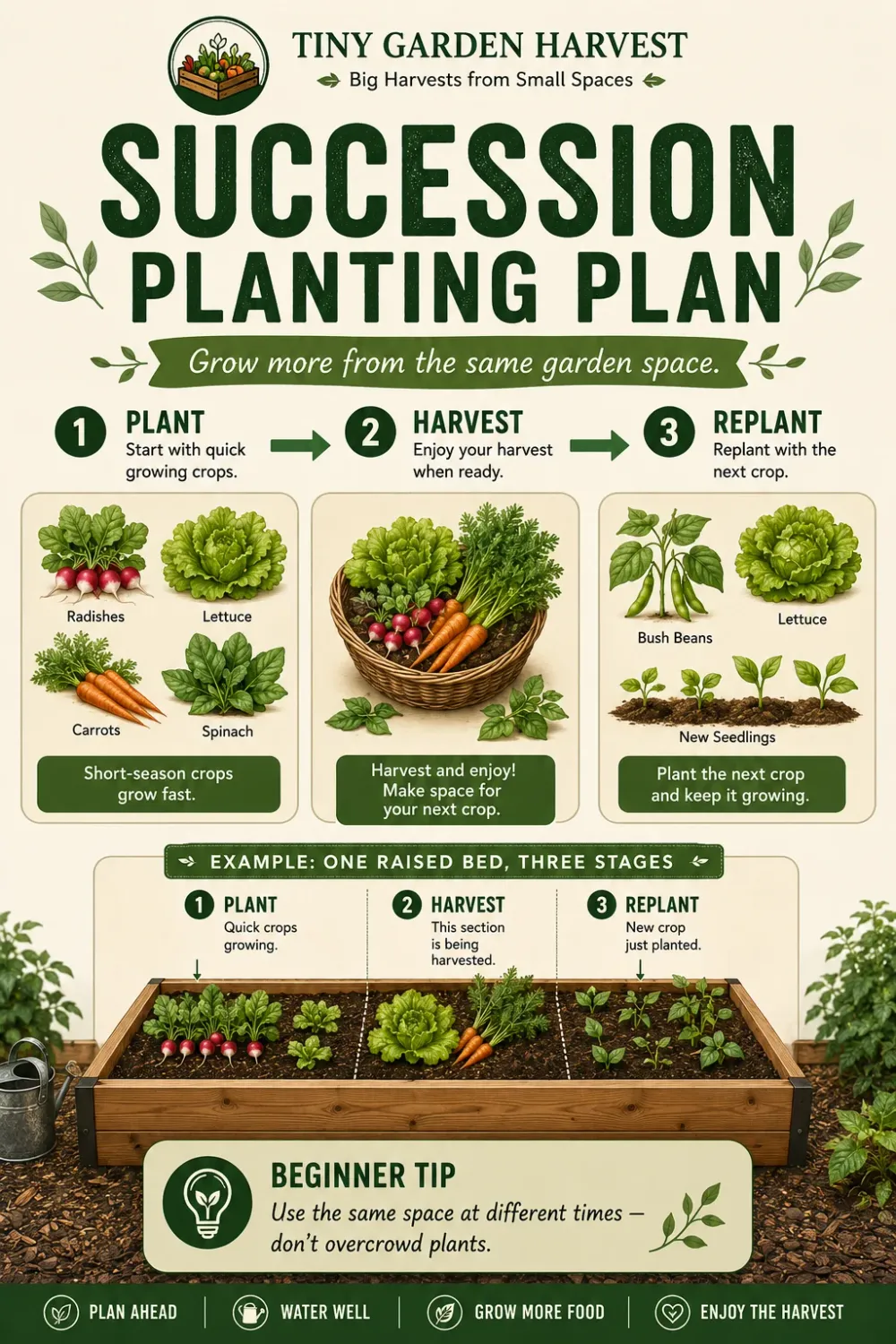
Plant → Grow → Harvest → Replant
For example, you might grow one crop in a section of your raised bed. Once that crop has finished and the space is available, you can prepare the area for another suitable crop.
The goal isn't to squeeze more plants into the bed at the same time.
Instead, you're making the same space useful at different points in the growing season.
This fits naturally with Tiny Garden Harvest's small-space gardening approach, which focuses on efficient layouts, compact crops, vertical growing and succession planting as ways to make limited growing areas more useful.
Why Succession Planting Is Useful for Small Gardens
When your garden is small, you have a limited amount of soil and growing space.
That makes planning important.
A raised bed shouldn't have to be completely replanted every time you want to grow something different. Instead, you can think about how the space will be used before, during and after each crop.
For example:
A section may start with a quick-growing crop.
That crop is harvested.
The space is cleared and prepared.
A second suitable crop is planted.
The process can be repeated when growing conditions allow.
This approach can help you get more use from the same garden area without overcrowding it.
If you're working with a limited growing area, our guide to small-space vegetable gardening has more practical ideas for making the most of the space you have.
How Does Succession Planting Work?
There are several ways a beginner can approach succession planting.
1. Plant the Same Crop in Stages
Instead of planting every seed at once, you can divide your planting into separate rounds.
The advantage is that your crops don't all have to reach harvest at the same time.
Rather than one large harvest followed by an empty garden section, staged planting can help spread your use of the space.
The exact interval depends on the vegetable, variety, season and growing conditions.
2. Replace a Finished Crop
This is one of the easiest ways for a beginner to understand succession planting.
Imagine you have a small section of raised bed.
You plant one suitable crop.
When that crop finishes:
Harvest → Remove the finished plants → Prepare the soil → Plant the next suitable crop
The next crop should be selected according to the season and the conditions available in your garden.
3. Plan Around Long-Season Crops
Not every vegetable will leave its growing space quickly.
Large or long-season crops may occupy their area for much of the growing season.
Rather than trying to succession plant everything, plan around those crops.
For example, you might reserve one part of a raised bed for taller or longer-season vegetables while using other sections for crops that can be harvested and replaced.
This is where garden layout becomes important.
Which Vegetables Can Work Well With Succession Planting?
The Tiny Garden Harvest Gardening Knowledge Base identifies succession planting as an important small-space strategy, alongside compact crops, efficient layouts, vertical growing and using edges and corners.
For beginners, the best crops to consider are generally those that fit naturally into your growing season and don't occupy the same space indefinitely.
Potential candidates include:
Important: This is a planning framework rather than a universal planting calendar. Your local climate, season, crop variety and seed-packet recommendations should determine the actual timing.
Succession Planting in a Raised Bed
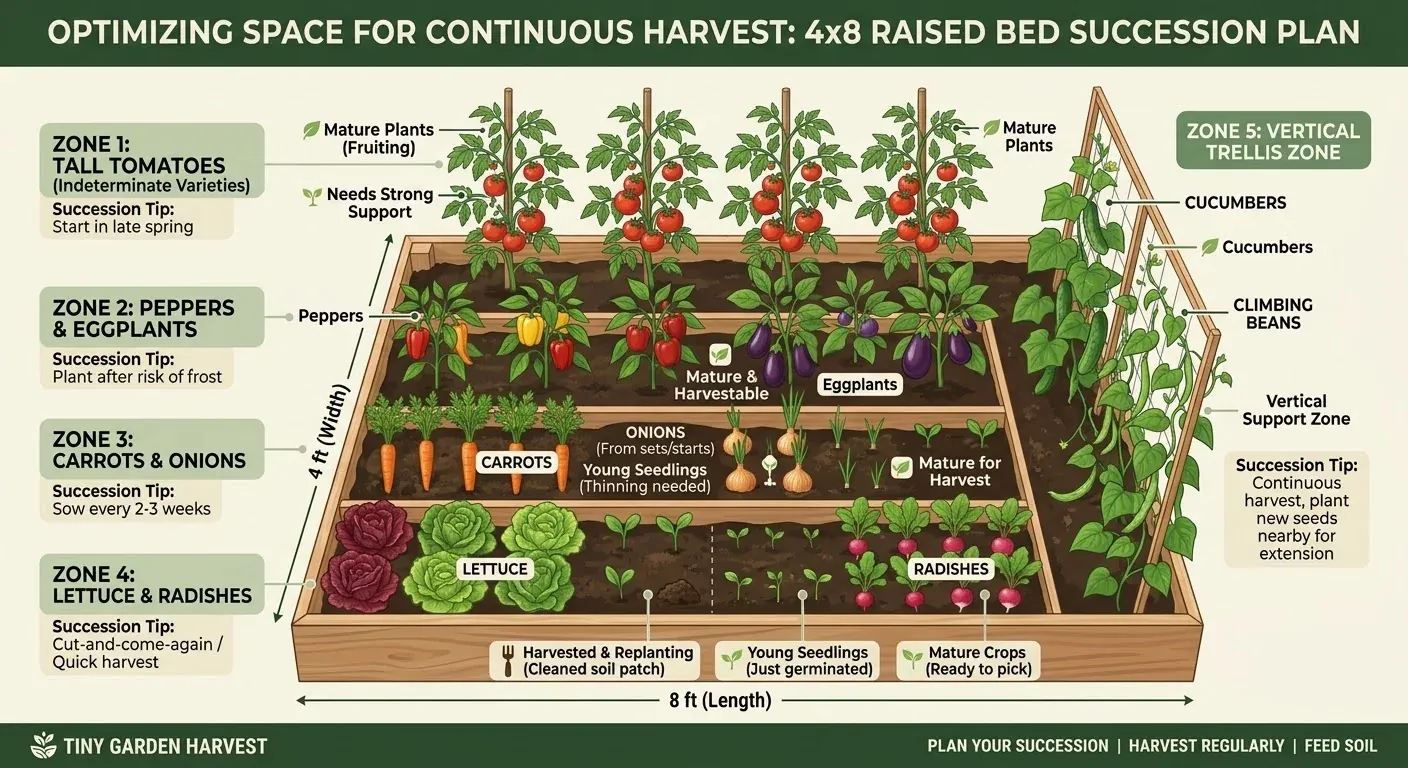
Raised beds are particularly convenient for planning succession planting because you can divide the growing area into manageable sections.
Instead of thinking about the entire bed as one planting area, think of it as several smaller growing zones.
For example:
Back: taller crops
Middle: medium-height vegetables
Front: shorter crops
Edges or corners: compact crops or suitable herbs
This type of organization also makes it easier to think ahead about which areas will become available after harvesting.
The Tiny Garden Harvest knowledge base uses this same general approach when planning raised-bed layouts: taller crops can occupy the rear zone, medium-height crops the middle, and shorter crops the front, with examples treated as planning guides rather than universal prescriptions.
For a practical example of organizing crops by height and available space, see our 4×8 raised bed vegetable garden layout.
How to Plan a Simple Succession Planting Schedule
You don't need a complicated gardening spreadsheet.
A simple plan can be enough.
Step 1 — Choose the Vegetables You Actually Want to Eat
Start with the vegetables your household will use.
Make a simple list of:
Crops you want to grow for one harvest
Crops you would like to grow repeatedly
Long-season crops
Crops that can potentially follow another crop
This prevents you from using valuable garden space for vegetables you don't really need.
Step 2 — Understand Your Growing Season
Before deciding when to plant and replant, consider your local growing conditions.
Your planting schedule may depend on:
Climate
Temperature
Growing season
Crop variety
Expected maturity
Local planting recommendations
This is one reason a universal succession calendar isn't appropriate for every gardener.
Use the information on your seed packets and plant labels alongside local growing guidance.
Step 3 — Map Your Garden
Draw a simple plan of your garden.
Mark:
Long-season crops
Shorter crops
Available planting areas
Walkways
Trellises or supports
Areas that receive suitable sunlight
Then ask:
"What will happen to this space when this crop is finished?"
That question is at the heart of succession planting.
Step 4 — Check Plant Spacing
Succession planting does not mean putting plants closer together.
Each crop still needs appropriate space.
The Tiny Garden Harvest spacing resources provide examples such as:
Tomatoes: 24–30 inches
Peppers: 18–24 inches
Lettuce: 10–12 inches
Carrots: 2–3 inches
Radishes: 1–2 inches
Cucumbers: 12–18 inches
Bush beans: 3–4 inches
Spinach: 4–6 inches
These are general planning figures, and the specific variety you're growing may have different requirements.
Before starting your next planting, check our vegetable plant spacing guide to make sure each crop has enough room to reach its mature size.
Succession Planting Does Not Mean Overcrowding
This is one of the most important ideas for beginners.
Imagine you have a small raised bed.
You harvest a row of radishes.
That doesn't mean you should immediately plant another crop directly on top of the remaining plants.
Instead:
Finish harvesting the crop.
Remove finished plant material.
Prepare the growing area.
Check whether the next crop suits the current conditions.
Plant it using appropriate spacing.
The benefit comes from using the space again later, not from growing too many plants at once.
The Tiny Garden Harvest spacing guidance emphasizes checking mature plant size, following seed-packet spacing, allowing room between rows, considering plant height and sunlight, leaving space for airflow, and providing room for watering and harvesting.
A Simple Succession Planting Example
Here's a simple way to visualize the process.
Imagine a small section of a raised bed.
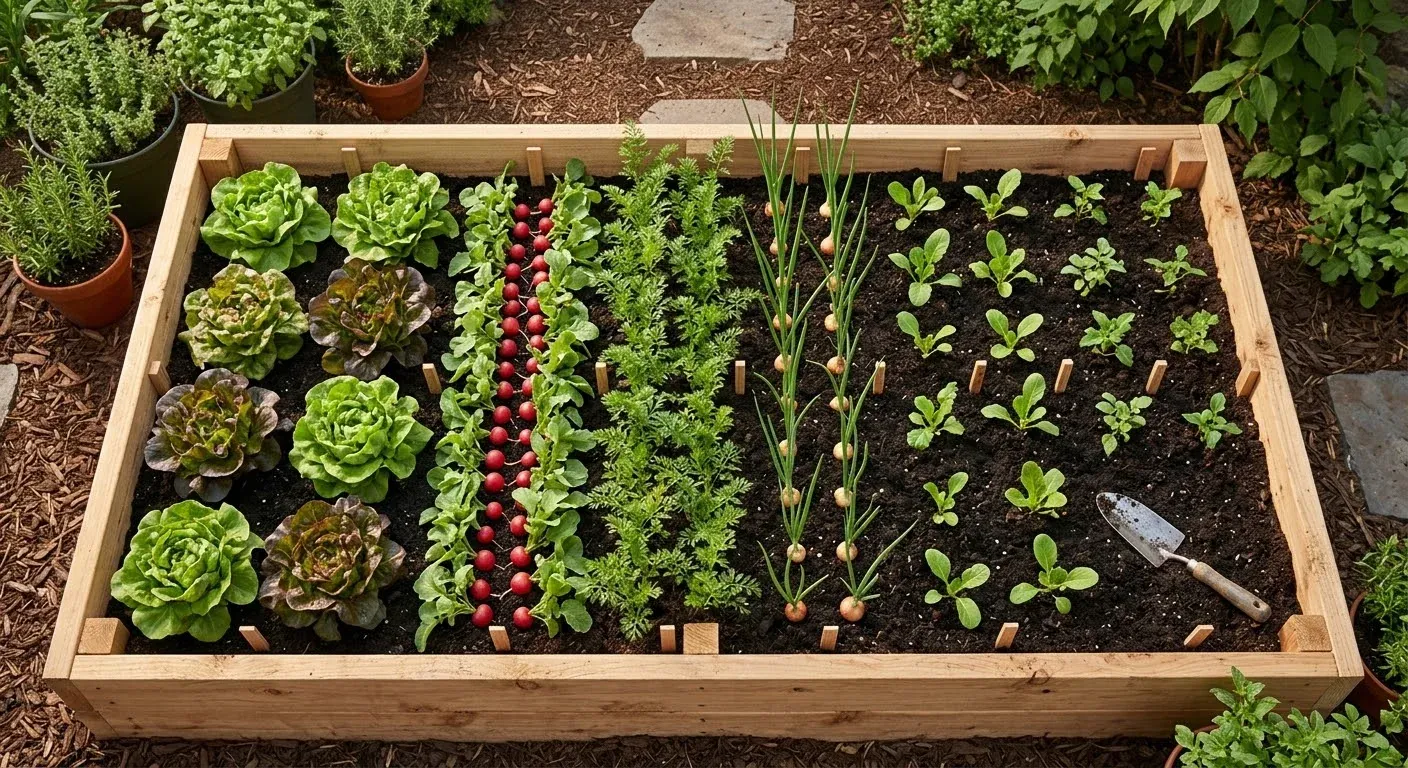
First planting
Radishes
The radishes grow and are harvested.
Second planting
After the radishes are finished, the area can be cleared and prepared for another suitable crop, such as lettuce, if the season and conditions are appropriate.
Third planting
Once that crop has finished, you can assess the space again and decide whether another suitable crop can follow.
The important thing isn't memorizing one specific sequence.
It's learning to think:
What is growing now?
When will this space become available?
What can grow here next?
Will the next crop have suitable conditions?
That's the foundation of succession planting.
Use Garden Layout to Make Succession Planting Easier
Good succession planting begins with good garden planning.
If plants are placed randomly, it can become difficult to know which areas will become available and when.
A simple layout can make the process easier.
For example, in a raised bed:
Back zone
Reserve space for taller crops that may remain in the bed longer.
Middle zone
Use space for medium-height vegetables.
Front zone
Use shorter crops that are easy to reach and harvest.
Edges and corners
Consider compact crops or suitable herbs where they fit without interfering with the main plants.
This approach also supports one of the central Tiny Garden Harvest planning principles: use the available space efficiently while still giving plants enough room to grow.
If you're deciding how much space to work with, compare different raised bed sizes before creating your planting plan.
Don't Forget Sunlight
A crop may be suitable for succession planting on paper but unsuitable for the actual location.
Sunlight is one of the first things to consider.
The Tiny Garden Harvest planning resources recommend observing the garden throughout the day and considering how sunlight changes with the seasons.
This is especially important when one crop is removed and another is planted.
Ask:
Does this area receive enough direct sunlight?
Will nearby plants shade the new crop?
Will seasonal changes affect the available light?
Is the crop suited to the conditions?
Before choosing your next crop, see our guide to how much sun a vegetable garden needs and match your planting plan to the light available in your garden.
Keep a Simple Planting Record
A small notebook or garden calendar can make succession planting much easier.
Record:
You don't need perfect records.
Even a few simple notes can help you understand how your garden behaves.
Over time, you'll learn which crops fit comfortably into your available space and which combinations make your garden harder to manage.
Common Succession Planting Mistakes Beginners Should Avoid
Planting Without Considering the Season
A crop that works well at one point in the year may not be suitable later.
Always consider the current growing conditions before planting the next crop.
Overcrowding Plants
Don't reduce spacing just to fit another planting into the garden.
Succession planting works through time, not overcrowding.
Forgetting Mature Plant Size
A seedling can look tiny when you plant it.
Plan for its mature size.
Ignoring Sunlight
The next crop still needs suitable light.
A newly available space isn't automatically suitable for every vegetable.
Making the Schedule Too Complicated
You don't need to plan every day of the growing season.
Start with one section of the garden and one follow-up planting.
Forgetting Maintenance Time
When one crop finishes, you may need time to:
Remove old plants
Clear debris
Prepare the soil
Replant
Water
Maintain the new crop
Leave enough flexibility in your plan to actually keep up with the garden.
How to Start Succession Planting as a Beginner
If you're completely new to the idea, keep it simple.
Try this three-step approach:
1. Choose one small section.
Don't redesign your entire garden.
2. Plant one suitable crop.
Follow the recommended spacing and growing requirements.
3. Plan what comes next.
Before the crop finishes, consider what could follow it.
That's enough to start learning.
Once you've completed one successful succession, you can expand the idea to other parts of your garden.
Combine Succession Planting With Other Space-Saving Strategies
Succession planting doesn't have to work alone.
The Tiny Garden Harvest Gardening Knowledge Base identifies several related small-space strategies, including:
Growing vertically
Using compact crops
Efficient layouts
Using edges and corners
Raised-bed gardening
Succession planting
These strategies can complement one another.
For example, a small raised bed might use vertical support for a vining crop while shorter vegetables occupy the front of the bed. When one shorter crop finishes, that section can potentially be replanted.
The goal is to use space thoughtfully while maintaining appropriate spacing and access.
If you're still learning the fundamentals, our raised bed gardening for beginners guide can help you build a strong foundation before adding succession planting.
Frequently Asked Questions
What is succession planting?
Succession planting is a method of using the same garden space for multiple plantings over time. When one crop is harvested or finishes, another suitable crop can follow.
Is succession planting good for small gardens?
Yes. It can be particularly useful in small gardens because it focuses on making better use of existing growing space over time.
Does succession planting mean planting vegetables closer together?
No. Each crop should still have enough space to grow according to its mature size and specific growing recommendations.
What vegetables can I use for succession planting?
Potential candidates include crops such as lettuce, radishes, carrots, bush beans, spinach, green onions and beets, depending on your local conditions and growing season.
Can I use succession planting in a raised bed?
Yes. Raised beds can be divided into manageable growing areas, making it easier to plan what happens after individual crops are harvested.
Do I need a planting calendar?
Not necessarily. A simple garden notebook or calendar can be useful, but beginners can start with a basic plan for one or two planting sequences.
Final Thoughts
Succession planting is a simple way to rethink how you use a small vegetable garden.
Instead of asking only:
"How many plants can I grow here?"
ask:
"How many useful planting opportunities can this space provide throughout the growing season?"
Start with one small section.
Choose a crop that fits your conditions.
Give it the space it needs.
Harvest it.
Then evaluate whether another suitable crop can follow.
You don't need a complicated system to begin. With a little planning and observation, you can gradually learn how to make better use of the growing space you already have.
Small garden. Smart planning. More opportunities to grow.
Ready to Plan Your Vegetable Garden?
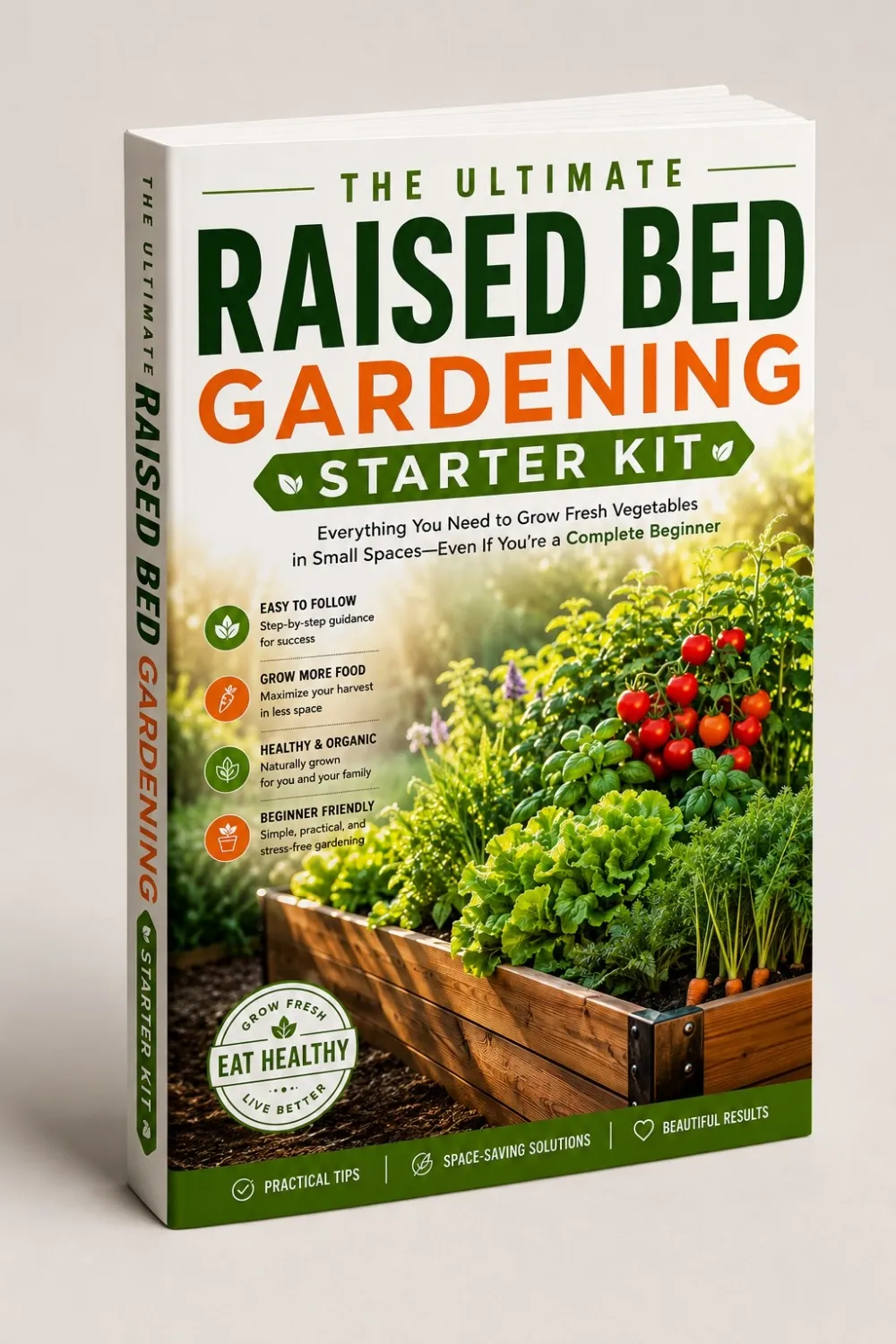
If you're starting your first raised bed, get The Ultimate Raised Bed Gardening Starter Kit for beginner-friendly help with planning your garden, choosing vegetables and preparing your growing space.
Written by:
Wren Hartley
SHARE




About me
Hi there 👋 I’m Wren Hartley, the creator of Tiny Garden Harvest. I love helping beginners grow fresh food and enjoy bigger harvests from small spaces. 🌱

Trending
learn the basics of location, soil, vegetables, spacing, watering, and care.
Grow more food in less space with raised beds, vertical gardening, and smart crop choices.
Learn an easy raised bed soil mix using topsoil, compost, and aeration material.
Free E-book
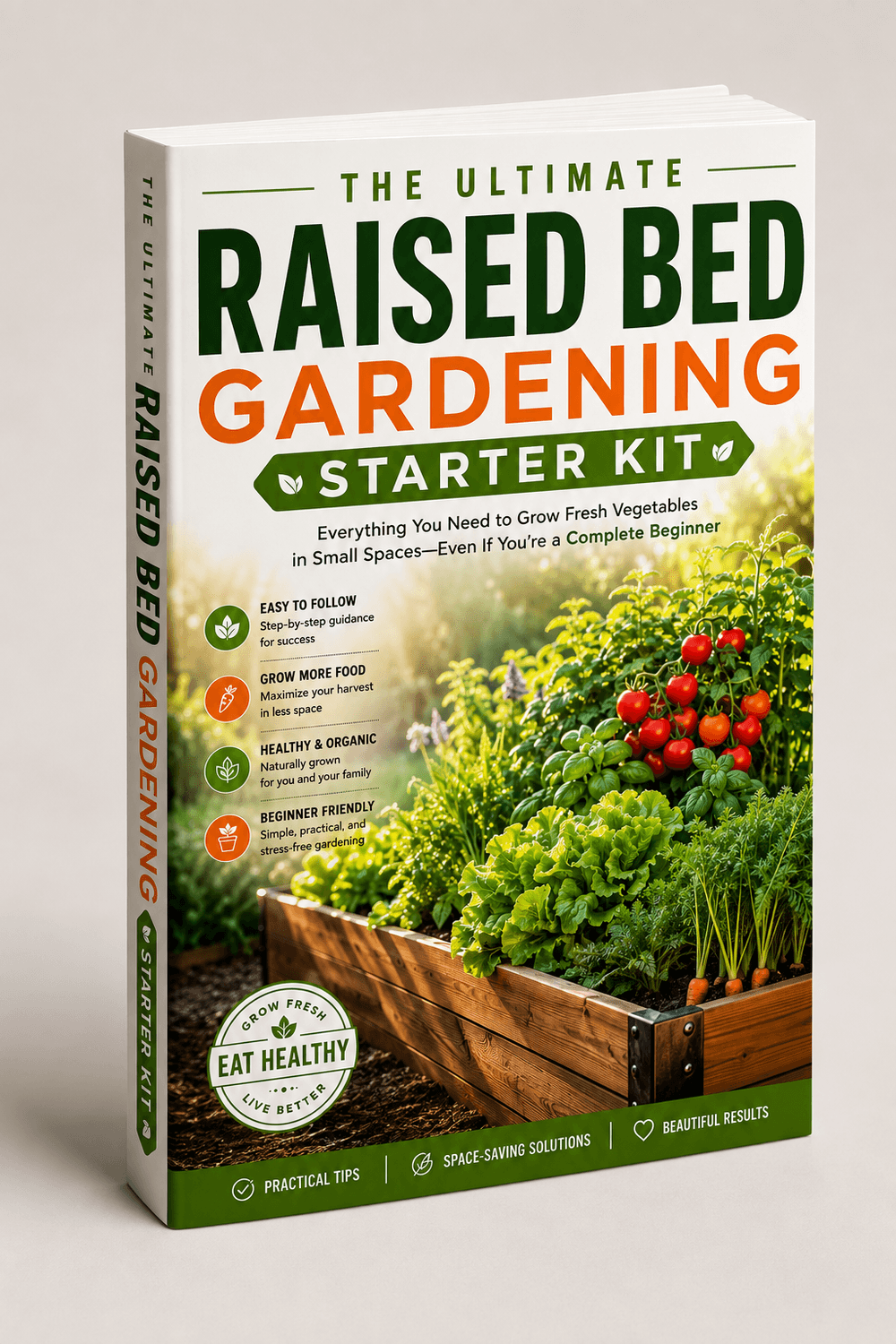
Grab your free Ultimate Raised Bed Gardening Starter kit -Ever if you've not garden before.
NEW FREE E-BOOK: Grow Fresh Vegetables in Small Spaces Even If You've Never Gardened Before