
15 Easy Vegetables to Grow for Beginner Gardeners
Starting your first vegetable garden is exciting but choosing what to grow can quickly become overwhelming.
Should you start with
tomatoes?
Carrots?
Lettuce?
Cucumbers?
For beginners, the goal isn't to grow everything at once. It's better to start with a manageable selection of vegetables suited to your available space, climate and growing conditions.
Some crops are especially useful for beginners because they're relatively straightforward to grow, productive in small gardens or quick to harvest.
Here are 15 easy vegetables to grow for beginners to help you plan your first garden.
1. Lettuce
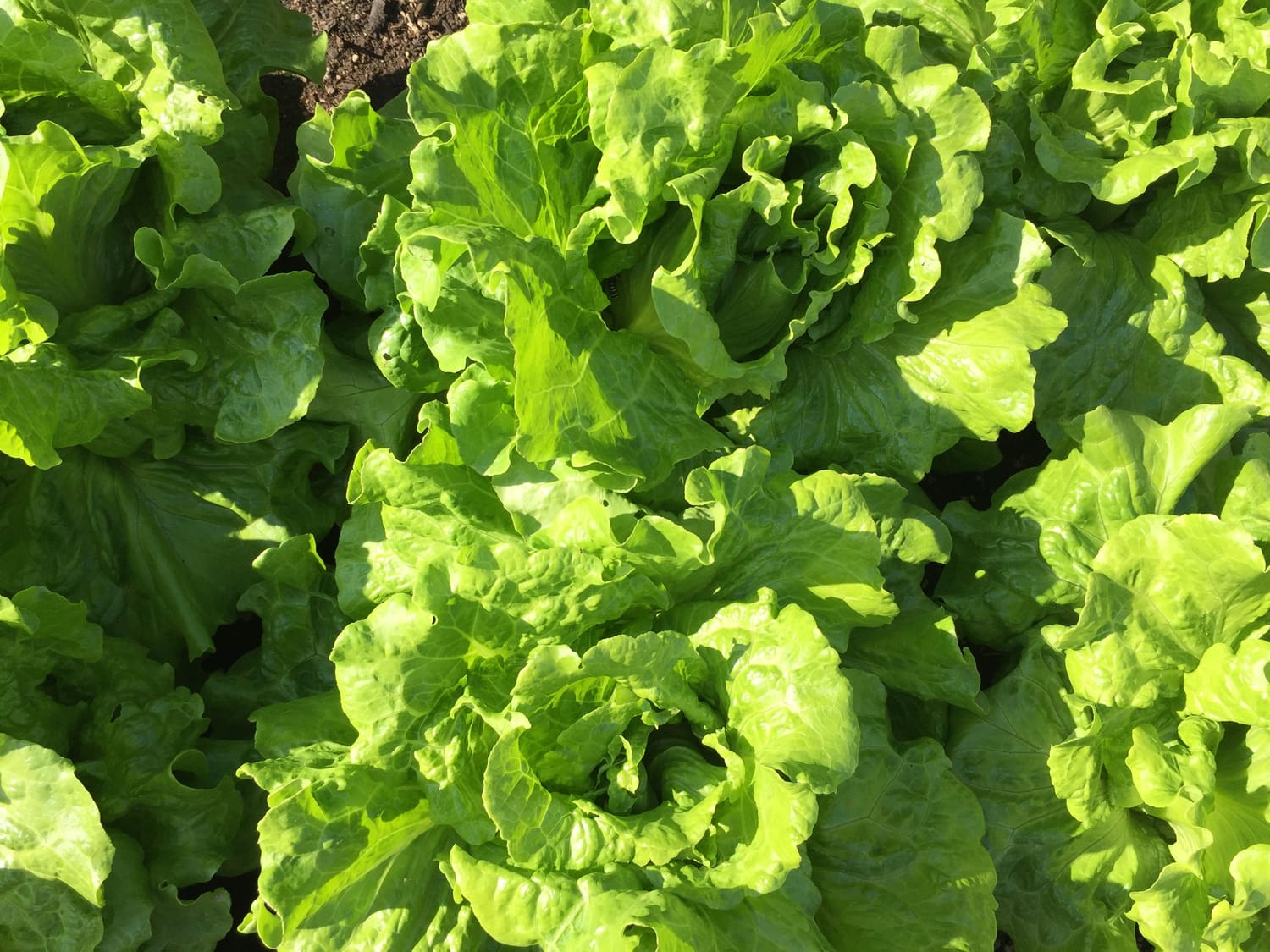
Lettuce is a great crop for gardeners who want to start small.
It has a relatively compact growing habit, which makes it useful for raised beds and small-space vegetable gardens.
Depending on the variety, you can grow lettuce as full heads or harvest outer leaves while allowing the plant to continue growing.
Beginner Growing Tip
Lettuce generally performs best during cooler growing conditions.
Give plants enough room for air circulation and keep the soil consistently moist without leaving it waterlogged.
Why beginners may like it: Compact and useful for small beds.
2. Radishes
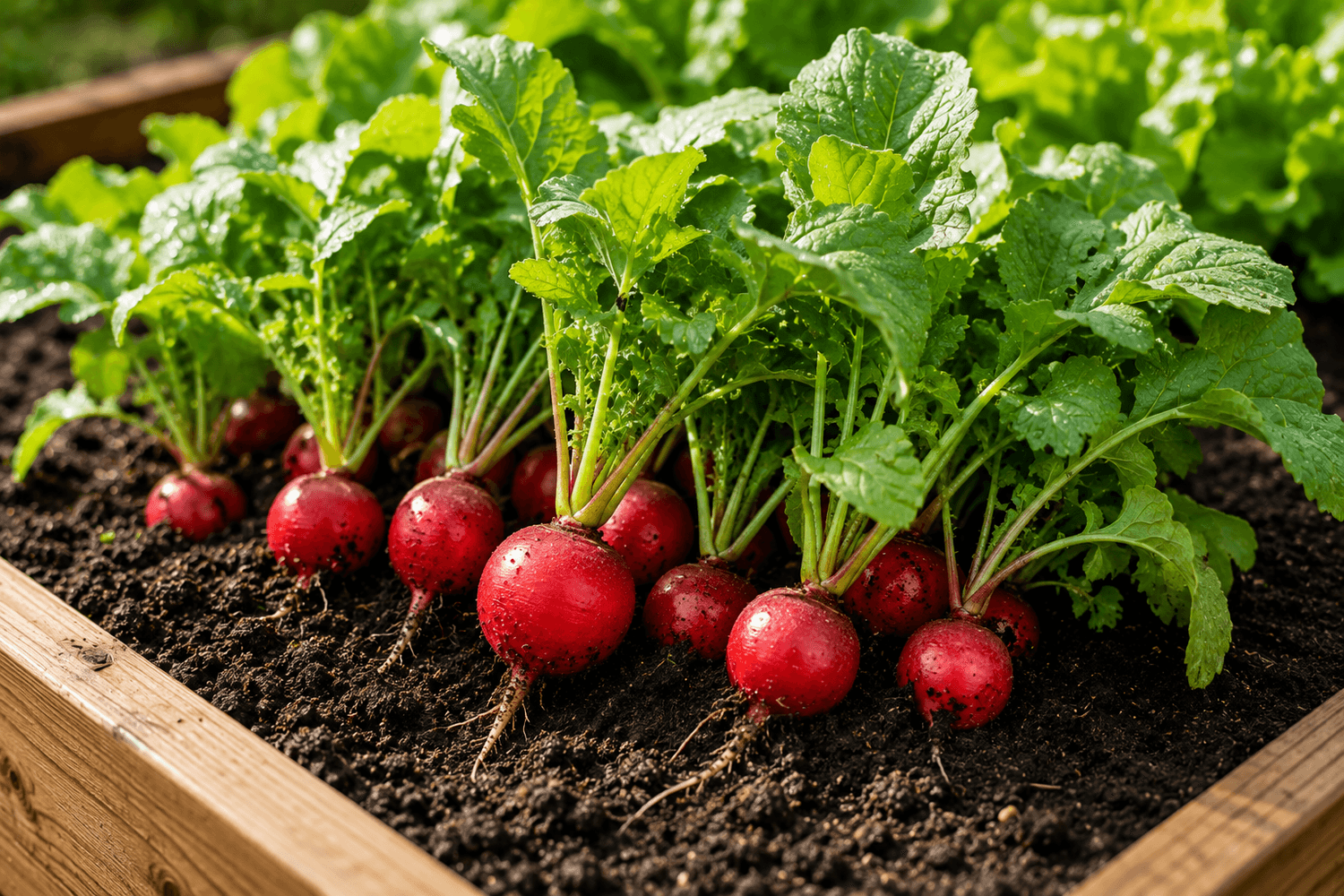
Radishes are popular beginner vegetables because many varieties grow relatively quickly.
They're also small enough to fit between or alongside other appropriately spaced crops.
That makes radishes particularly useful when you're trying to get more productivity from a small raised bed.
Beginner Growing Tip
Loose soil is important for developing healthy roots.
Avoid overcrowding seedlings, and thin them according to the spacing recommended for your variety.
Why beginners may like them: Quick-growing root crop.
3. Bush Beans
Bush beans can be easier to fit into compact gardens than climbing varieties because they grow as relatively compact plants and don't normally require a tall trellis.
They can also provide a useful harvest from a modest amount of garden space.
Beginner Growing Tip
Plant bush beans in a sunny position with well-draining soil.
Harvest pods regularly once they reach the appropriate size for your variety.
Why beginners may like them: Compact compared with climbing types.
4. Kale
Kale can be a productive leafy crop and works well in raised beds.
Instead of harvesting the entire plant immediately, you can usually harvest mature outer leaves while allowing younger leaves toward the center to continue developing.
Beginner Growing Tip
Harvest the lower, mature leaves first while leaving the growing point intact.
Why beginners may like it: Productive leafy crop.
5. Swiss Chard
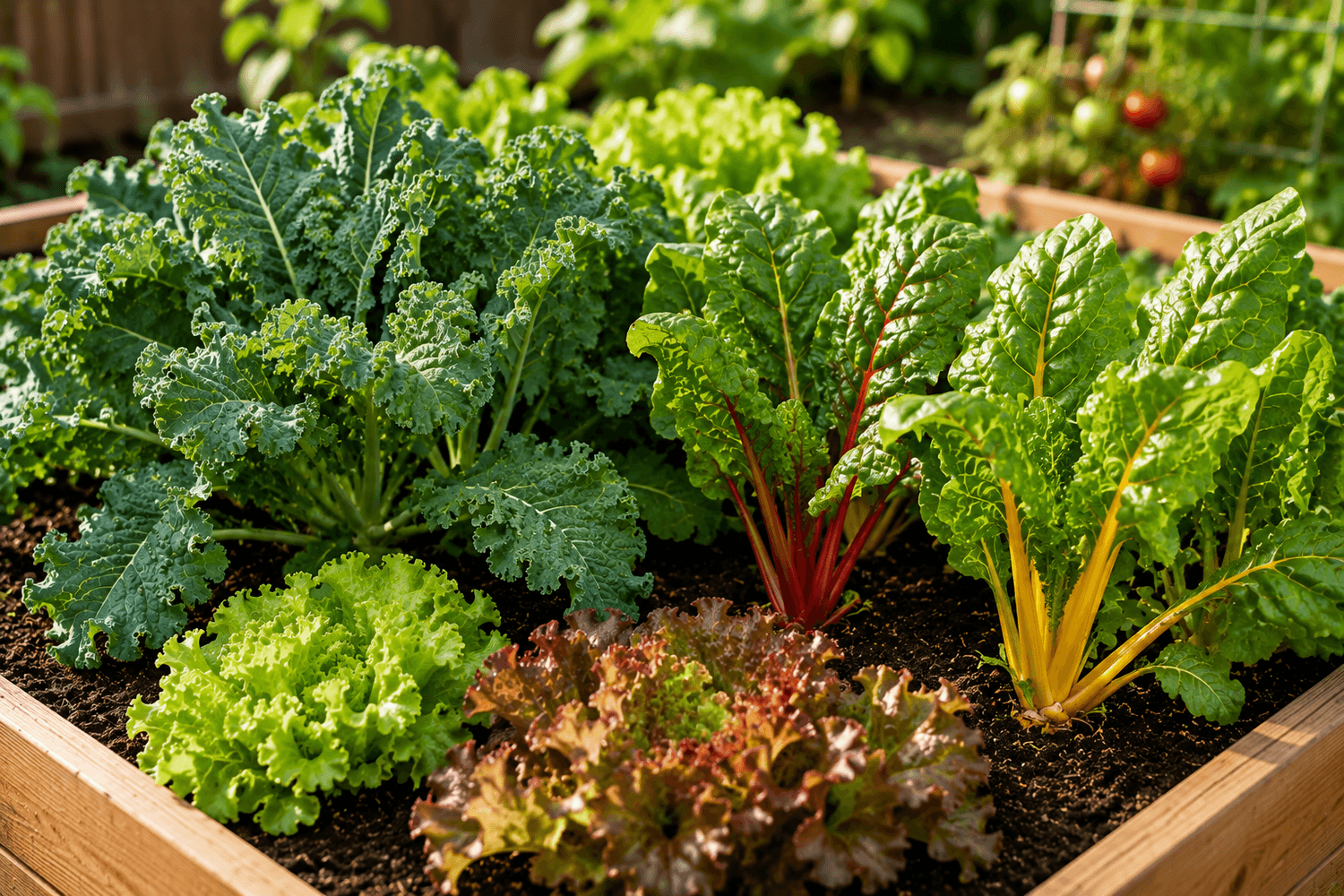
Swiss chard is another useful leafy vegetable for beginners.
Its colorful stems can also make a vegetable garden more attractive.
Like kale, you can harvest mature outer leaves and allow the plant to continue producing new growth.
Beginner Growing Tip
Don't remove every leaf at once.
Take mature outer leaves and leave enough healthy foliage for continued growth.
Why beginners may like it: Can provide repeated leaf harvests.
6. Carrots
Carrots don't take up much space above ground, making them useful for raised beds.
However, what's happening below the soil matters considerably.
Compacted or rocky soil can interfere with root development and lead to oddly shaped carrots.
Beginner Growing Tip
Prepare loose, well-draining soil before planting.
Because carrot seeds are small, seedlings can emerge very close together.
Thin them when necessary so the roots have room to develop.
Why beginners may like them: Useful root crop for raised beds.
7. Green Onions
Green onions are useful when garden space is limited.
Their upright growth habit allows them to occupy relatively little horizontal space compared with large crops such as tomatoes or squash.
Beginner Growing Tip
Keep weeds under control so young onions aren't competing heavily for water, light and nutrients.
Why beginners may like them: Compact growing habit.
8. Peppers
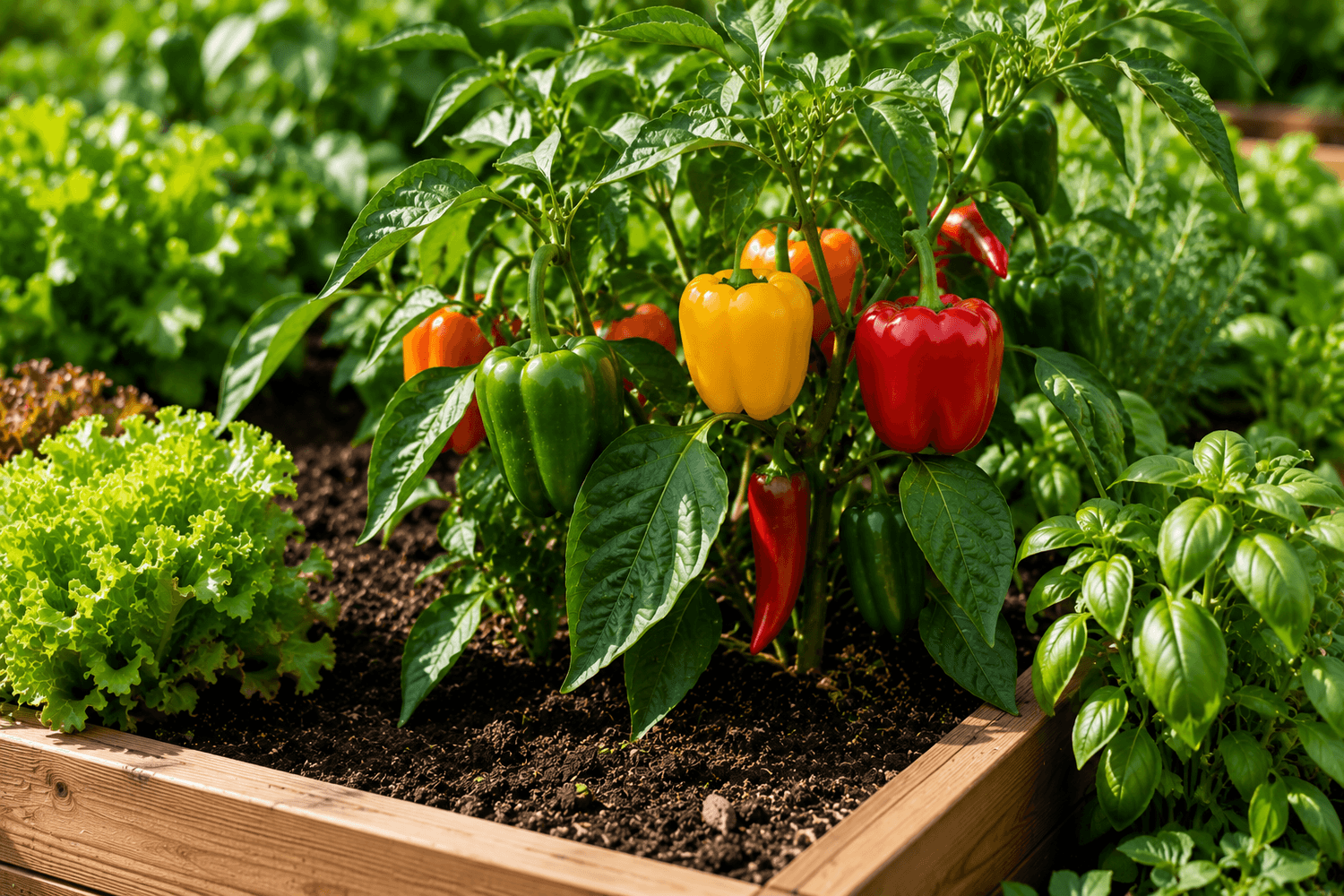
Pepper plants can produce a useful harvest without taking over an entire raised bed.
They prefer warm, sunny growing conditions and fertile, well-draining soil.
There are many varieties available, ranging from sweet peppers to hot peppers.
Beginner Growing Tip
Don't rush peppers outdoors during cold conditions.
Give them adequate sunlight and allow enough space between mature plants for good airflow.
Why beginners may like them: Productive in warm, sunny conditions.
9. Tomatoes
Tomatoes require more attention than lettuce or radishes, but they're still one of the most popular vegetables for new gardeners.
A healthy tomato plant can produce plenty of fruit from a relatively small footprint when properly supported.
For small gardens, compact or determinate varieties can sometimes be easier to manage than large sprawling types.
Beginner Growing Tip
Give tomatoes plenty of sunlight and support them with a cage, stake or trellis.
Most importantly, don't plant them too closely together.
Remember how small your tomato seedling looks now isn't how large it will remain.
Why beginners may like them: Popular and productive with support.
10. Cucumbers
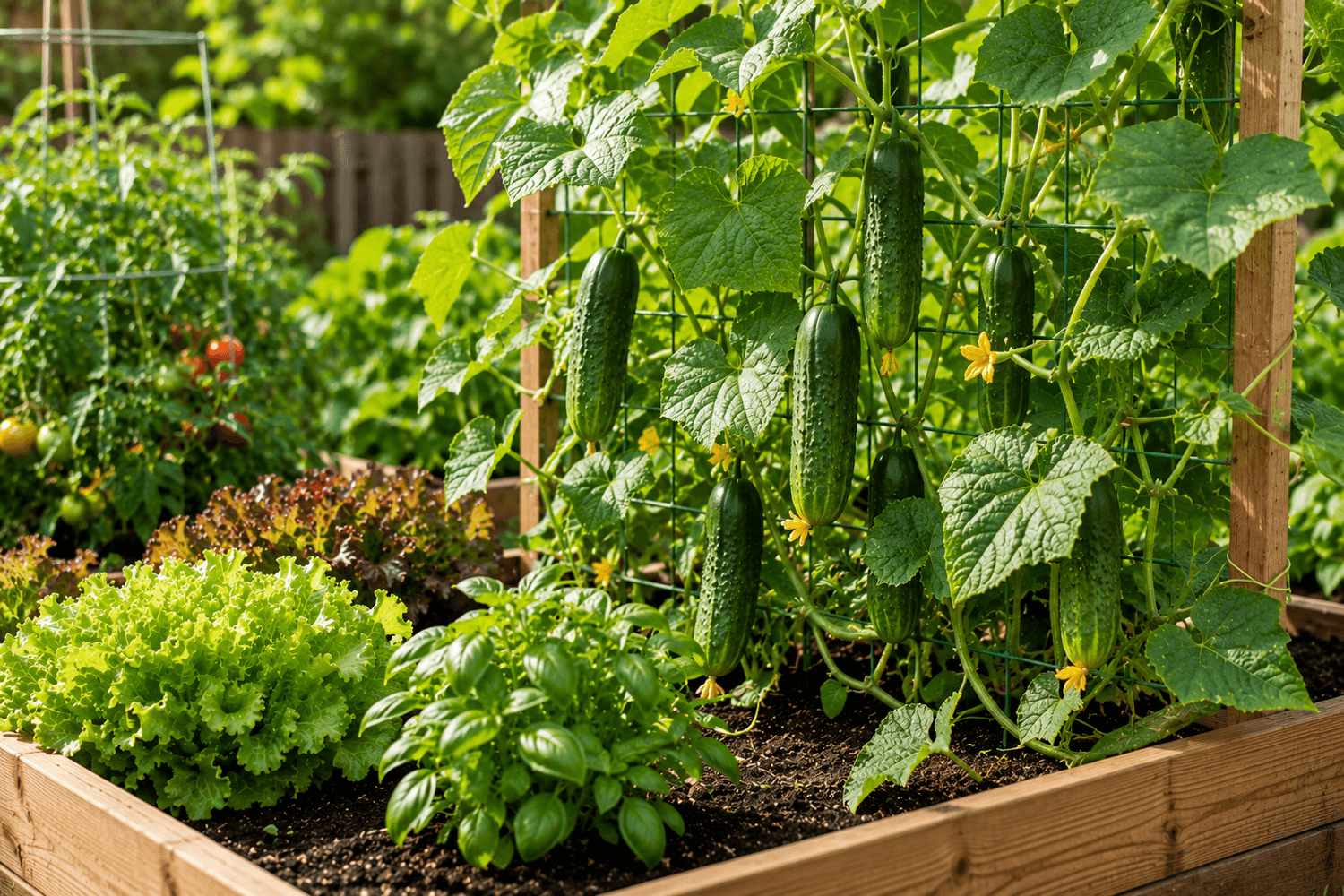
Cucumbers can spread considerably if allowed to trail across the ground.
But there's another option.
Grow them vertically.
Training suitable cucumber varieties onto a trellis can help make better use of limited garden space.
Beginner Growing Tip
Position the trellis so climbing cucumber vines don't unnecessarily shade shorter crops.
Harvest cucumbers regularly once they reach an appropriate size for the variety you're growing.
Why beginners may like them: Can use vertical space efficiently.
11. Beets
Beets give you something interesting: both the roots and leaves can be useful.
Their relatively compact growth also makes them suitable for many raised-bed gardens.
Beginner Growing Tip
Thin seedlings where necessary to provide adequate space for root development.
Keep the soil reasonably even in moisture while the plants establish.
Why beginners may like them: Compact root crop with edible greens.
12. Zucchini
Zucchini can be extremely productive under suitable growing conditions.
However, beginners need to understand one thing:
Zucchini plants can get large.
They aren't necessarily the best choice when you only have a tiny raised bed, but they can work well when sufficient space is available.
Beginner Growing Tip
Give the plant enough room from the beginning.
Once fruits begin developing, check the plant regularly and harvest at an appropriate size rather than allowing every zucchini to become enormous.
Why beginners may like it: Potentially very productive.
13. Peas
Peas are another crop that can take advantage of vertical growing space.
Climbing varieties can be trained onto a trellis, helping you use the vertical area above your raised bed rather than only the soil surface.
Beginner Growing Tip
Install support early rather than waiting until the vines become tangled.
Peas generally prefer cooler conditions compared with heat-loving crops such as peppers.
Why beginners may like them: Useful vertical crop for cooler conditions.
14. Spinach
Spinach is a compact leafy vegetable that can work well in raised beds.
Like lettuce, it generally prefers cooler growing conditions.
Beginner Growing Tip
Avoid planting spinach in the hottest part of the season if your local conditions cause it to bolt quickly.
Harvest healthy leaves while they're tender.
Why beginners may like it: Compact leafy crop.
15. Arugula
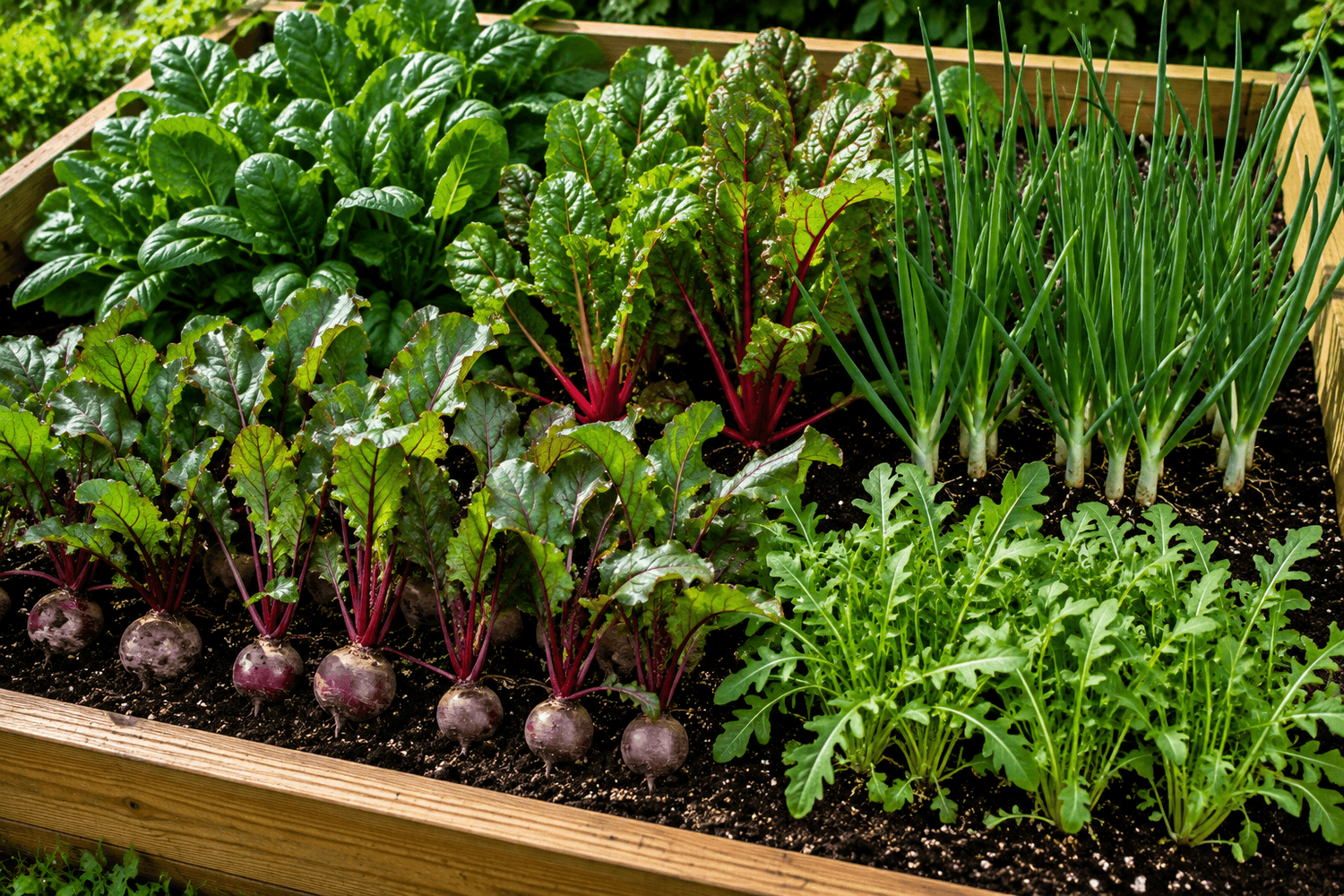
Arugula is another leafy green worth considering for a beginner garden.
It's compact and can be useful when you want to grow fresh salad greens in a relatively small area.
Beginner Growing Tip
Harvest young leaves regularly and pay attention to changing temperatures, because hot conditions can affect leaf quality and encourage flowering.
Why beginners may like it: Compact salad green.
Which Vegetables Should a Complete Beginner Grow First?
You don't need to plant all 15.
In fact, don't.
For your first raised bed, selecting around 3–5 crops you actually enjoy eating can make the garden much easier to manage.
For example, a beginner might start with:
Choose crops according to your climate, season, sunlight, available space and personal preferences rather than simply planting everything labelled “easy.”
Match Your Vegetables to Your Growing Conditions
There's no vegetable that's automatically easy to grow everywhere.
A crop can be beginner-friendly and still struggle when planted in unsuitable conditions.
Before choosing your vegetables, consider four things:
1. Sunlight
Observe how much direct sunlight reaches your garden.
2. Growing season
Choose vegetables suited to the temperatures you're likely to experience.
3. Available space
A zucchini plant and a radish don't require anything close to the same amount of room.
4. Your eating habits
Grow vegetables you'll actually use.
A productive garden full of vegetables nobody in your household wants to eat isn't particularly useful.
Don't Forget Your Raised Bed Layout
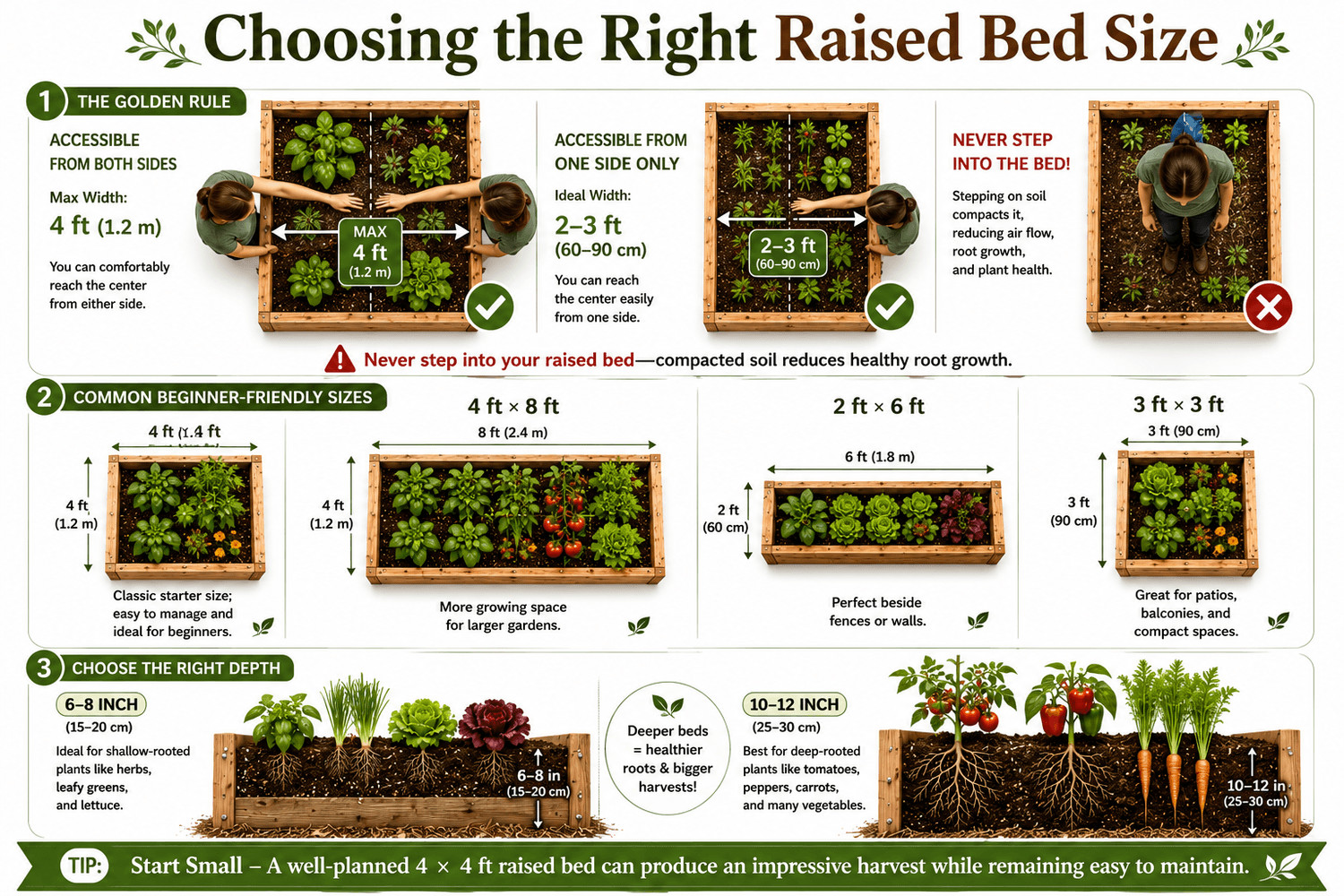
Choosing easy vegetables is only the beginning.
You also need to decide where each crop will go.
As a general planning principle, consider placing taller supported crops where they're less likely to shade shorter vegetables, taking your garden's sun direction into account.
Give large plants more room and use smaller crops strategically rather than overcrowding every available inch.
Your First Garden Doesn't Need to Be Complicated
Successful vegetable gardening doesn't require growing dozens of crops.
Start with a few vegetables.
Learn what they need.
Observe how they respond.
Then expand your garden as your experience grows.
A small raised bed containing lettuce, radishes, beans and a supported tomato plant can teach you far more than an enormous garden that's difficult to maintain.
The goal isn't to grow everything.
It's to start growing successfully.
Written by:
Wren Hartley
SHARE




About me
Hi there 👋 I’m Wren Hartley, the creator of Tiny Garden Harvest. I love helping beginners grow fresh food and enjoy bigger harvests from small spaces. 🌱

Trending
learn the basics of location, soil, vegetables, spacing, watering, and care.
Grow more food in less space with raised beds, vertical gardening, and smart crop choices.
Learn an easy raised bed soil mix using topsoil, compost, and aeration material.
Free E-book
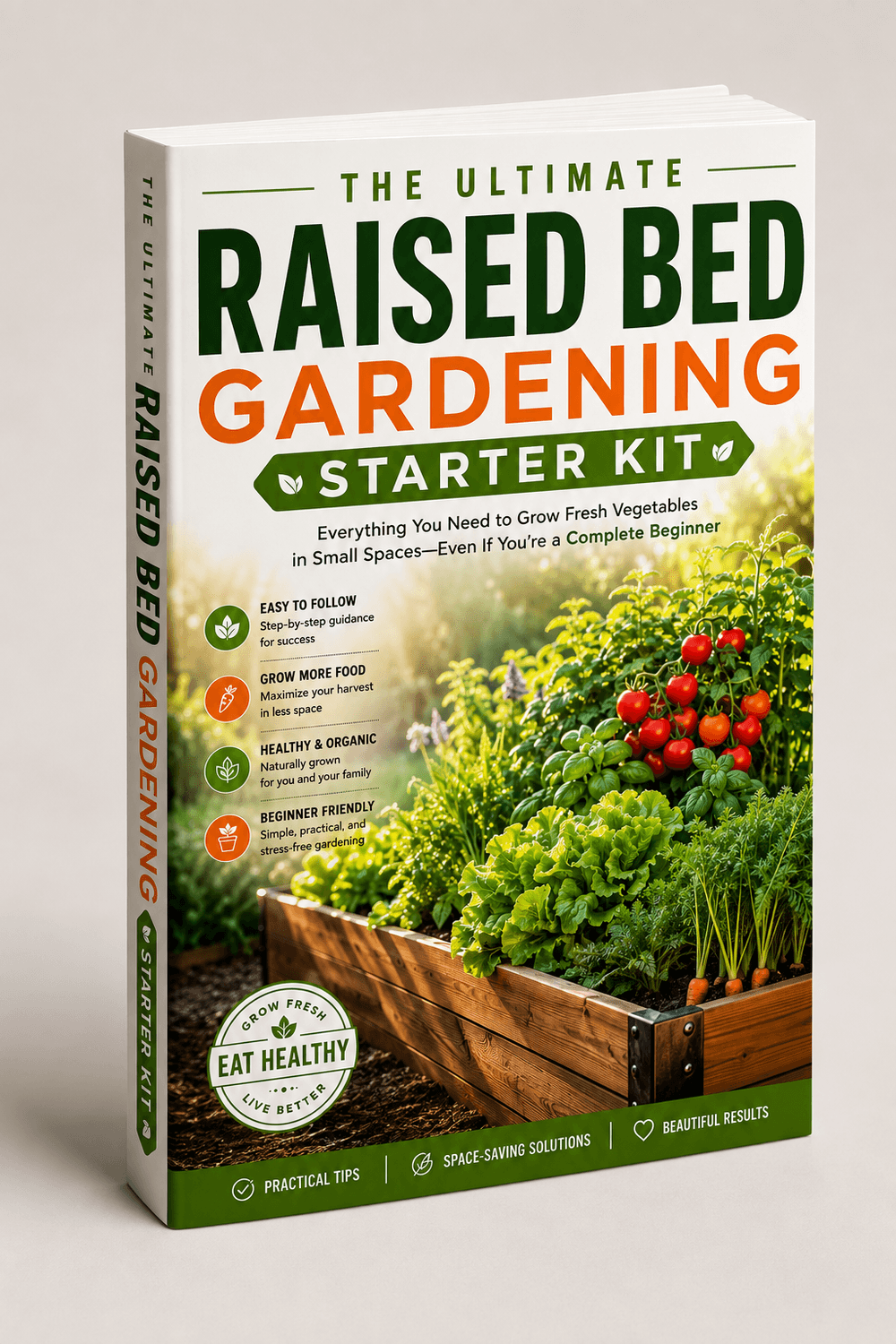
Grab your free Ultimate Raised Bed Gardening Starter kit -Ever if you've not garden before.
NEW FREE E-BOOK: Grow Fresh Vegetables in Small Spaces Even If You've Never Gardened Before