
4×8 Raised Bed Garden Layout for Beginners
A 4×8 raised bed garden layout is a great starting point if you want to grow several vegetables without managing a huge garden.
A bed this size gives you 32 square feet of growing space, which is enough for a useful mix of leafy greens, root vegetables, herbs and larger crops such as tomatoes and peppers.
But having enough space is only part of the equation.
You also need to decide:
Where should taller plants grow?
Which vegetables should go together?
How much room should each crop receive?
How can you avoid overcrowding?
A simple plan before planting can make your raised bed much easier to manage.
Here is one beginner-friendly way to organize a 4×8 vegetable garden.
A Simple 4×8 Raised Bed Garden Layout
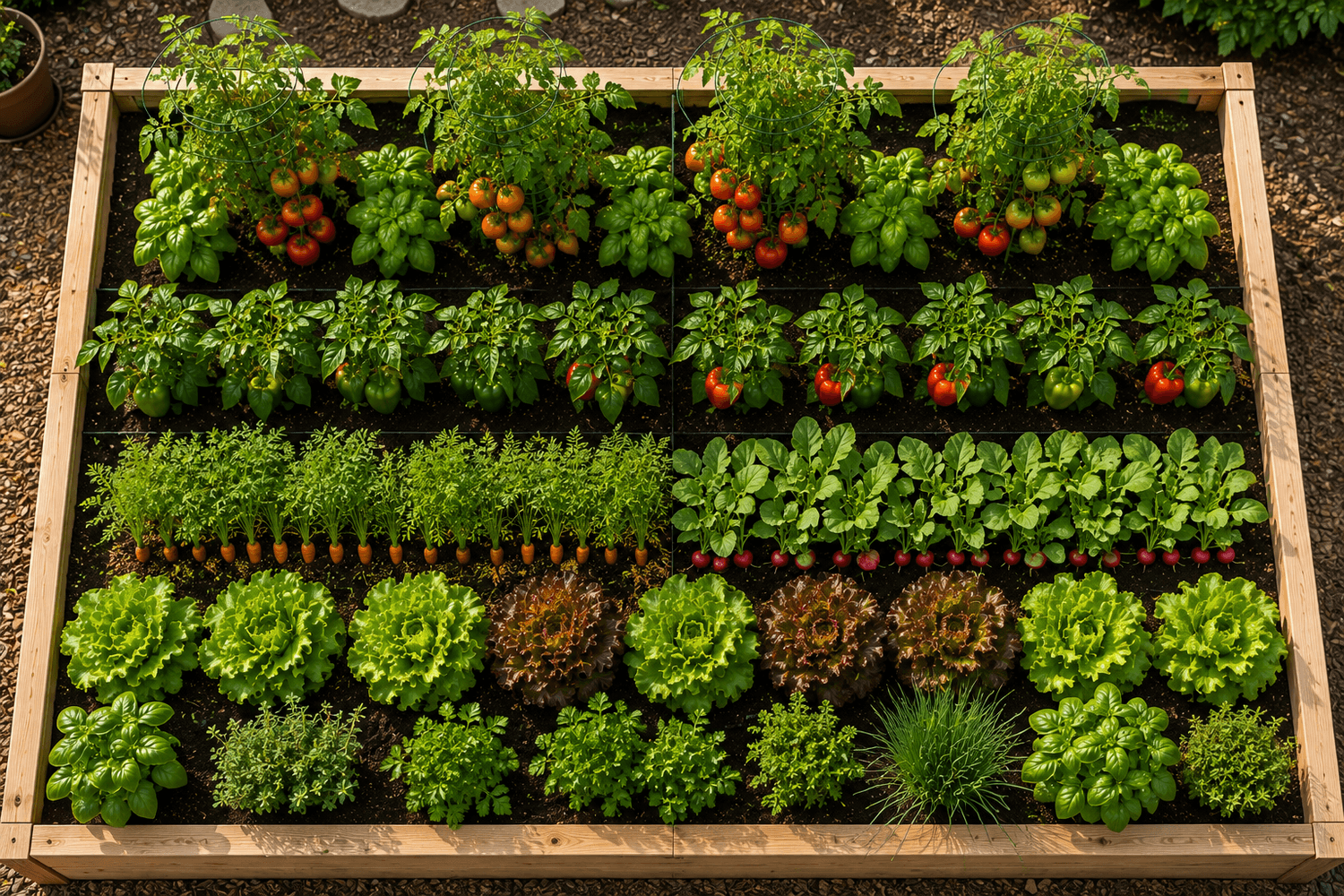
You don't need to divide your raised bed into perfectly equal sections.
Different vegetables require different amounts of growing space.
For example, a mature tomato plant needs substantially more room than a row of radishes.
Here's a simple starting layout:
Think of this as a starting template rather than a strict planting rule.
Your final arrangement should depend on your climate, season, sun direction and the varieties you're growing.
Always check the spacing information provided for your particular seeds or transplants.
Put Tomatoes Where They Won't Shade Everything Else
Tomatoes are likely to become some of the tallest and widest plants in this garden.
That means their location deserves careful consideration.
Place them toward the side of the bed where their mature growth and supports are less likely to block sunlight from shorter vegetables.
The best side depends on your location and how sunlight moves across your garden.
Provide sturdy support using:
Tomato cages
Stakes
Trellises
Install your support early rather than waiting until the plants become large and difficult to manage.
Basil can also be grown nearby, provided both crops have enough room.
Give Your Pepper Plants Room to Grow
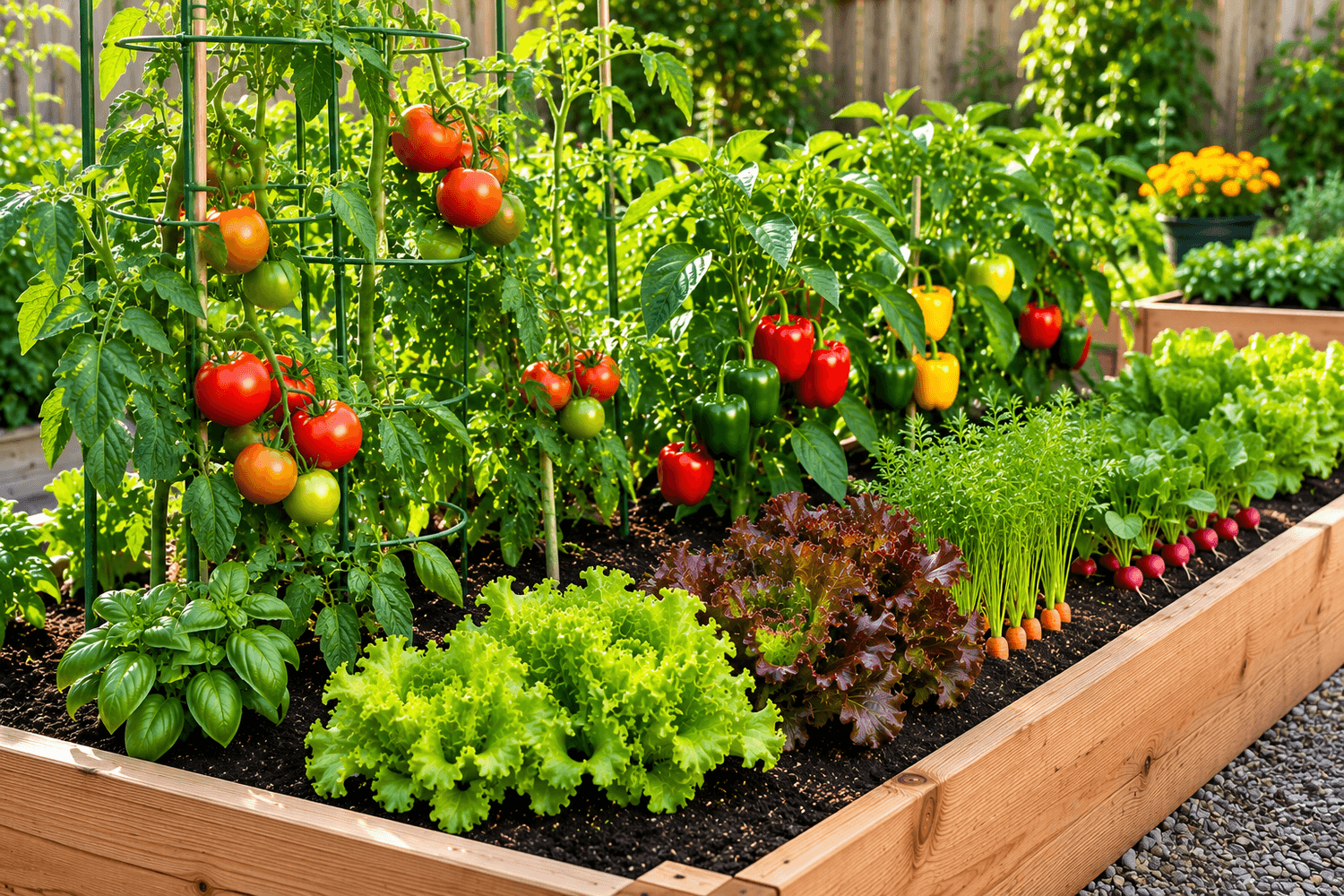
Pepper seedlings can look tiny when they're first transplanted.
That can tempt you to put several plants close together.
Remember that you're planning for mature plants, not seedlings.
Give each pepper enough room according to the spacing recommendation for its variety.
Good spacing helps plants receive sunlight and makes it easier for you to water, inspect and harvest them.
🌱 Beginner Tip
Don't judge spacing by how your raised bed looks on planting day.
A healthy young garden should have visible open soil. Your plants will gradually fill much of that space.
Use Smaller Areas for Carrots and Radishes
Carrots and radishes work differently from tomatoes and peppers.
Most of their harvest develops below the soil, and their above-ground growth occupies less space.
This makes them useful for smaller sections of a raised bed.
However, don't simply scatter large quantities of seeds into one area.
If seedlings emerge too close together, thinning can give the remaining plants more room to develop.
Radishes can also mature relatively quickly, making them useful when you're trying to get more from limited garden space.
Once a crop has been harvested, that area may become available for another suitable planting.
Keep Lettuce Easy to Reach
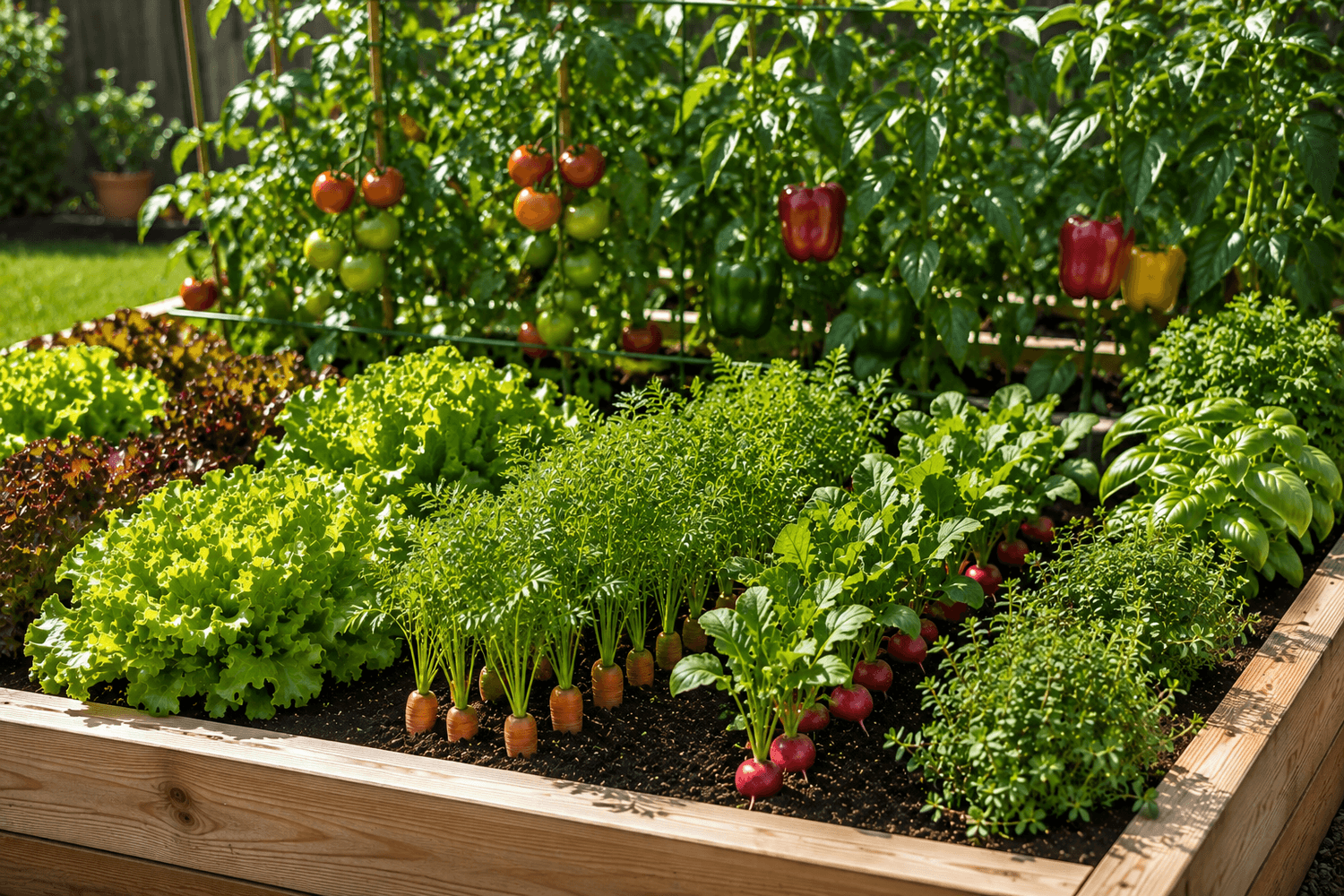
Consider putting lettuce toward the front or along an accessible side of the bed.
Why?
Because you'll probably harvest it regularly.
Keeping frequently harvested vegetables near the edge means you won't have to reach through tomato or pepper plants every time you want some leaves.
Lettuce is also relatively compact compared with larger fruiting vegetables.
Depending on your climate, it can be a useful crop for making productive use of smaller areas.
Use Herbs Around the Edges
Small herbs can help you make use of corners and edges that aren't suitable for larger vegetables.
Possible choices include:
Basil, parsley, cilantro and chives.
But don't assume every herb is naturally compact.
Some herbs can spread aggressively or eventually become much larger than expected.
Check the mature size before planting them permanently inside your vegetable bed.
You can also grow spreading herbs in separate containers if you want better control over them.
Don't Overcrowd Your 4×8 Raised Bed
This is one of the most important parts of planning your layout.
A newly planted raised bed often looks empty.
Don't panic and fill every gap.
Those little seedlings won't stay little.
Tomatoes become large plants. Peppers develop wider canopies. Lettuce expands. Root vegetables need underground space.
Packing too many vegetables together can create unnecessary competition for:
Sunlight
Water
Nutrients
Root space
Crowded foliage can also reduce airflow.
Instead of asking, “How many plants can I squeeze into this bed?”, ask:
“How many healthy mature plants can this space support?”
If you're starting your first garden, also read 7 Raised Bed Gardening Mistakes Beginners Should Avoid.
Make Vertical Space Part of Your Layout
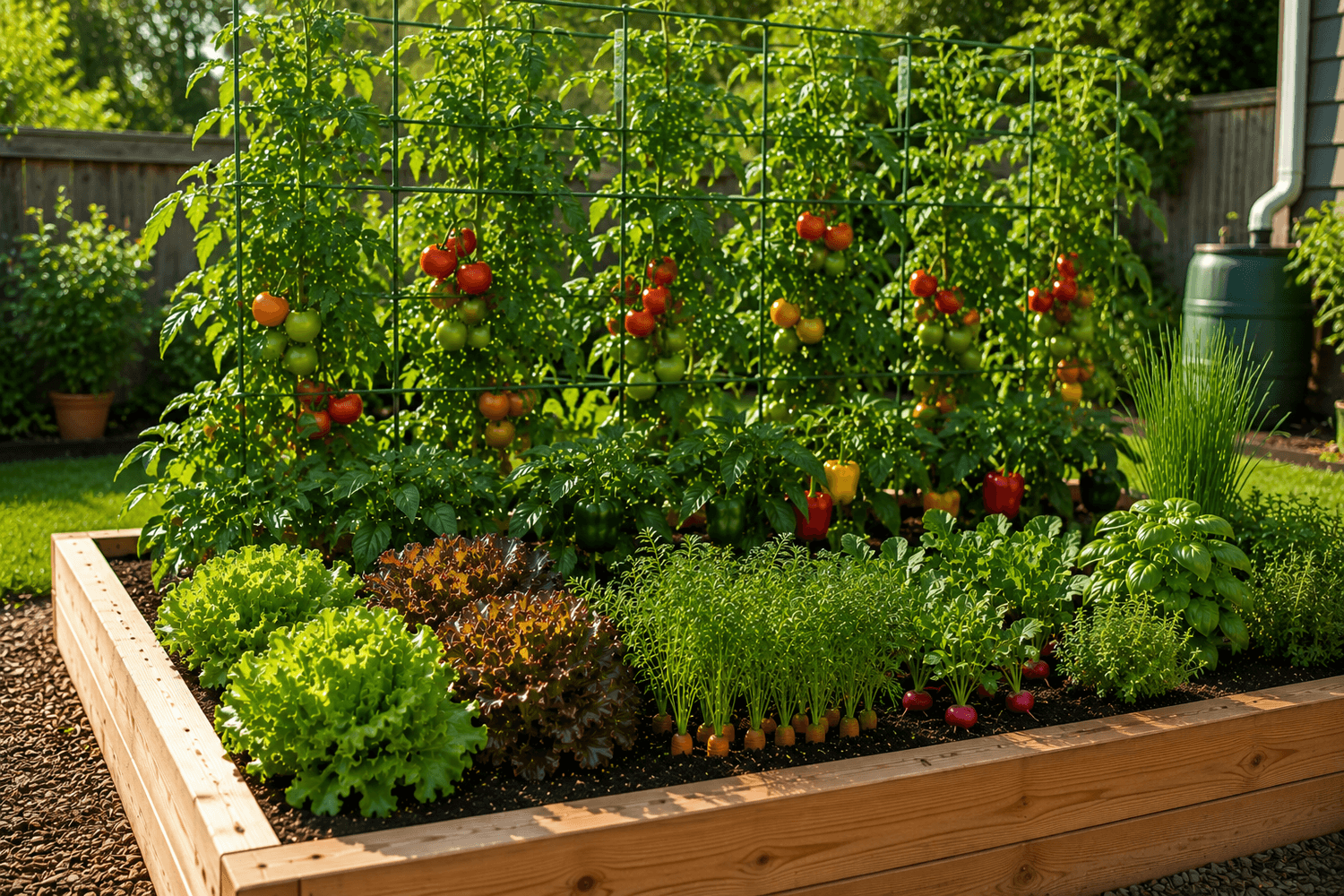
Your garden doesn't have to stop at the soil surface.
Vertical supports can help certain crops grow upward rather than sprawling across valuable growing space.
Tomatoes are an obvious example.
Depending on the variety, you can support them with cages, stakes or trellises.
Other garden layouts might include climbing crops such as cucumbers or peas on vertical supports.
This approach can be particularly valuable when you're trying to grow more vegetables in a small space.
Just remember that a tall wall of foliage can cast shade.
Think about the sun before deciding where to install your trellis.
Think About How You'll Reach Your Plants
Plant access is easy to overlook when drawing a garden layout.
One advantage of a 4-foot-wide raised bed is that you can generally work from both long sides rather than walking through the growing area.
Keep the surrounding paths accessible.
You'll need to reach into the bed for:
Planting
Watering
Weeding
Pruning
Checking for pests
Harvest
Avoid stepping inside the bed whenever possible because repeated foot traffic can compact your soil.
Prepare the Soil Before Following Your Layout
A beautiful planting plan won't compensate for poor growing conditions.
Before transplanting your vegetables or sowing seeds, prepare a growing medium that provides adequate drainage, moisture retention, aeration and organic matter.
For beginners, a useful starting framework is:
40% topsoil + 40% finished compost + 20% aeration material
You can learn more in The Simple Raised Bed Soil Mix Beginners Need.
Remember that soil materials vary, so treat the formula as a starting framework and observe how your particular mixture performs.
Water According to the Soil, Not Just the Calendar
Plants in the same raised bed may not always use water at exactly the same rate.
Weather conditions also change.
Instead of automatically watering because it's a particular day, check your soil and plants.
During hot or dry periods, the bed may require more frequent attention than during cooler or rainy weather.
Water deeply enough to encourage healthy root development rather than repeatedly wetting only the very top of the soil.
Your Layout Can Change Throughout the Season
Your raised bed doesn't have to look exactly the same all year.
Some crops mature much faster than others.
For example, radishes may finish while your tomatoes are still developing.
After harvesting a crop, you may be able to use the newly available space for another vegetable suited to your current growing conditions.
This is one reason keeping a simple garden record can be helpful.
Write down:
What you planted → where you planted it → when you planted it → how well it performed.
Next season, you'll have your own information to improve the layout.
What Should a Beginner Grow First?
You don't need to grow every vegetable shown in this example.
If this is your first raised bed, starting with fewer crops may actually make gardening easier.
Choose vegetables that:
Receive enough sunlight in your garden
Suit your growing season
Fit your available space
Your household actually enjoys eating
Lettuce, radishes, bush beans, peppers and tomatoes are among the crops beginners may consider depending on local growing conditions.
For more ideas, see 15 Easy Vegetables Every Beginner Can Grow.
A Simple 4×8 Layout Is Enough to Get Started
Your first 4×8 raised bed garden layout doesn't need to be perfect.
The important principles are simple:
Give large vegetables enough room. Keep shorter crops accessible. Use vertical supports where they make sense. Avoid overcrowding. Prepare good soil and pay attention to sunlight.
Then observe what happens.
Your first growing season will teach you things no generic garden layout can tell you about your particular space.
Use what you learn to make your next garden even better.
Written by:
Wren Hartley
SHARE




About me
Hi there 👋 I’m Wren Hartley, the creator of Tiny Garden Harvest. I love helping beginners grow fresh food and enjoy bigger harvests from small spaces. 🌱

Trending
learn the basics of location, soil, vegetables, spacing, watering, and care.
Grow more food in less space with raised beds, vertical gardening, and smart crop choices.
Learn an easy raised bed soil mix using topsoil, compost, and aeration material.
Free E-book
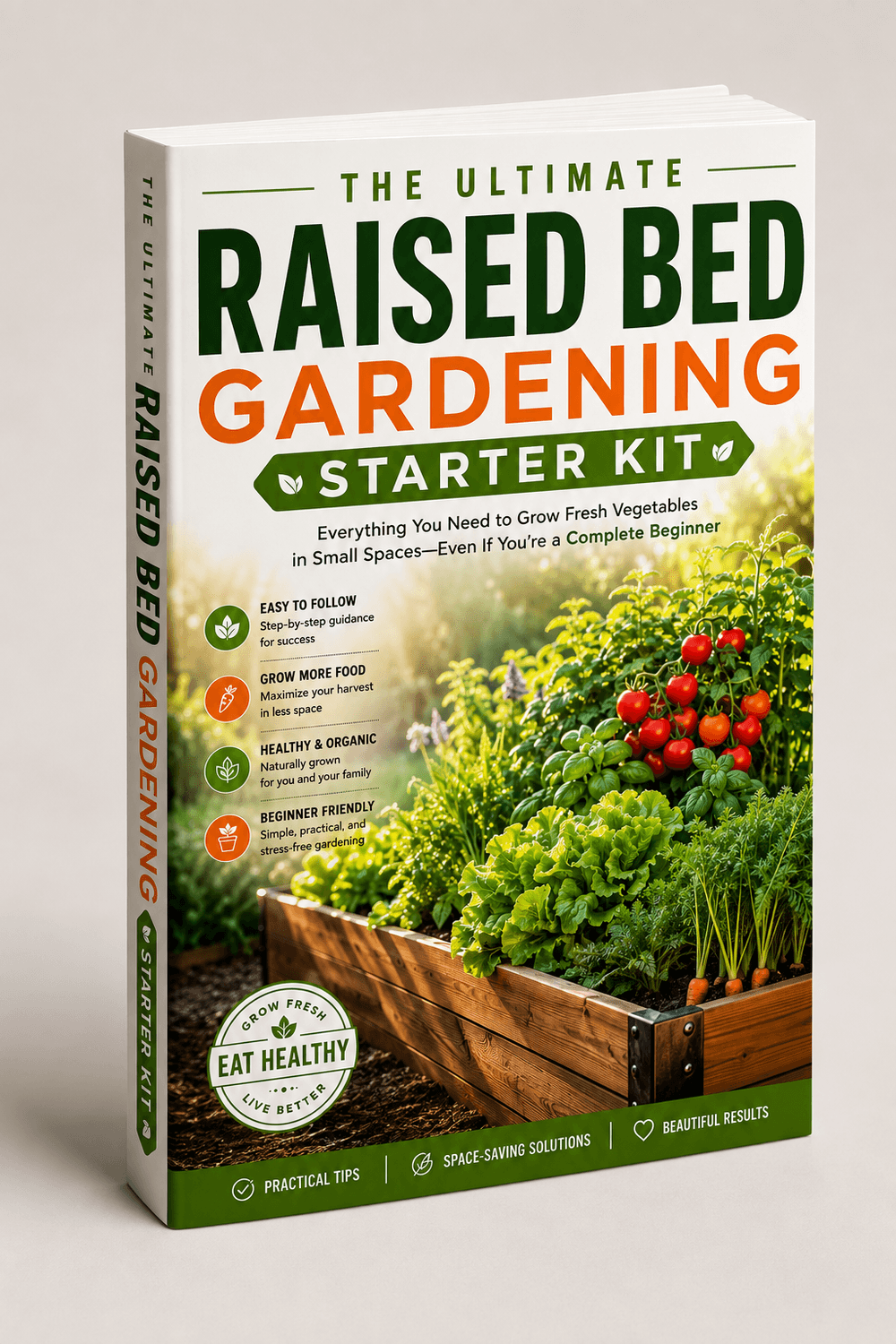
Grab your free Ultimate Raised Bed Gardening Starter kit -Ever if you've not garden before.
NEW FREE E-BOOK: Grow Fresh Vegetables in Small Spaces Even If You've Never Gardened Before