
Raised Bed Sizes: How to Choose the Right Size for Your Vegetable Garden
Choosing the right raised bed size can make vegetable gardening much easier. A bed that is too small may limit what you can grow, while one that is too large can be difficult to reach, water, weed, and maintain.
The best raised bed size isn't necessarily the biggest one you can fit into your yard. It should match your available space, the vegetables you want to grow, how easily you can reach the plants, and how much garden maintenance you want to handle.
For many beginner gardeners, a 4×8-foot raised bed is a useful layout to consider because it provides a generous growing area while giving you enough room to organize crops into different planting zones. Tiny Garden Harvest's existing 4×8 layout uses taller crops toward the back, medium-height crops in the middle, and shorter crops toward the front.
In this guide, you'll learn how to choose the right raised bed dimensions, how wide a raised bed should be, how length affects your garden, and which size may work best for a small-space vegetable garden.
What Is the Best Size for a Raised Garden Bed?
There isn't one raised bed size that works for every gardener.
The right size depends on:
The space available in your yard
How many vegetables you want to grow
How far you can comfortably reach
Whether you need pathways around the bed
Your preferred garden layout
How much time you want to spend maintaining the garden
A raised bed should give your plants enough growing space without making the center difficult to reach.
For a beginner, 4×8 feet is an excellent size to consider when the available space allows it. Tiny Garden Harvest's 4×8 layout demonstrates how this footprint can be divided into tall, medium, middle/front, front, and vertical growing zones.
If you're completely new to raised beds, start with our raised bed gardening for beginners guide before deciding which bed size and growing setup is right for you.
How Wide Should a Raised Garden Bed Be?
Width is one of the most important measurements to consider.
A bed can be long enough for a large garden, but if it's too wide, you may struggle to reach the plants in the middle.
Think about what you will need to do regularly:
Plant seedlings
Pull weeds
Water plants
Check for problems
Harvest vegetables
Add compost or other soil amendments
You should be able to comfortably reach the growing area without repeatedly stepping into the bed.
Why Reach Matters
The purpose of a raised bed is to create an organized growing area that is easier to manage.
If the bed is too wide for you to reach comfortably, routine maintenance becomes more difficult.
That's why accessibility should influence the width before you build.
Your Tiny Garden Harvest location checklist specifically includes easy access and working space as important factors when planning a raised garden bed.
How Long Should a Raised Bed Be?
Length is generally more flexible than width.
A long raised bed can provide plenty of growing space, but the longer it becomes, the more important your surrounding pathways and access points become.
For a compact garden, a shorter bed may fit better.
For a larger backyard, a longer bed can give you more planting area.
The key is to consider the entire garden footprint, not just the dimensions of the wooden box.
A 4×8-foot bed, for example, needs room around it for walking and gardening activities. The Tiny Garden Harvest location guidance specifically recommends leaving enough working space around a raised bed so you can move and work comfortably.
Popular Raised Bed Sizes for Vegetable Gardens
Several raised bed footprints can work well depending on your space.
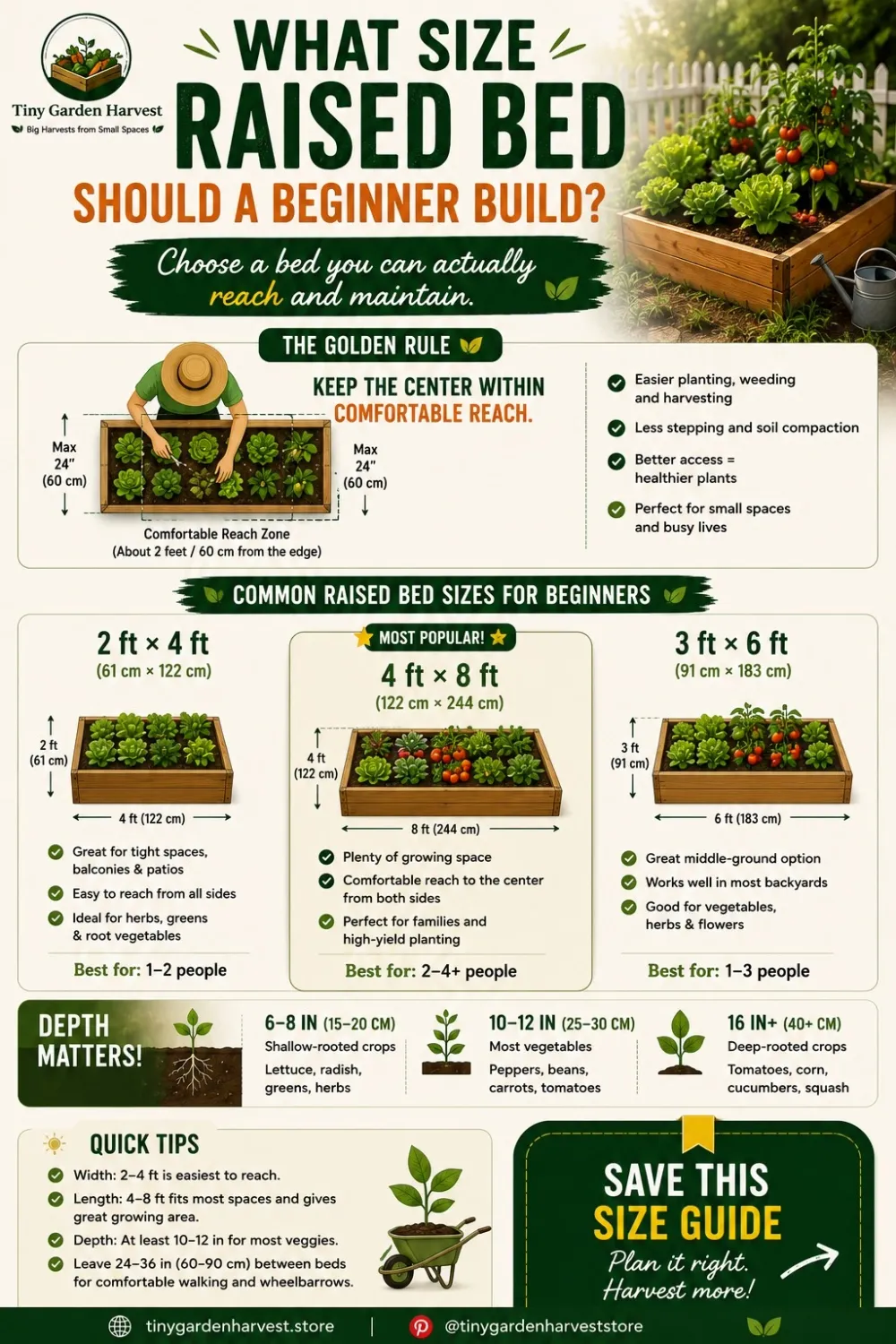
2×4-Foot Raised Bed
A 2×4-foot bed is compact and can work well when you have limited outdoor space.
It can be useful for:
A small backyard
A patio-adjacent garden
A beginner who wants a manageable starting point
A small selection of vegetables and herbs
Its smaller footprint also makes it easier to fit into a narrow garden area.
3×6-Foot Raised Bed
A 3×6-foot bed provides more growing area while remaining relatively compact.
It can be a useful middle option when a 4×8 bed would take up too much space.
4×8-Foot Raised Bed
A 4×8-foot raised bed provides a larger growing area and is one of the layouts featured in the Tiny Garden Harvest garden-planning materials.
The existing layout measures 4 feet by 8 feet and organizes crops into different height and planting zones.
The example includes:
Tomatoes and basil in the tall zone
Peppers in the medium zone
Carrots and onions in the middle/front
Lettuce and radishes toward the front
Cucumbers or beans using vertical space
The layout also shows different plant spacing recommendations within these zones.
Important: These are example layouts rather than a requirement that every gardener use a 4×8 bed.
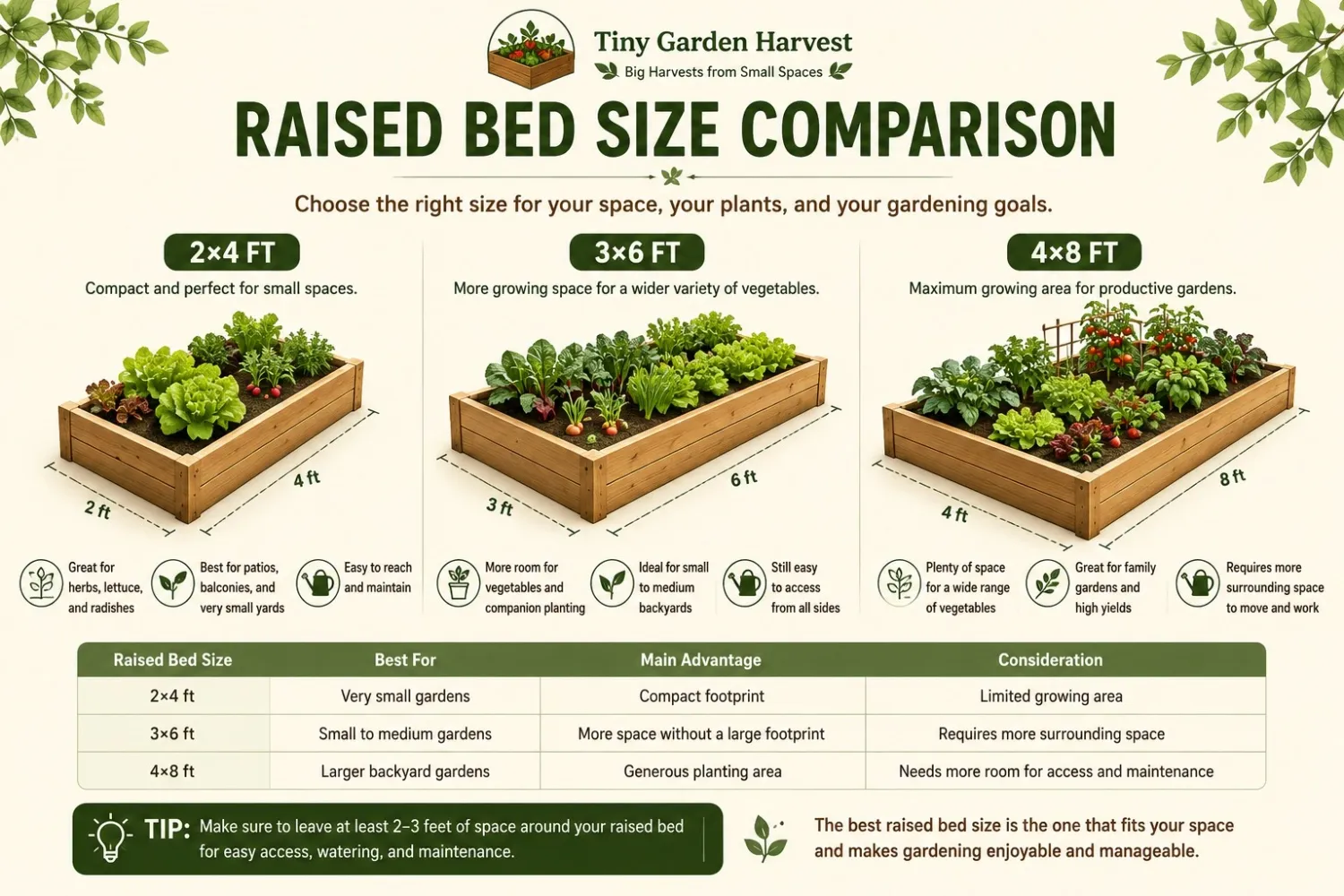
Raised Bed Size Comparison
The 4×8-foot dimensions and planting zones in the table above are supported by the Tiny Garden Harvest 4×8 layout resource.
How to Choose the Right Raised Bed Size for Your Space
Before buying lumber or a pre-built bed, measure your available garden area.
Step 1: Measure the Available Space
Measure the length and width of the area where you want to place the bed.
Don't measure only the area where the bed itself will sit.
Include space around the bed for walking, watering, harvesting, and maintenance.
Step 2: Think About Access
Ask yourself:
Can I comfortably reach all parts of this bed?
If the answer is no, consider making the bed narrower or creating a pathway that allows access from another side.
Step 3: Consider What You Want to Grow
Your crop choices should influence your layout.
Large crops such as tomatoes need more room than compact crops such as radishes.
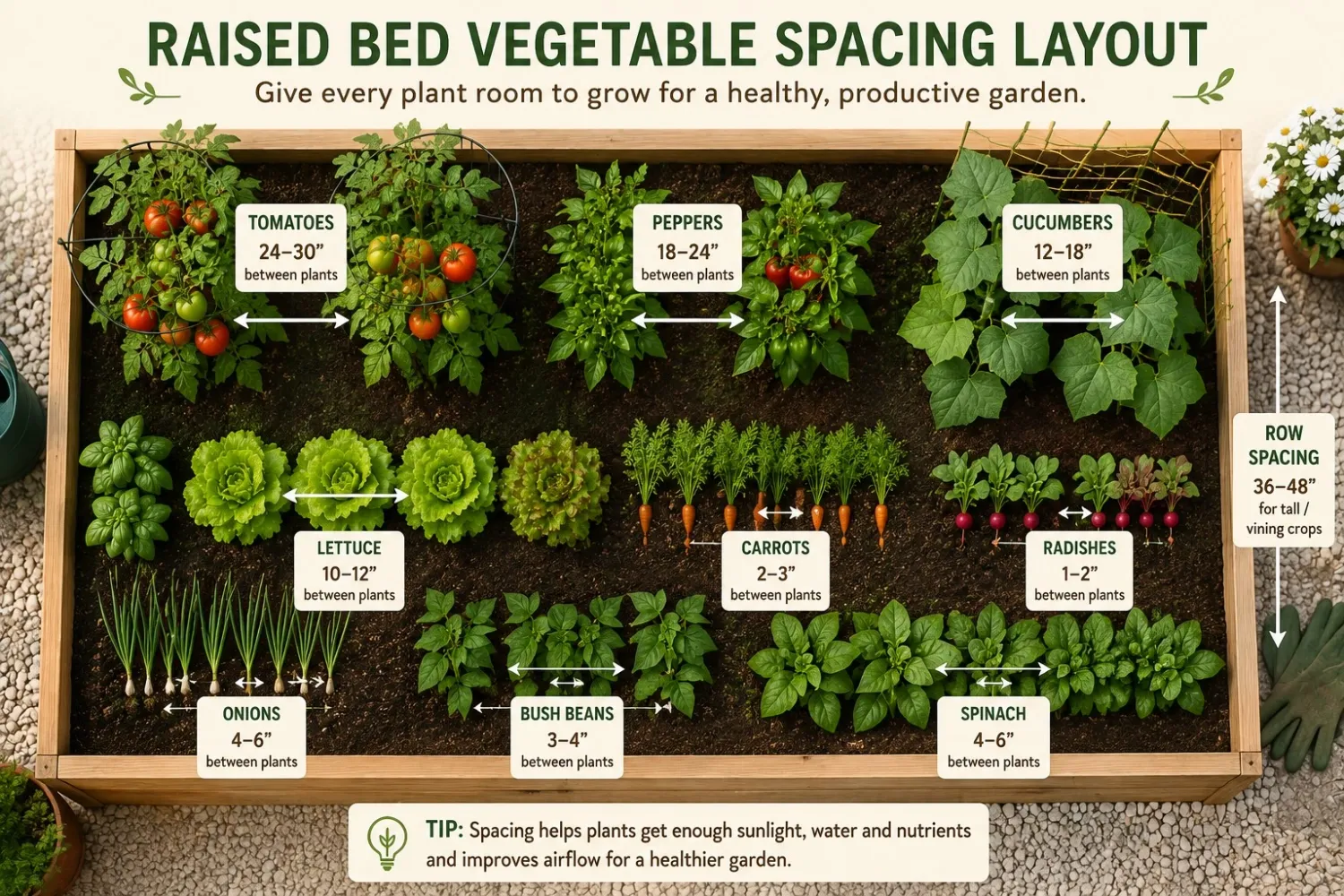
The Tiny Garden Harvest spacing guide, for example, lists 24–30 inches for indeterminate tomatoes, 18–24 inches for peppers, 10–12 inches for lettuce, 2–3 inches for carrots, and 1–2 inches for radishes as general spacing examples.
Step 4: Think About Plant Height
Tall crops can affect sunlight reaching shorter plants.
A good layout can place taller plants toward the back, medium height plants in the middle, and shorter crops toward the front.
This is the approach used in the Tiny Garden Harvest sunlight smart raised bed layout.
Don't Forget the Space Around Your Raised Bed
One common beginner mistake is measuring the bed but forgetting the space needed around it.
Your garden needs room for you not just your vegetables.
Leave enough space to:
Walk around the bed
Water plants
Harvest vegetables
Pull weeds
Carry soil or compost
Use gardening tools
Inspect plants
The Tiny Garden Harvest location checklist specifically identifies working space and accessibility as important considerations when choosing a garden location.
Once you've chosen the footprint, use a raised bed garden layout to organize your vegetables by plant height, spacing, and available growing space.
Is a 4×8 Raised Bed Too Big for Beginners?
Not necessarily.
A 4×8 bed can provide plenty of room for a productive vegetable garden, but its suitability depends on your available space and whether you can comfortably reach and maintain it.
The Tiny Garden Harvest 4×8 layout demonstrates how this footprint can be organized into several planting zones rather than treating the entire bed as one large planting area.
If you're new to gardening and the size feels overwhelming, you don't have to fill every section immediately.
You can start with a smaller selection of vegetables and expand your planting plan over time.
How Deep Should a Raised Garden Bed Be?
Bed height is different from bed length and width.
The ideal height depends on factors such as:
What you want to grow
The existing ground conditions
How much soil you need
Whether you want easier access to the garden
The available Tiny Garden Harvest materials emphasize choosing level, stable ground for a raised bed and ensuring adequate working space around it.
Because the provided Tiny Garden Harvest source material does not establish one universal raised bed height, it's better to choose a height based on your crop requirements, site conditions, and accessibility rather than treating one measurement as mandatory.
How Raised Bed Size Affects Plant Spacing
A larger bed gives you more room, but that doesn't mean you should simply add more plants.
Each vegetable still needs enough space to grow.
For example, the Tiny Garden Harvest spacing guide gives these general examples:
Tomatoes: 24–30 inches
Peppers: 18–24 inches
Lettuce: 10–12 inches
Carrots: 2–3 inches
Radishes: 1–2 inches
Cucumbers: 12–18 inches
Bush beans: 3–4 inches
Spinach: 4–6 inches
Onions: 4–6 inches
Always check the seed packet or plant label for the specific variety you're growing.
Before filling your raised bed, use our vegetable plant spacing guide to check how much room different crops need.
Should You Build One Large Raised Bed or Several Small Beds?
This depends on your garden space and how you prefer to work.
One Large Bed
A single larger bed can create a unified planting area.
It can also make it easier to organize crops into zones.
The 4×8-foot Tiny Garden Harvest layout is an example of using one larger rectangular footprint and dividing it into planting zones.
Several Smaller Beds
Several smaller beds can give you more flexibility.
You might use separate beds for:
Leafy greens
Root vegetables
Fruiting vegetables
Herbs
Seasonal crops
Smaller beds can also make pathways and access easier to customize.
Raised Bed Size for Small-Space Vegetable Gardening
If you have a tiny backyard, don't assume you need a large raised bed.
Instead, measure the space you have and choose a bed that leaves enough room to move around it.
A smaller bed can still grow useful crops when you make thoughtful use of:
Plant spacing
Vertical growing
Crop selection
Plant height
Succession planting
Companion planting
For more ideas on making limited growing space work harder, explore our small-space vegetable gardening guide.
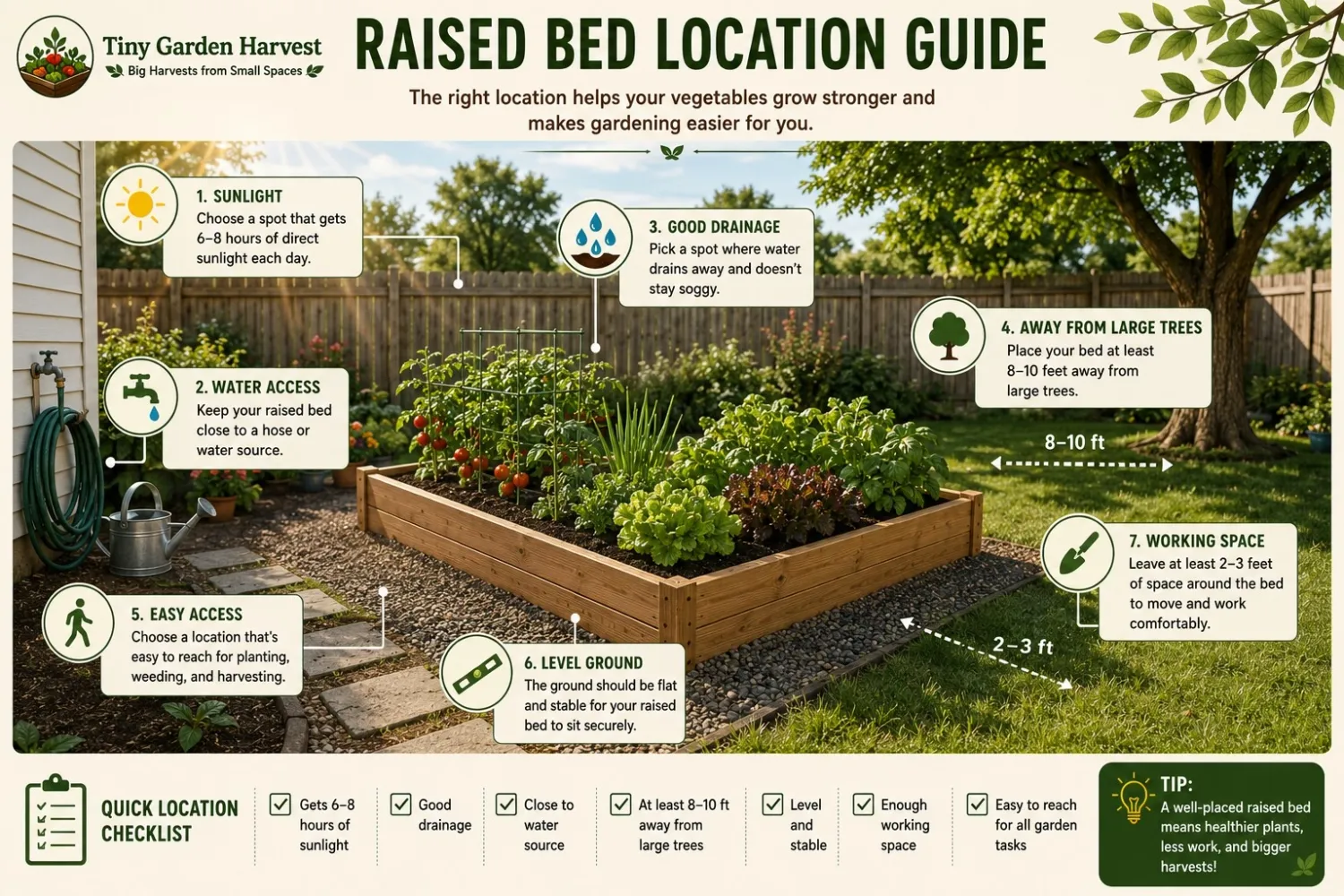
How to Position a Raised Bed in Your Garden
Choosing the correct dimensions is only part of the planning process.
You also need to consider where the bed will go.
The Tiny Garden Harvest location resources identify several factors to check:
Sunlight
Drainage
Water access
Distance from large trees
Accessibility
Level ground
Working space
A good sized bed in a poor location may be more difficult to manage than a smaller bed in a well-planned location.
Check Sunlight
The Tiny Garden Harvest location guidance recommends about 6–8 hours of direct sunlight each day for the garden location.
Check Drainage
Choose an area where water can drain away rather than remaining soggy.
Check Water Access
Keeping the garden reasonably close to a hose or water source can make regular watering easier.
Consider Nearby Trees
The Tiny Garden Harvest location materials recommend keeping raised beds 8–10 feet away from large trees to reduce shade and root competition.
Common Raised Bed Size Mistakes Beginners Make
Making the Bed Too Wide
A bed that is difficult to reach can make maintenance frustrating.
Using All Available Space for the Bed
Don't forget pathways and working space.
Choosing the Size Before Choosing the Location
Measure the garden area first.
Planting Too Many Vegetables
More growing space doesn't mean every available inch should be filled.
Follow appropriate spacing for each crop.
Ignoring Plant Height
Tall crops can affect shorter crops by changing the amount of sunlight they receive.
Forgetting Future Access
Think about how you will reach the bed when plants are mature, not only when the bed is empty.
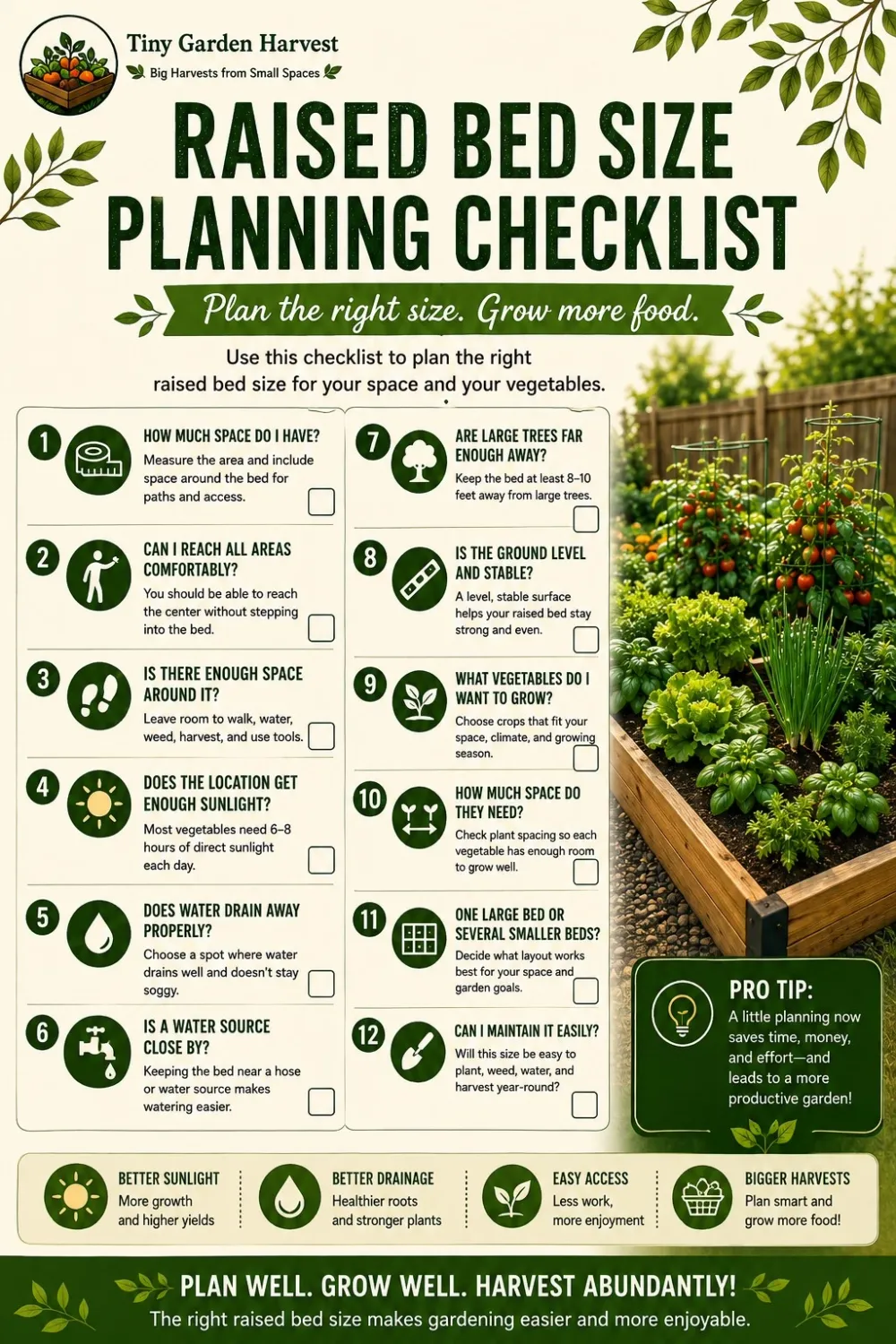
A Simple Raised Bed Size Planning Checklist
Before building or buying your raised bed, ask:
How much outdoor space do I have?
Can I comfortably reach all areas of the bed?
Is there enough walking space around it?
Does the location receive adequate sunlight?
Does water drain away properly?
Is a water source reasonably accessible?
Is the ground level and stable?
Are large trees far enough away?
What vegetables do I want to grow?
How much space will those vegetables need?
Do I want one large bed or several smaller beds?
Can I maintain the bed once the plants become full-sized?
This checklist combines the dimensions and access considerations with the location factors already emphasized in the Tiny Garden Harvest planning resources.
Frequently Asked Questions About Raised Bed Sizes
What is the best raised bed size for beginners?
There is no single best size for every beginner. Choose a size that fits your available space and allows you to comfortably reach, water, weed, and harvest the plants.
A 4×8-foot bed is one practical layout to consider when you have enough space for the bed and surrounding access. Tiny Garden Harvest has a dedicated 4×8 layout showing how this footprint can be divided into planting zones.
Is a 4×8 raised bed too big?
Not necessarily. It can work well when you have enough room and can comfortably access the entire bed. The key is planning the surrounding working space as well as the bed itself.
How wide should a raised garden bed be?
Choose a width that allows you to comfortably reach the plants for planting, watering, weeding and harvesting. Accessibility should be considered before choosing the final dimensions.
What is a good raised bed size for a small backyard?
A smaller footprint such as 2×4 feet or 3×6 feet can be easier to fit into a compact garden. The best choice depends on your available space and the crops you want to grow.
How much space should I leave around a raised bed?
Leave enough working space to comfortably walk, water, weed, harvest and maintain the garden. Tiny Garden Harvest's location resources specifically identify working space and accessibility as important planning factors.
Can I grow different vegetables in the same raised bed?
Yes. A raised bed can be divided into planting zones based on crop height, spacing and growing habits. The Tiny Garden Harvest 4×8 layout demonstrates this approach with tomatoes, basil, peppers, carrots, onions, lettuce, radishes and vertical crops.
Final Thoughts: Choose the Size You Can Actually Maintain
The best raised bed isn't simply the biggest bed you can fit into your yard.
It's the one that gives your vegetables enough room while still leaving comfortable access for you.
Start by measuring your available space. Then consider the vegetables you want to grow, their spacing requirements, plant height, sunlight, pathways and the amount of maintenance you're prepared to handle.
If you have plenty of room, a 4×8-foot raised bed can provide a versatile footprint for organizing several types of vegetables into clear planting zones.
If your garden is smaller, don't feel pressured to build a large bed. A compact raised bed can still become a useful vegetable garden when you plan the space carefully.
Choose the bed size that fits both your garden and the gardener standing beside it.
Once you've chosen your bed size, see our 15 vegetable to grow for a beginner on a raised bed garden guide for good harvest and for soil improvement.
Ready to Plan Your Vegetable Garden?
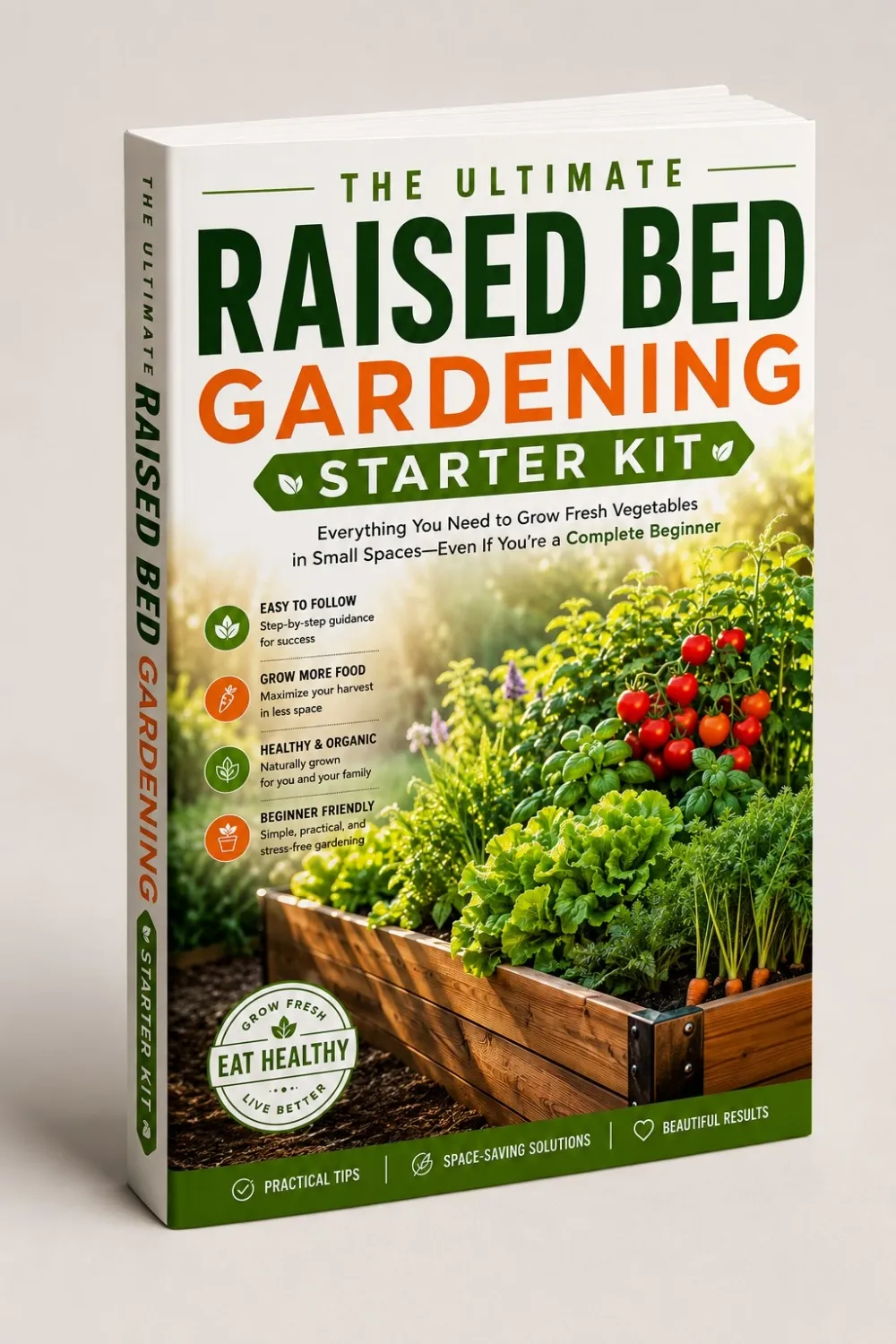
If you're starting your first raised bed, get The Ultimate Raised Bed Gardening Starter Kit for beginner-friendly help with planning your garden, choosing vegetables and preparing your growing space.
Written by:
Wren Hartley
SHARE



About me
Hi there 👋 I’m Wren Hartley, the creator of Tiny Garden Harvest. I love helping beginners grow fresh food and enjoy bigger harvests from small spaces. 🌱

Trending
learn the basics of location, soil, vegetables, spacing, watering, and care.
Grow more food in less space with raised beds, vertical gardening, and smart crop choices.
Learn an easy raised bed soil mix using topsoil, compost, and aeration material.
Free E-book
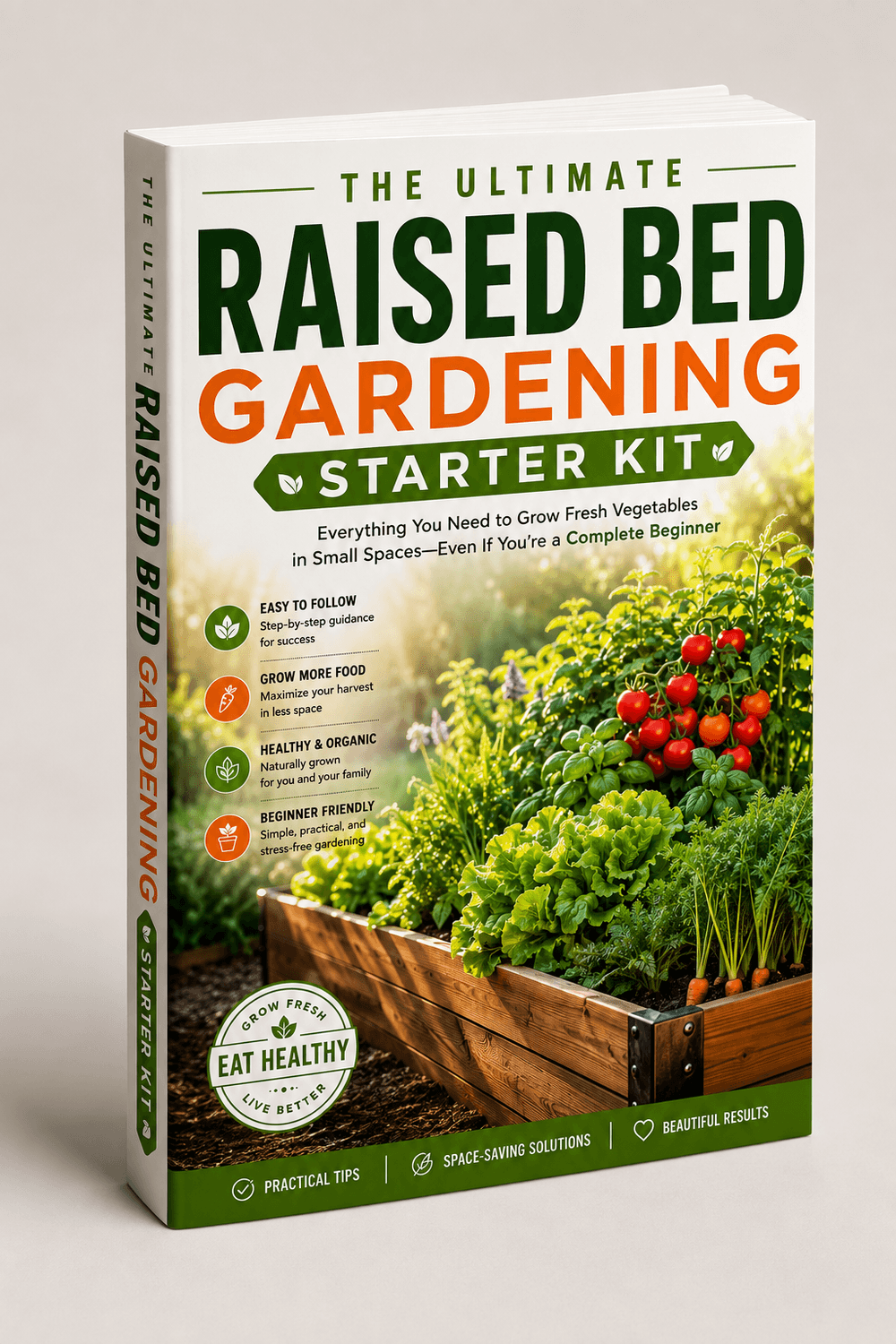
Grab your free Ultimate Raised Bed Gardening Starter kit -Ever if you've not garden before.
NEW FREE E-BOOK: Grow Fresh Vegetables in Small Spaces Even If You've Never Gardened Before