
How Much Sun Does a Vegetable Garden Need? A Beginner's Guide
If you're planning a vegetable garden, one of the first questions to answer is: how much sun does a vegetable garden need?
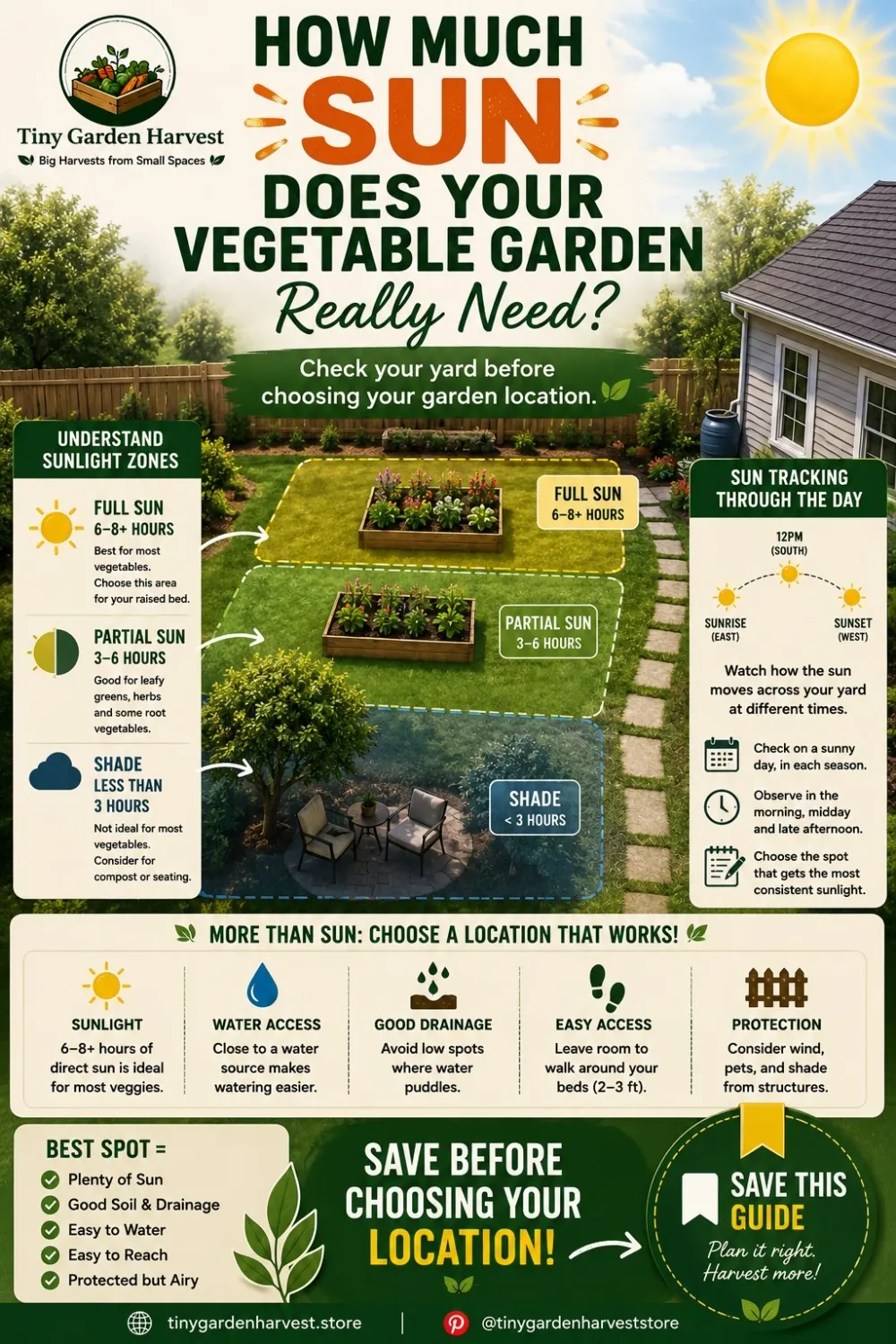
As a simple starting point, plan for about 6–8 hours of direct sunlight each day when choosing a location for a vegetable garden or raised bed.
Your Tiny Garden Harvest location guide specifically recommends this range and advises avoiding areas blocked by trees, buildings, or walls.
But not every vegetable needs exactly the same amount of sunlight.
Some crops perform best in a bright, sunny location, while certain leafy vegetables can be more flexible when your garden receives less direct light.
The important thing is to understand the sunlight available in your particular space and choose crops accordingly.
In this beginner-friendly guide, you'll learn how to measure sunlight, where to place a vegetable garden, how shade changes throughout the day, and how to choose vegetables for your available light.
How Many Hours of Sun Does a Vegetable Garden Need?
For most vegetable gardens, 6–8 hours of direct sunlight per day is a useful target when choosing your garden location.
This is particularly important if you want to grow a wide variety of vegetables.
A sunny location gives you more flexibility when deciding which crops to grow.
However, your garden doesn't necessarily have to receive exactly eight hours of sunlight to grow vegetables.
The amount of sunlight available can vary depending on:
The vegetables you're growing
The season
Your garden's location
Nearby trees
Buildings and fences
The position of your raised bed
The direction sunlight moves across your yard
The key is to observe your actual garden space before planting rather than assuming that a spot is sunny enough.
If you're just getting started, our raised bed gardening for beginners guide can help you choose the right location, bed size, soil and vegetables for your garden.
Full Sun, Partial Shade, and Shade: What Do They Mean?
Gardeners often describe growing locations using terms such as full sun, partial shade and shade.
For beginners, these terms can be confusing.
Full Sun
A full-sun location receives a substantial amount of direct sunlight during the day.
For a vegetable garden, this is generally the type of location to look for when you want to grow a broad range of sun-loving vegetables.
A good starting target for your garden location is 6–8 hours of direct sunlight each day.
Partial Shade
A partially shaded garden receives less direct sunlight because part of the day may be affected by shade.
This can happen when a garden is near:
A fence
A house
A wall
A tree
A taller garden structure
Partial shade doesn't automatically mean you can't grow vegetables.
Instead, you may need to be more selective about what you plant.
Deep or Heavy Shade
A location that receives very little direct sunlight is much more challenging for a vegetable garden.
Before placing a raised bed in a shady corner simply because the space is available, observe how much direct sunlight it actually receives.
Why Does Sunlight Matter for Vegetable Gardens?
Sunlight is one of the basic environmental factors plants need to grow.
When planning a vegetable garden, sunlight should be considered alongside soil, water, spacing and drainage.
The Tiny Garden Harvest raised-bed location material places sunlight first in its location checklist, recommending about 6–8 hours of direct sun daily and advising gardeners to avoid locations blocked by trees, buildings or walls.
Choosing the right location before building or planting your garden can save you from having to move it later.
How to Check How Much Sun Your Garden Gets
You don't need complicated equipment to begin assessing sunlight.
The simplest approach is to observe your garden throughout the day.
Step 1: Choose the Area You're Considering
Mark the area where you are thinking about placing your vegetable garden or raised bed.
Don't assess only the soil surface.
Look around the entire area.
Are there trees nearby?
Is there a tall fence?
Does a house or wall block sunlight?
These structures can change the amount of direct sunlight reaching your plants.
Step 2: Observe the Area in the Morning
Check the garden area earlier in the day.
Record whether direct sunlight is reaching the space.
A location that looks sunny in the afternoon may have been shaded during the morning.
Step 3: Check Again Around Midday
Observe the same area around midday.
This helps you understand whether the sun is reaching the garden consistently or whether nearby structures are creating shade.
Step 4: Check Again in the Afternoon
Continue observing the area later in the day.
This is important because the direction and position of sunlight change as the day progresses.
A spot that receives morning sun could become shaded later.
Step 5: Look at Seasonal Changes
Your garden's sunlight pattern can change throughout the year.
Trees may have different levels of foliage.
The angle of the sun changes.
Shadows from buildings and fences can become longer or shorter.
For this reason, don't judge a garden location from one observation alone.
The Tiny Garden Harvest location guidance specifically recommends observing your space at different times of the day when evaluating a garden location.
Where Is the Best Place to Put a Vegetable Garden?
A good vegetable garden location should provide enough sunlight while also being practical to maintain.
When choosing a spot, consider:
Sunlight
Drainage
Water access
Nearby trees
Accessibility
Ground level
Working space
These are the seven factors included in the Tiny Garden Harvest raised garden bed location checklist.
Sunlight is important, but it isn't the only consideration.
A garden in full sun that is difficult to water or access may become frustrating to maintain.
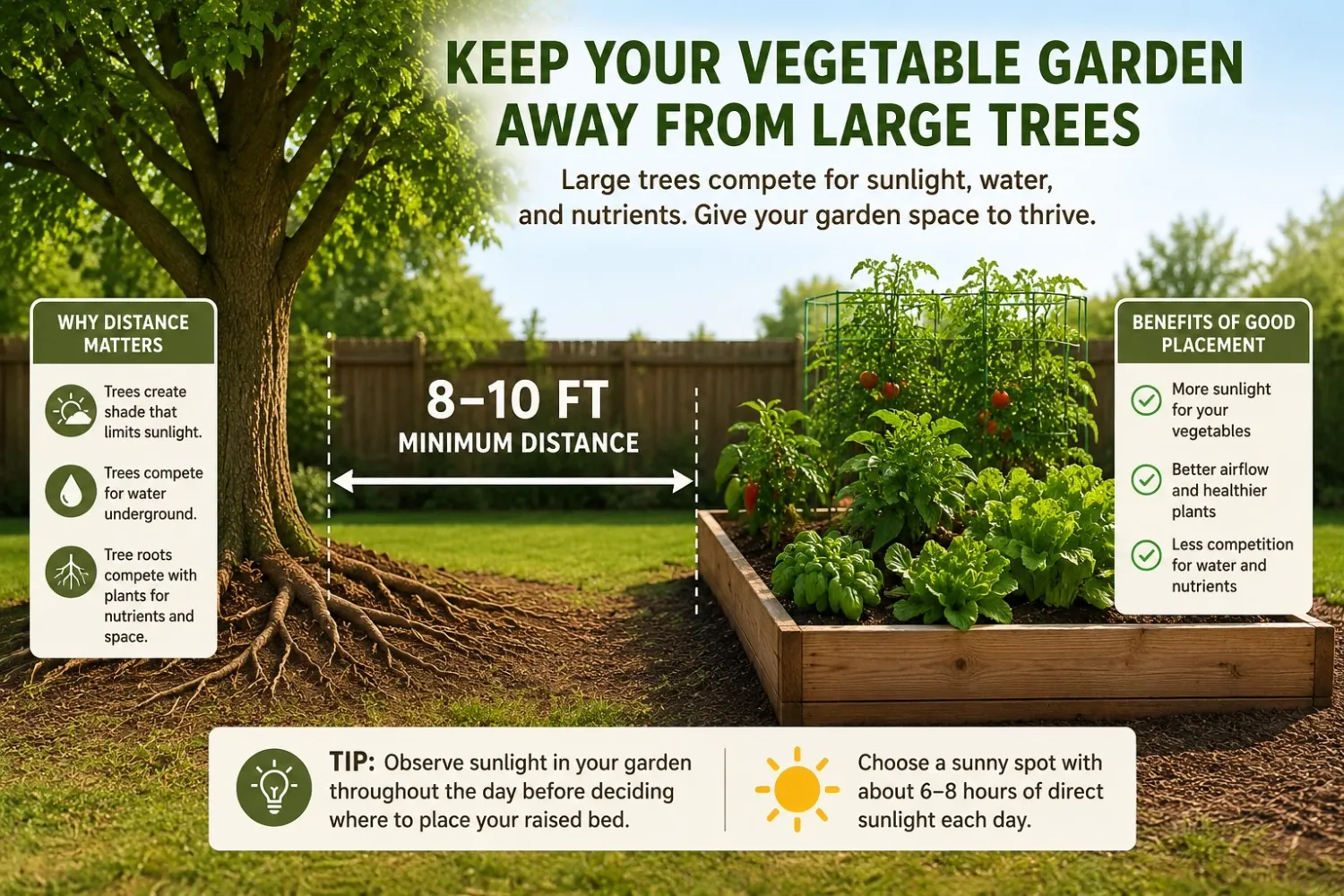
Keep Your Vegetable Garden Away From Large Trees
Large trees can create significant shade.
Their roots can also occupy surrounding soil.
The Tiny Garden Harvest location guide recommends keeping a raised bed at least 8–10 feet away from large trees to reduce shade and root competition.
This doesn't mean every tree must be removed or that every garden must follow exactly the same distance.
Instead, use the recommendation as a practical starting point when selecting a raised-bed location.
Why Nearby Trees Can Be a Problem
A large tree can:
Cast shade over your garden
Change throughout the day as the sun moves
Compete for water and nutrients
Make it harder to maintain consistent growing conditions
If possible, choose an open location where the garden receives direct sunlight without being heavily shaded by mature trees.
Which Vegetables Need the Most Sun?
When you're planning a vegetable garden, it's useful to separate crops by their general sunlight preferences.
Rather than trying to memorize a long list, start by thinking about the type of crop you're growing.
Fruiting Vegetables
Vegetables grown for their fruits generally benefit from a sunny growing location.
Examples include:
Tomatoes
Peppers
Cucumbers
Squash
Zucchini
If these are among your main crops, prioritize the sunniest part of your garden.
Leafy Vegetables
Leafy vegetables can be more flexible when planning a garden with varying light conditions.
Examples include:
Lettuce
Spinach
Kale
Swiss chard
If part of your garden receives less direct sun than another area, consider placing suitable leafy crops in that location rather than using your shadiest space for a crop that needs stronger sunlight.
Important: Always check the growing recommendations for the specific variety you're planting.
What Vegetables Can Grow With Less Sun?
A garden with less direct sunlight doesn't necessarily have to remain empty.
Instead, consider crops that are more suitable for the amount of light your space receives.
For example, leafy crops such as lettuce and spinach can be useful choices when you're working with a garden area that doesn't receive the same amount of direct sunlight as your sunniest location.
However, less sun may affect how well some crops grow.
That's why it's important to match the crop with the conditions available rather than expecting every vegetable to perform equally in every location.
How Sunlight Affects a Raised Bed Garden
Raised beds are often used in small gardens because they provide a defined growing area.
But building a raised bed doesn't automatically solve a sunlight problem.
A raised bed placed in deep shade will still receive deep shade.
That's why location should come before construction.
Before filling your raised bed with soil, observe where sunlight falls throughout the day.
How to Position Tall and Short Plants for Better Sunlight
Plant height can influence how sunlight reaches the rest of your garden.
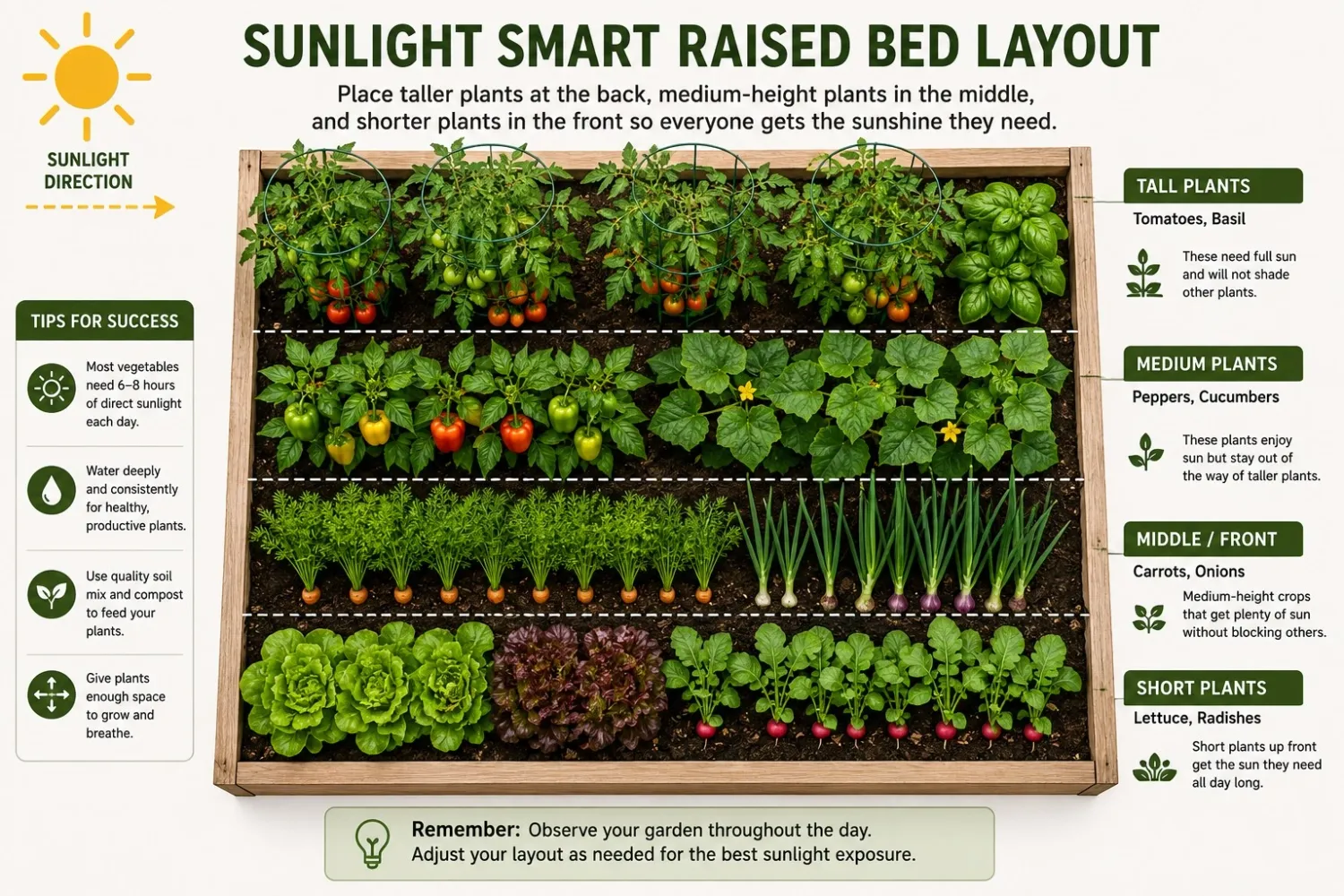
A simple layout principle is:
Tall plants → back
Medium plants → middle
Short plants → front
For example, you might place:
Back: Tomatoes
Middle: Peppers
Middle/front: Carrots and onions
Front: Lettuce and radishes
Vertical zone: Cucumbers or beans on suitable support
This arrangement is illustrated in the Tiny Garden Harvest 4×8 raised bed layout, which organizes the garden into tall, medium, middle/front and vertical zones.
This isn't a universal rule for every garden.
The exact arrangement should depend on your garden's orientation, sunlight pattern and the mature size of the crops you're growing.
What About Morning Sun vs. Afternoon Sun?
When observing your garden, you may notice that one area receives sunlight earlier while another becomes sunny later.
Don't focus only on whether a location is sunny at one particular time.
Instead, consider the total amount of direct sunlight the area receives throughout the day.
A garden that receives morning sunlight but becomes heavily shaded for the rest of the day may have a very different growing environment from a garden that receives strong sunlight for much of the day.
This is why observing your space at multiple times is so useful.
How Buildings, Fences, and Walls Affect Garden Sunlight
Your garden doesn't have to be underneath a tree to experience shade.
Buildings, fences and walls can also block direct sunlight.
Before choosing a location, look at what surrounds the garden.
Ask yourself:
Is a tall fence blocking morning sunlight?
Does the house shade the garden later in the day?
Is a wall casting a long shadow?
Will nearby structures create seasonal shade?
Is the garden surrounded by taller plants?
The Tiny Garden Harvest location checklist specifically advises avoiding areas blocked by trees, buildings or walls when selecting a sunny garden location.
How to Choose the Best Spot for a Small Vegetable Garden
If you're working with a small backyard, you may not have several perfect locations to choose from.
That's okay.
Start with the best available space and evaluate it carefully.
Prioritize Sunlight
Look for the area that receives the most useful direct sunlight.
Check Drainage
The garden should not sit in an area where water remains after rain. The Tiny Garden Harvest location checklist recommends choosing a location where water drains away rather than remaining soggy.
Make Watering Easy
A garden located close to a hose or outdoor tap can be easier to maintain.
Make Sure You Can Reach It
You should be able to comfortably check, water, weed and harvest your garden.
If you're working with a small backyard or limited growing area, our small-space vegetable gardening guide has practical ideas for making better use of the space you already have.
Can a Vegetable Garden Get Too Much Sun?
For beginners, the bigger concern is often finding enough sunlight rather than having too much.
However, a very sunny garden can also become challenging depending on your local growing conditions, temperature, water availability and the crops you're growing.
This is another reason not to treat sunlight as the only factor.
Your garden also needs:
Appropriate watering
Healthy soil
Good drainage
Suitable spacing
Adequate airflow
Crops appropriate for your growing conditions
The Tiny Garden Harvest gardening framework treats sunlight as one part of a larger garden-planning process alongside soil, watering, spacing and maintenance.
Common Sunlight Mistakes Beginners Make
Mistake 1: Choosing a Location Based on Appearance
A spot may look bright when you first see it but receive much less direct sunlight than expected.
Observe it at different times of day.
Mistake 2: Checking Only One Time of Day
Morning, midday and afternoon sunlight can be very different.
Mistake 3: Ignoring Nearby Trees
A garden can become increasingly shaded as plants and trees grow.
Mistake 4: Putting the Raised Bed in the Most Convenient Spot
Convenience matters, but sunlight should be considered before construction.
Mistake 5: Planting Every Vegetable in the Same Location
Different crops have different growing requirements.
Match your crop choices to the conditions in your garden.
Mistake 6: Forgetting About Plant Height
Tall crops can shade shorter crops.
Plan your garden vertically as well as horizontally.
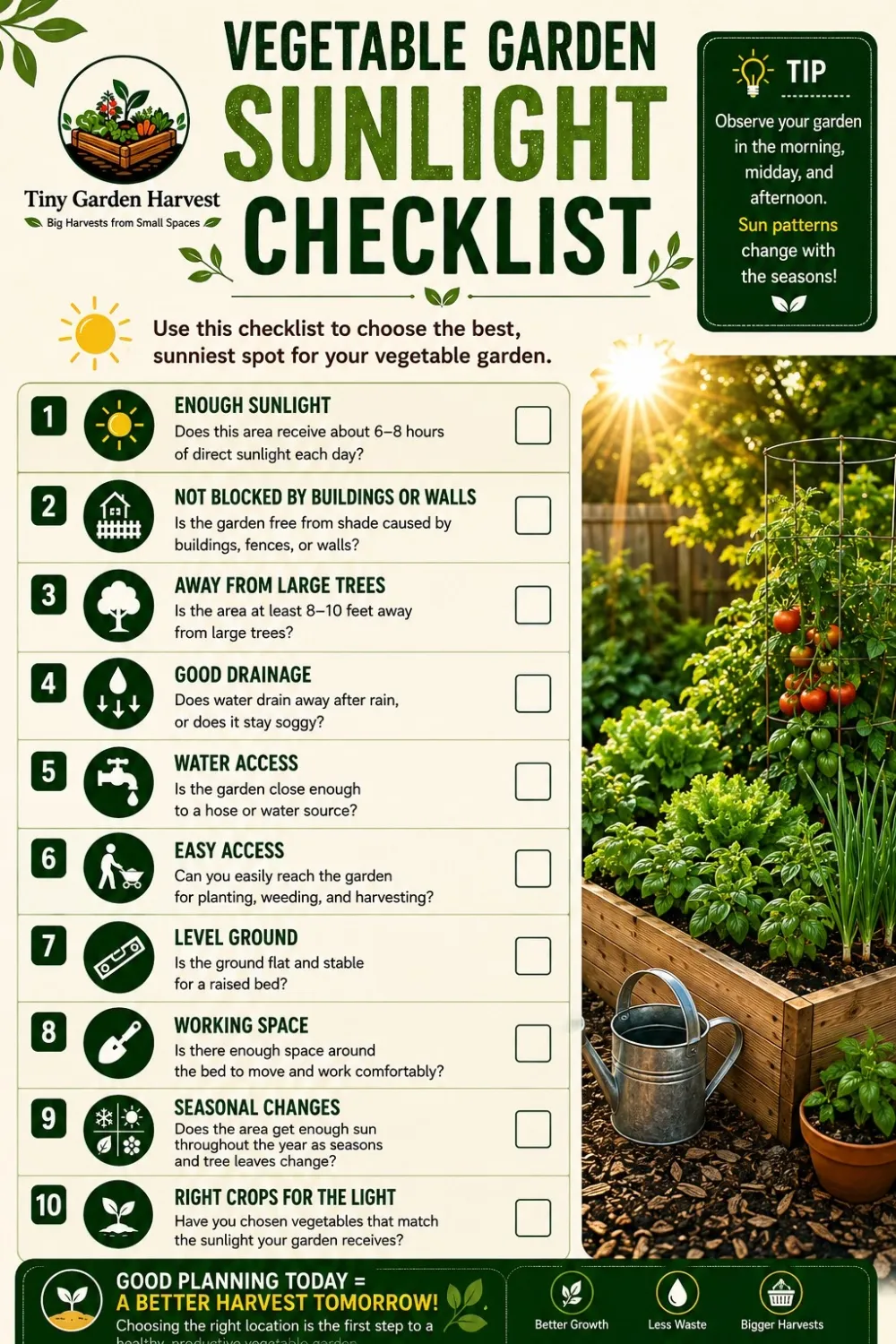
A Simple Sunlight Checklist for Your Vegetable Garden
Before planting, walk around your garden and answer these questions:
Does this area receive about 6–8 hours of direct sunlight?
Is the garden blocked by a building or wall?
Are there large trees nearby?
Does shade change significantly throughout the day?
Does water drain away after rain?
Is the garden close enough to a hose or tap?
Can you easily reach the plants?
Is the ground level and stable?
Is there enough space around the bed to work?
Have you chosen crops that fit the available sunlight?
The Tiny Garden Harvest location checklist uses these same practical considerations when evaluating a raised-bed site.
Frequently Asked Questions About Vegetable Garden Sunlight
How many hours of sun does a vegetable garden need?
A practical starting point is about 6–8 hours of direct sunlight each day.
Can vegetables grow with only 4 hours of sunlight?
Some crops may tolerate lower-light conditions better than others, but four hours is considerably less than the 6–8-hour target used in the Tiny Garden Harvest garden location guidance. Choose crops according to the actual light available and their specific growing requirements.
Do tomatoes need full sun?
Tomatoes are best placed among the crops that receive your strongest available sunlight. When planning a raised bed, place tall tomato plants where they can receive adequate light without unnecessarily shading shorter crops.
Can lettuce grow with less sun?
Lettuce can be a useful choice for a garden area that receives less direct sunlight than your sunniest location, depending on the variety and local conditions.
Should a raised bed be in full sun?
If you want to grow a broad selection of vegetables, a location receiving about 6–8 hours of direct sunlight is a strong starting point.
How do I know if my garden gets enough sunlight?
Observe the garden at different times of day and note when direct sunlight reaches the area. Also check for shade from trees, buildings, walls and fences.
Can a fence shade a vegetable garden?
Yes. A tall fence can block direct sunlight for part of the day. Observe the garden at different times before deciding where to place your plants or raised bed.
Should I put my raised bed under a tree?
It's generally better to avoid placing a raised bed directly under or too close to a large tree. The Tiny Garden Harvest placement guidance recommends keeping raised beds at least 8–10 feet away from large trees to reduce shade and root competition.
Final Thoughts: Start With the Sun
Before you buy seeds, fill a raised bed or transplant your seedlings, take some time to understand the sunlight in your garden.
For most vegetable gardens, about 6–8 hours of direct sunlight per day is a useful target.
Then look beyond the number.
Consider where the shade comes from, how sunlight changes throughout the day, how tall your plants will become, and whether your garden will be easy to water and maintain.
If you're working with a small space, don't worry if your garden isn't perfectly sunny everywhere.
Use the sunniest areas for crops that need more light, choose suitable crops for areas with less direct sun, and organize taller plants so they don't unnecessarily block shorter ones.
A few hours of observation before planting can help you choose a much better location for your garden.
If you're ready to choose a location for your raised bed, see our raised garden bed location guide for a practical checklist covering sunlight, drainage, water access, trees, accessibility and working space.
Ready to Plan Your Vegetable Garden?
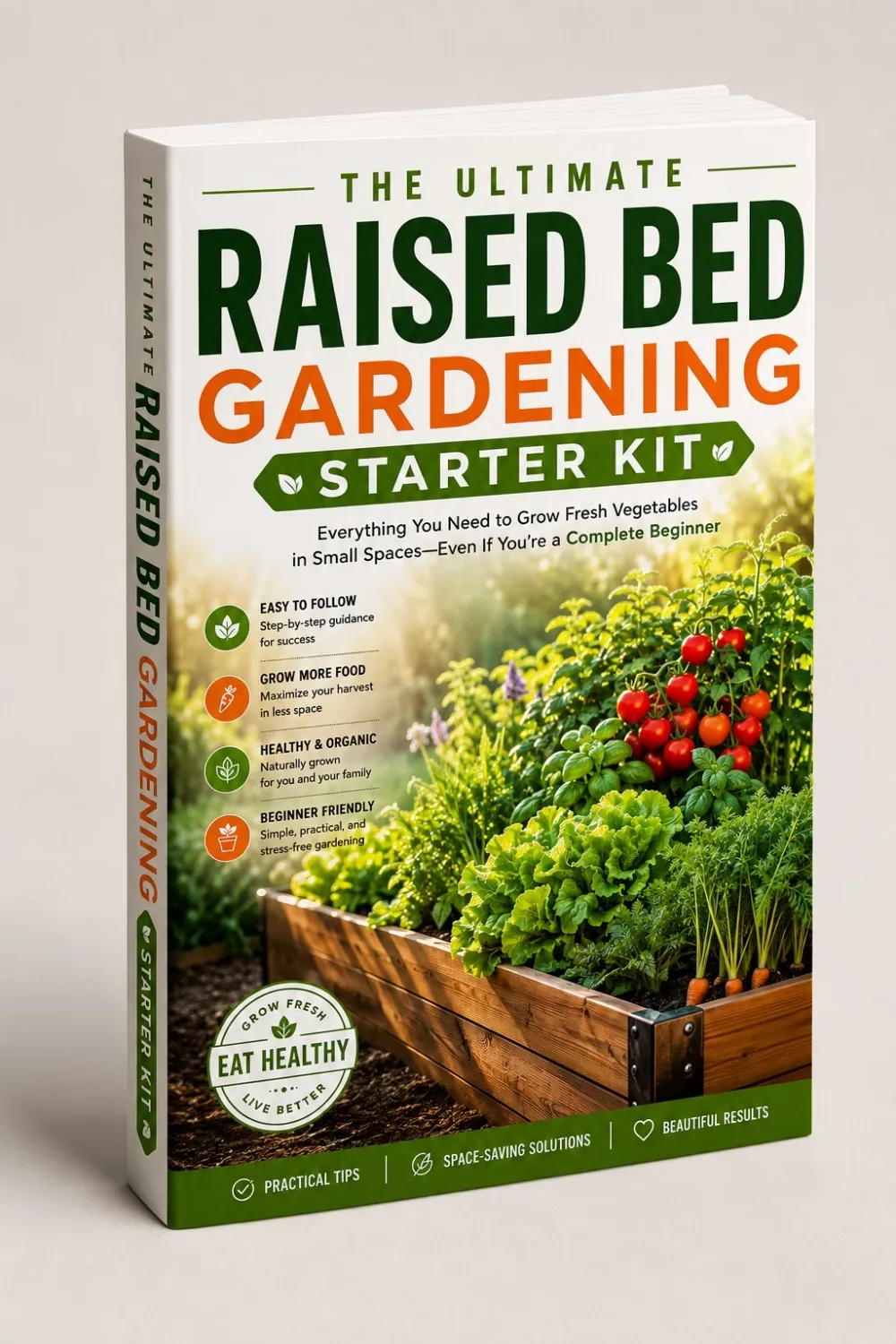
If you're starting your first raised bed, get The Ultimate Raised Bed Gardening Starter Kit for beginner-friendly help with planning your garden, choosing vegetables and preparing your growing space.
Written by:
Wren Hartley
SHARE




About me
Hi there 👋 I’m Wren Hartley, the creator of Tiny Garden Harvest. I love helping beginners grow fresh food and enjoy bigger harvests from small spaces. 🌱

Trending
learn the basics of location, soil, vegetables, spacing, watering, and care.
Grow more food in less space with raised beds, vertical gardening, and smart crop choices.
Learn an easy raised bed soil mix using topsoil, compost, and aeration material.
Free E-book
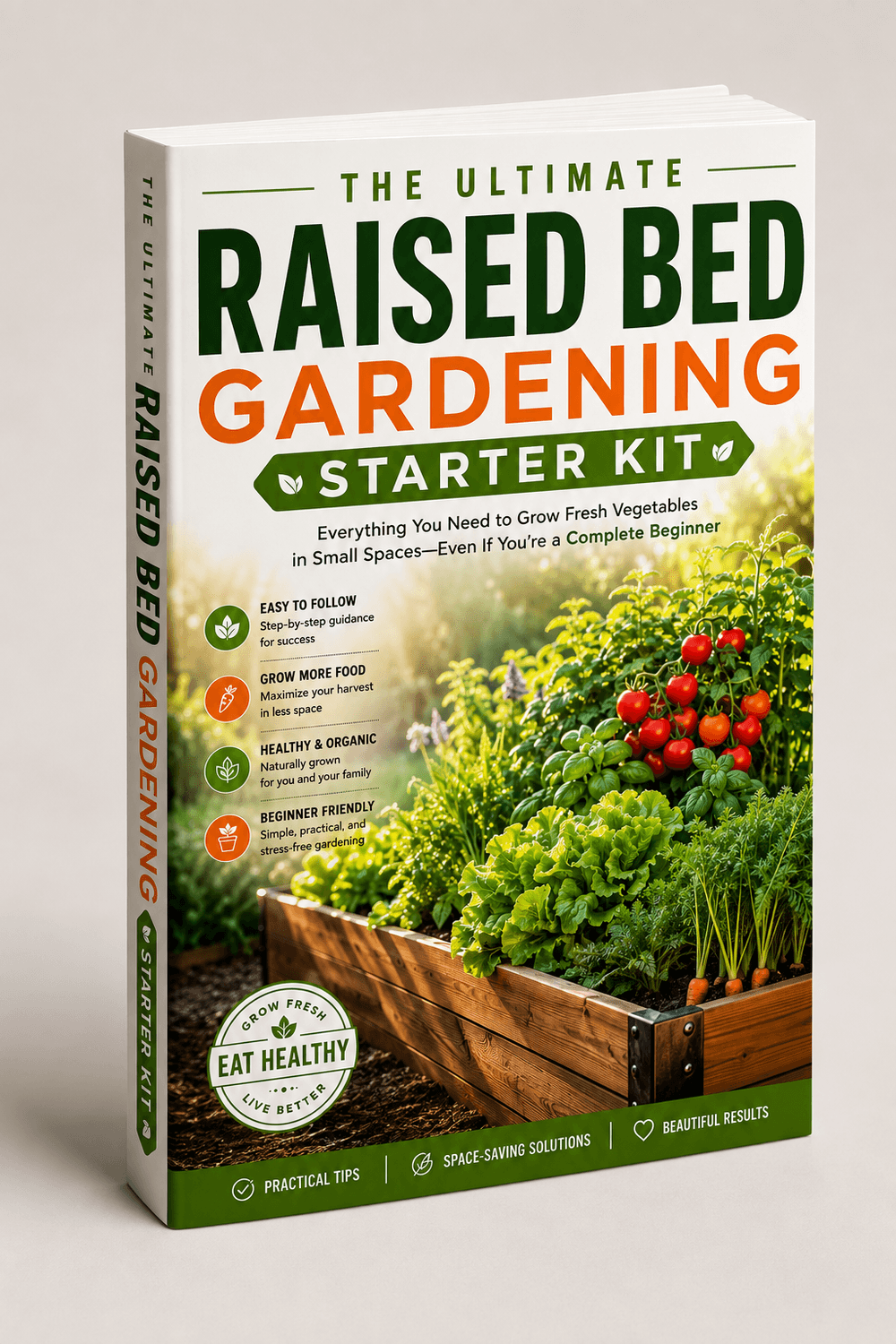
Grab your free Ultimate Raised Bed Gardening Starter kit -Ever if you've not garden before.
NEW FREE E-BOOK: Grow Fresh Vegetables in Small Spaces Even If You've Never Gardened Before