
The Simple Raised Bed Soil Mix Beginners Need
Building a raised bed is exciting.
You choose the location, assemble the bed and start imagining tomatoes, lettuce, peppers and herbs growing inside it.
Then comes an important question:
What should you fill your raised bed with?
Good soil is one of the foundations of a productive vegetable garden.
Your plants depend on it for water, nutrients, air and root support.
Fortunately, preparing raised bed soil doesn't need to be complicated.
For beginners, a useful starting framework is:
40% Topsoil + 40% Compost + 20% Aeration Material
Let's look at what each component does and how to use this simple raised bed soil mix effectively.
Why Raised Bed Soil Matters
A raised bed gives you more control over your growing environment than simply planting into whatever soil happens to be in your yard.
But filling the bed with the wrong material can create problems.
For example, soil that is too dense may drain poorly and restrict root growth.
A mix with too little organic matter may not provide the soil structure and nutrient supply you want for productive vegetables.
At the other extreme, a very light mix may dry out too quickly or settle considerably over time.
The goal is to create a growing medium that provides a useful balance of:
Good drainage
Air around the roots
Moisture retention
Organic matter
Nutrient availability
Enough structure to support plants
You don't need a perfect laboratory formula. You need a practical growing medium that supports healthy roots.
A Simple 40-40-20 Raised Bed Soil Mix
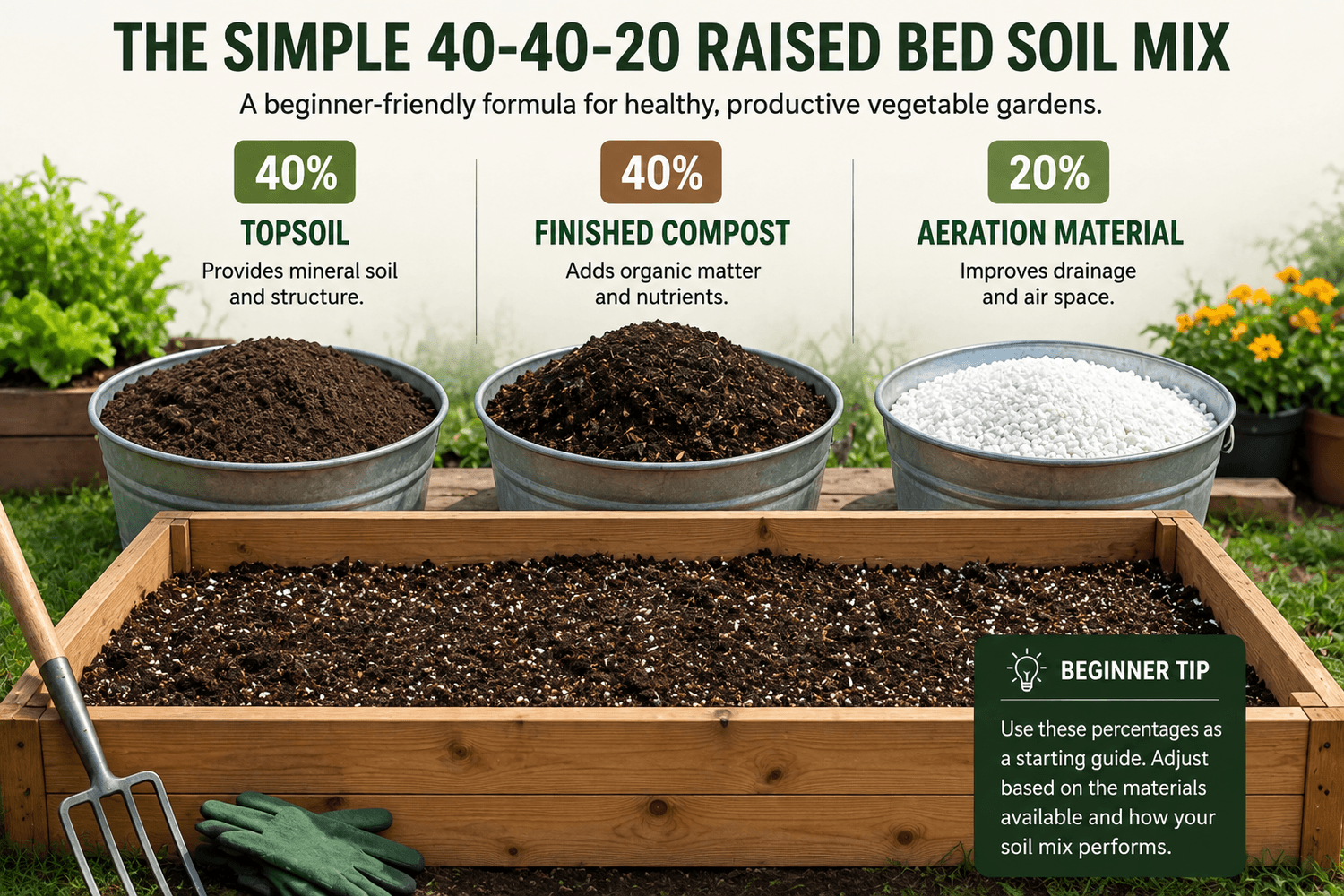
For a beginner vegetable garden, you can start with this straightforward framework:
Think of these percentages as a starting framework rather than an absolute rule.
Available materials differ considerably by location and supplier, so the final texture and performance of your soil matter more than hitting every percentage perfectly.
1. Topsoil — 40%
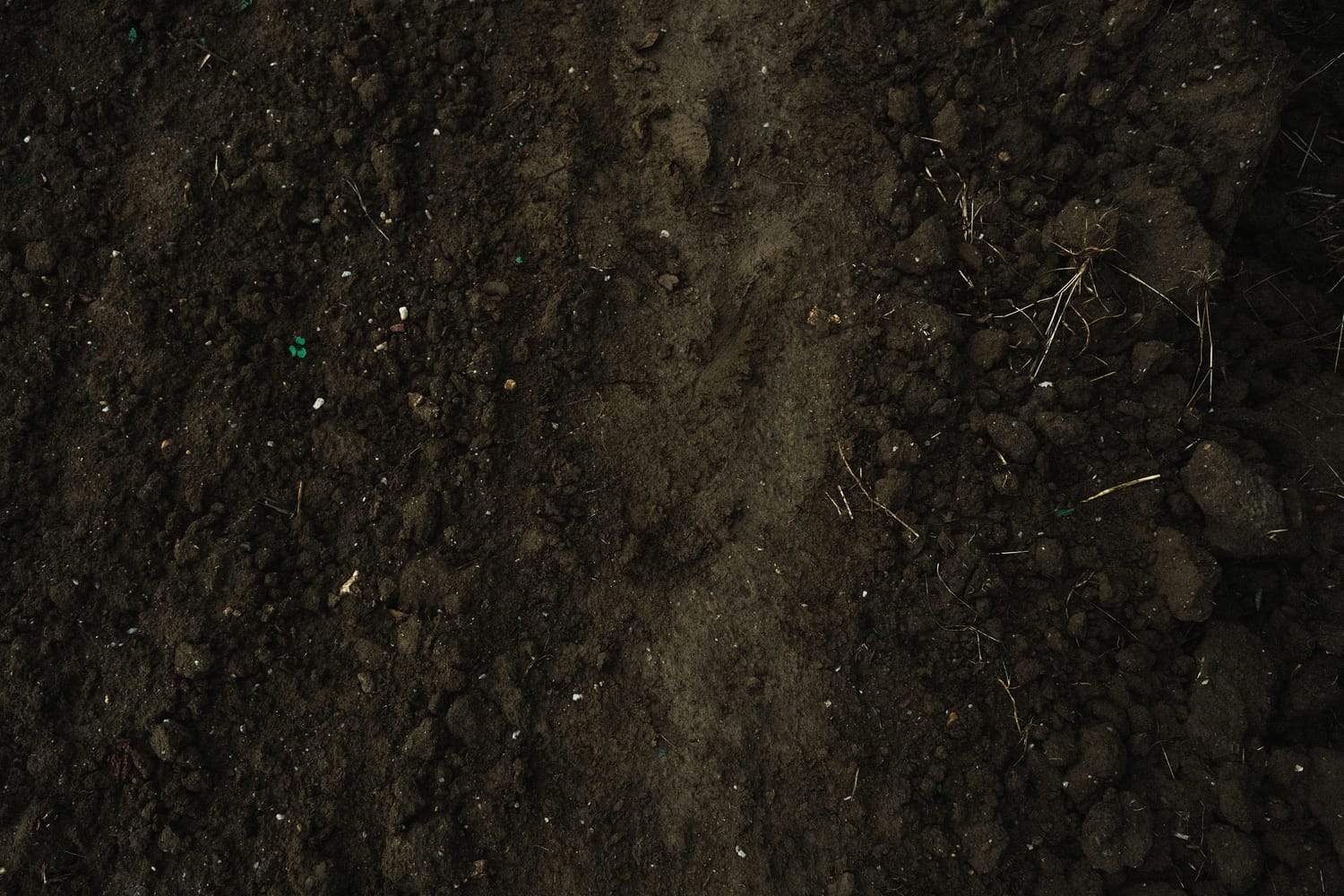
Topsoil forms the structural base of this raised bed soil mix.
Good-quality topsoil contains mineral particles primarily sand, silt and clay in varying proportions.
It gives the growing medium weight and structure and can help hold both moisture and nutrients.
What Should Good Topsoil Look Like?
Look for soil that is:
Relatively loose and workable
Not dominated by hard clay lumps
Free from obvious trash and construction debris
Not excessively sandy
Suitable for garden use
Avoid assuming that every bag labelled “topsoil” is automatically high quality.
Products can vary substantially.
If possible, inspect the material before buying a large quantity.
2. Finished Compost — 40%
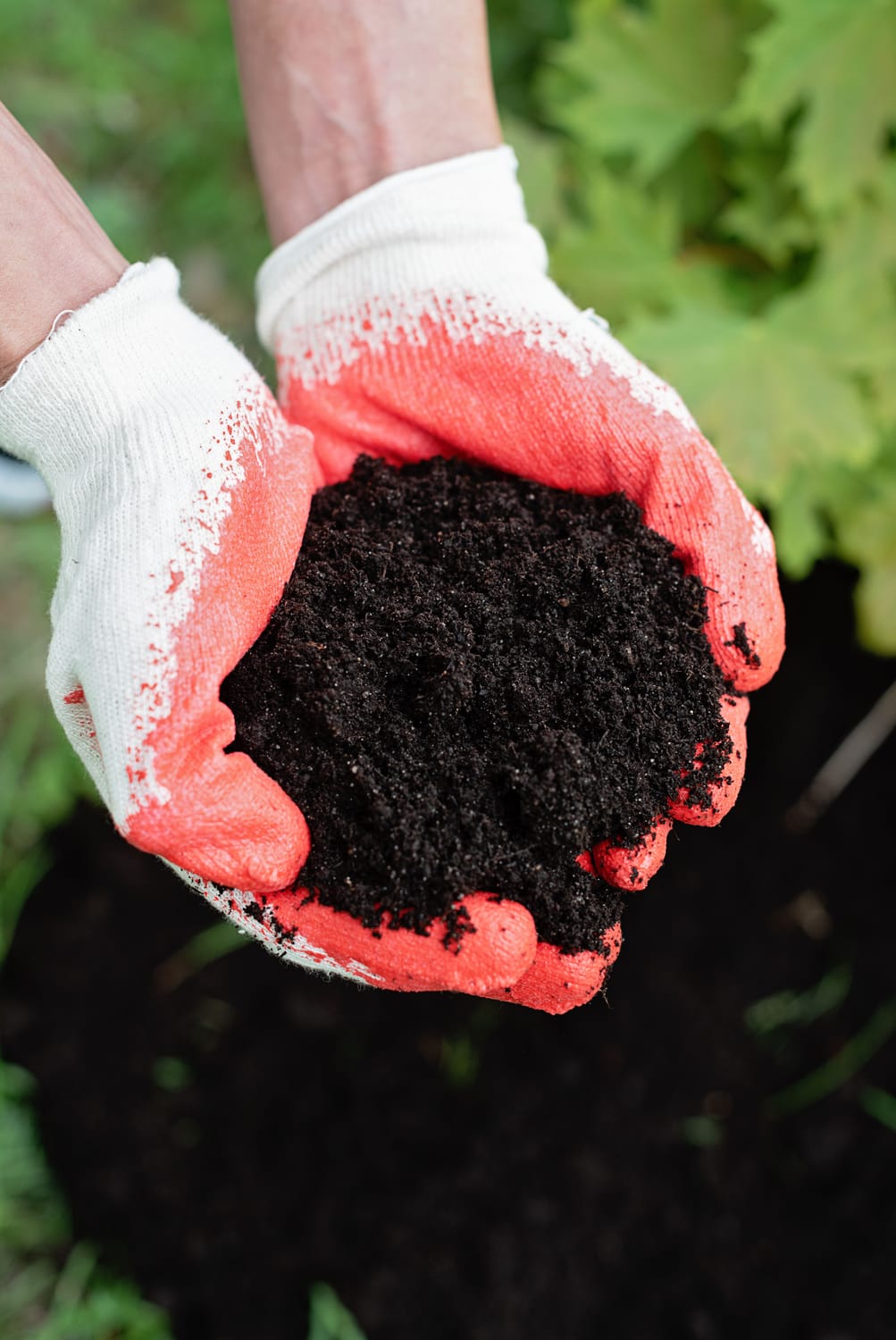
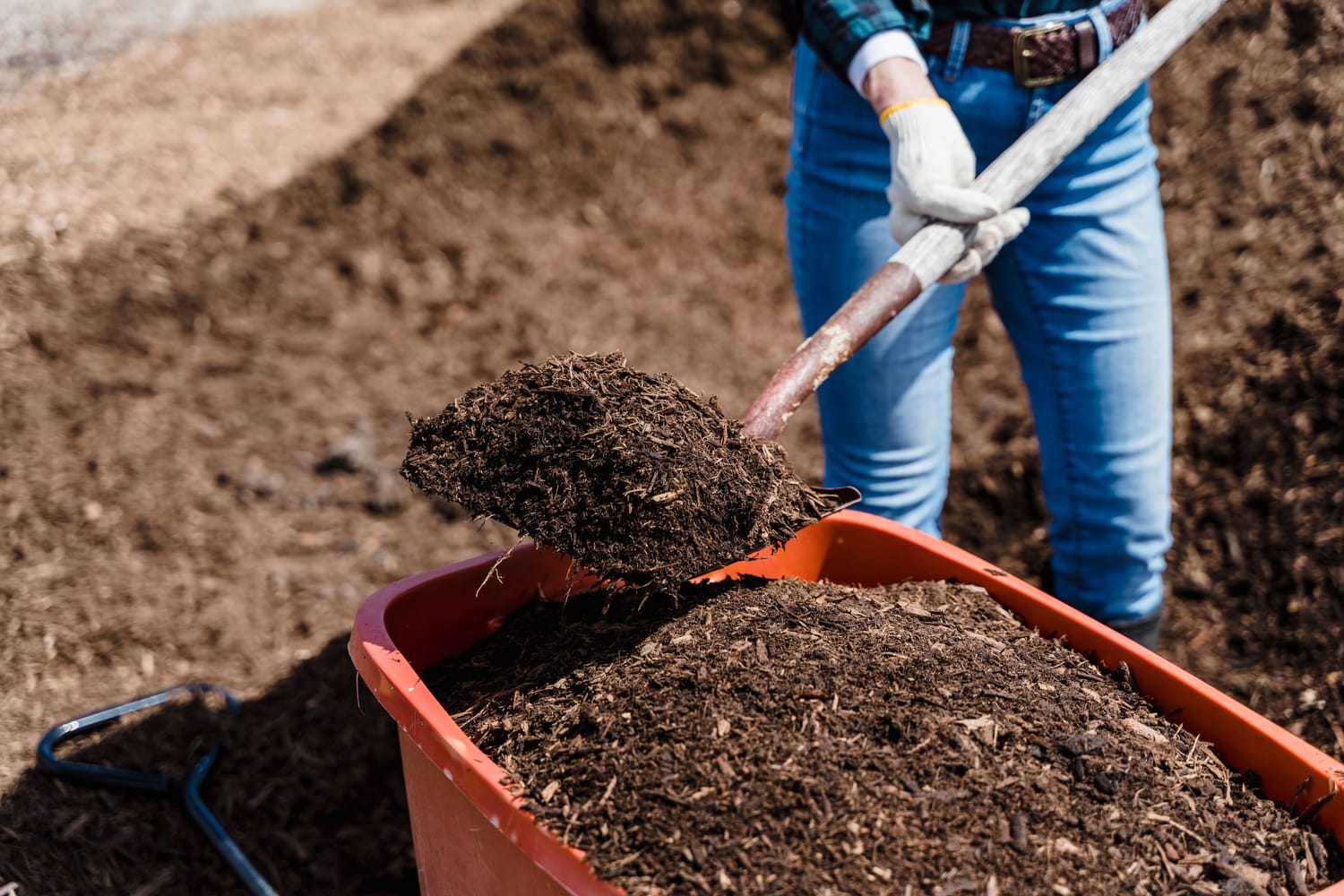
Compost is the organic-matter component of the mix.
Finished compost is created as organic materials decompose into a dark, soil-like material.
Adding compost can improve soil structure while contributing nutrients and supporting biological activity.
What Does Finished Compost Look Like?
Mature compost should generally be:
Dark + crumbly + earthy smelling
You shouldn't be able to easily recognize most of the original materials.
If a compost pile still contains large amounts of undecomposed material or has an unpleasant rotten smell, it may not be ready to use as finished compost.
Can You Use Different Types of Compost?
Depending on what's available locally, gardeners may encounter compost made from different source materials.
Quality matters more than simply seeing the word compost on the package.
Choose well-finished compost from a reliable source.
3. Aeration Material — 20%
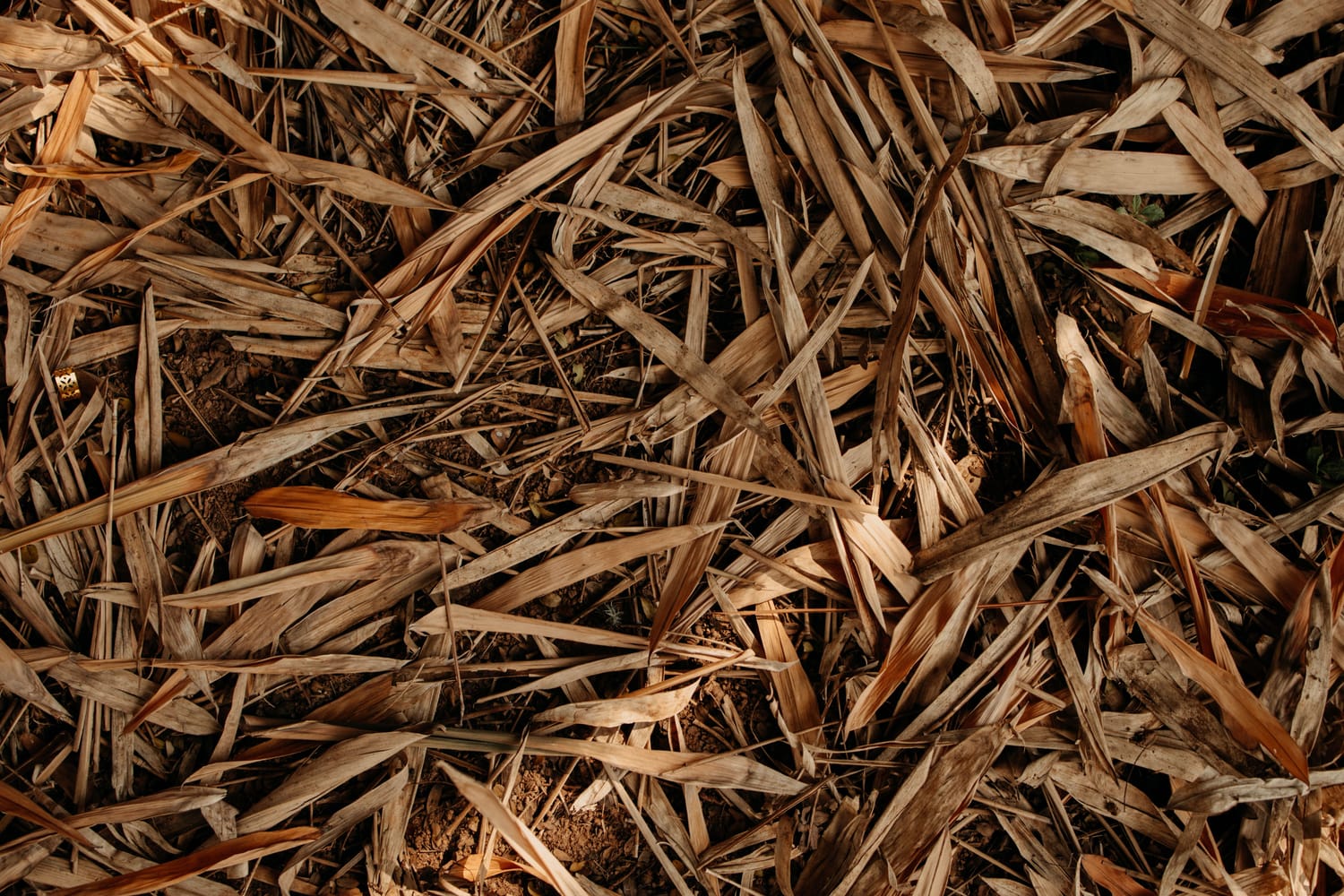
The third part of the mix helps prevent the growing medium from becoming excessively dense.
Roots need both water and oxygen.
Aeration materials help create pore spaces through which water and air can move.
Depending on availability and the characteristics of your other ingredients, suitable materials may include products such as:
Pumice
Perlite
Fine pine bark
The best choice can depend on what's locally available and how your overall mix behaves.
Beginner Tip
Don't focus on making the soil extremely light.
Your goal is a balanced growing medium that holds useful moisture while still draining adequately.
How to Mix Your Raised Bed Soil
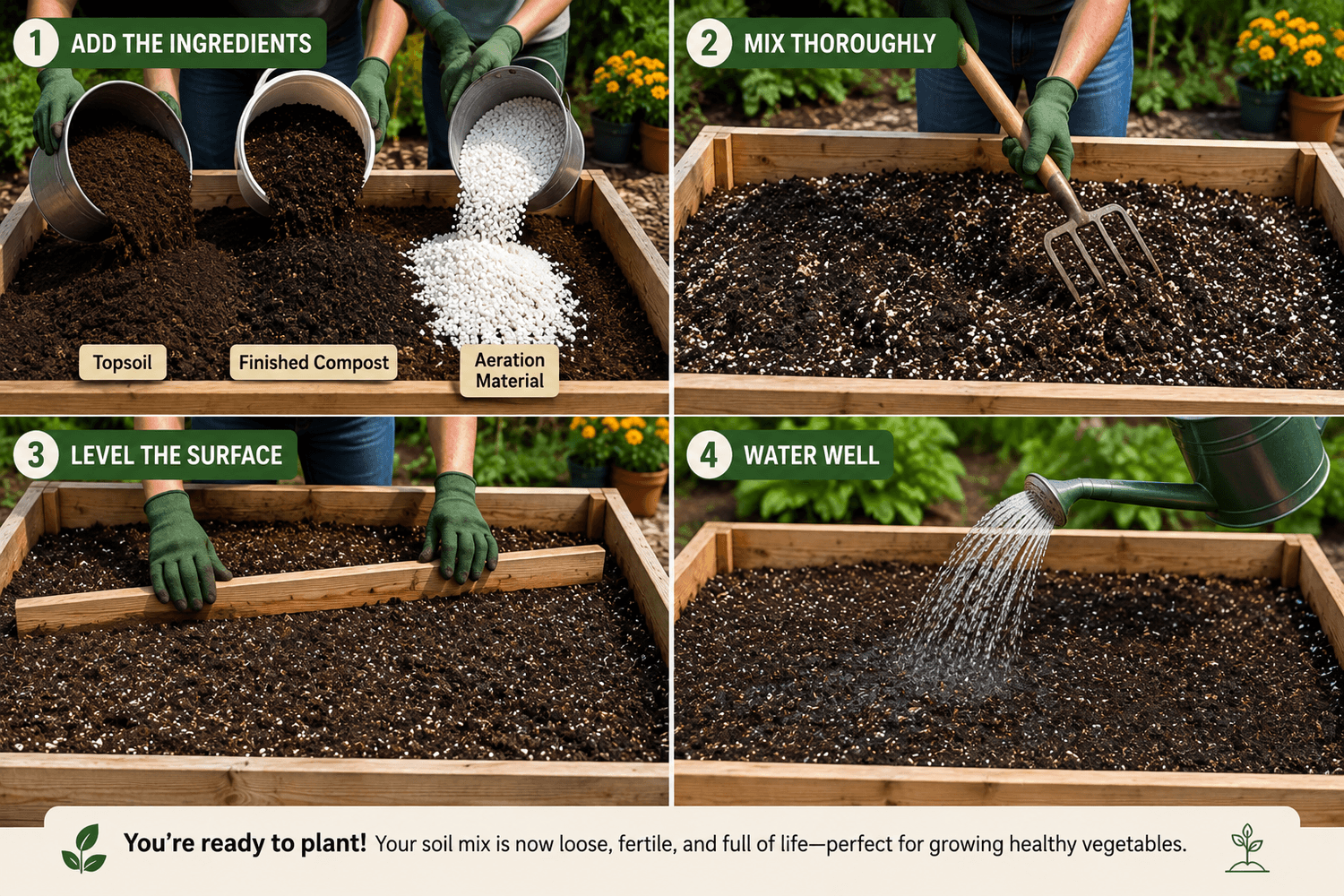
Once you have your materials, you can combine them directly in the raised bed.
Step 1 — Add the Materials in Layers
Add portions of topsoil, compost and aeration material across the bed.
Avoid putting all of one ingredient at the bottom and another ingredient entirely on top.
Step 2 — Mix Thoroughly
Use a garden fork or similar hand tool to combine the materials.
You want the ingredients distributed throughout the root zone.
Step 3 — Level the Surface
Once mixed, gently level the soil.
Avoid heavily compacting it by repeatedly walking on or pressing down the growing medium.
Step 4 — Water the Bed
Moistening the mixture can help the materials settle naturally and reveal whether you need to top up any areas.
How Much Soil Does Your Raised Bed Need?
Before buying soil, calculate the approximate volume of your raised bed.
For a rectangular bed:
Length × Width × Soil Depth = Volume
For example, a 4 × 8-foot raised bed filled to a depth of 1 foot requires approximately:
4 × 8 × 1 = 32 cubic feet
If you're purchasing material by the cubic yard:
27 cubic feet = 1 cubic yard
So:
32 ÷ 27 ≈ 1.19 cubic yards
Buying slightly more than the exact calculated amount can be useful because soil may settle.
Important
Use the actual depth you intend to fill, not automatically the total height of the wooden bed.
Should You Put Anything Under Your Raised Bed?
This depends on where the raised bed is installed.
For a bed placed directly over ordinary soil, you don't necessarily need to create a complicated bottom layer.
If you're dealing with existing grass or weeds, cardboard is sometimes used as a temporary weed suppressing layer before the bed is filled.
The cardboard will eventually decompose.
Avoid treating the bottom of the raised bed as a place to dispose of inappropriate materials.
Your primary goal should remain creating a healthy root zone for the vegetables above.
Should You Fill the Bottom With Logs or Rocks?
This deserves special attention because beginners often see this advice online.
Rocks
Adding a layer of rocks at the bottom is generally unnecessary for improving drainage in a standard raised vegetable bed.
Your soil itself needs suitable structure and drainage.
Logs and Large Woody Material
Some gardening systems intentionally incorporate woody materials.
However, that's different from simply filling most of a shallow raised bed with logs to avoid buying soil.
For a beginner working with a typical raised vegetable bed, keeping adequate high quality growing medium within the crops' root zone is the simpler approach.
Don't Fill Your Raised Bed With Potting Mix Alone
Potting mixes are primarily formulated for containers.
A large raised bed functions differently from a small flowerpot.
Filling an entire large raised bed with packaged potting mix can also become unnecessarily expensive.
Instead, build a balanced soil system using suitable bulk ingredients.
How to Improve Raised Bed Soil Over Time
Your soil isn't something you prepare once and forget forever.
Plants remove nutrients.
Organic matter decomposes.
The soil level may gradually settle.
Maintaining the bed from season to season is therefore important.
Add Finished Compost
Adding finished compost periodically helps replenish organic matter.
Keep the Soil Covered
Organic mulch can help reduce evaporation and protect the soil surface.
Avoid Unnecessary Compaction
One advantage of raised beds is that you can often reach plants from the sides.
Try not to stand or walk inside the growing area.
Observe Your Plants
Plant growth can provide useful clues.
If your vegetables consistently struggle, investigate possible causes instead of automatically adding more fertilizer.
Consider sunlight, watering, drainage, pests, diseases and soil conditions.
Common Raised Bed Soil Mistakes to Avoid
Even a simple soil recipe can go wrong if the basic principles are ignored.
Watch out for:
Using poor quality topsoil
Cheap material isn't necessarily good garden soil.
Using unfinished compost
Organic material should be properly decomposed before being treated as finished compost.
Creating an excessively dense mix
Roots need air as well as water.
Ignoring drainage
Persistent waterlogging can create serious root problems.
Compacting the soil
Avoid regularly walking inside your raised bed.
Never replenishing organic matter
Raised bed soil changes over time and benefits from ongoing care.
Raised Bed Soil Mix Quick Reference
For an easy starting point, remember:
🌱 40% TOPSOIL
Provides mineral soil and structure.
🌱 40% FINISHED COMPOST
Provides organic matter and contributes nutrients.
🌱 20% AERATION MATERIAL
Helps maintain drainage and pore space.
Then adjust your soil based on the materials available and how the finished mixture performs.
What Should You Plant in Your New Raised Bed?
Once your soil is ready, you're finally at the fun part:
Planting vegetables.
But resist the temptation to fill every available space immediately.
Start with crops that suit your season, sunlight and available space.
If you're completely new to vegetable gardening, read:
15 Easy Vegetables to Grow for Beginner Gardeners ➡️➡️➡️
And if you're trying to decide where those vegetables should go:
4×8 Raised Bed Vegetable Garden Layout for Beginners
These articles will help you move from preparing the soil to actually planning your first crop.
Build Good Soil Before You Plant
Your raised bed can only perform as well as the growing environment you create inside it.
You don't need an overly complicated recipe.
Start with good quality materials, create a mix that balances moisture retention with drainage and aeration, and continue improving the soil with organic matter over time.
Healthy soil won't eliminate every gardening problem.
But it gives your vegetables a much better place to start.
Ready to Plan Your Vegetable Garden?
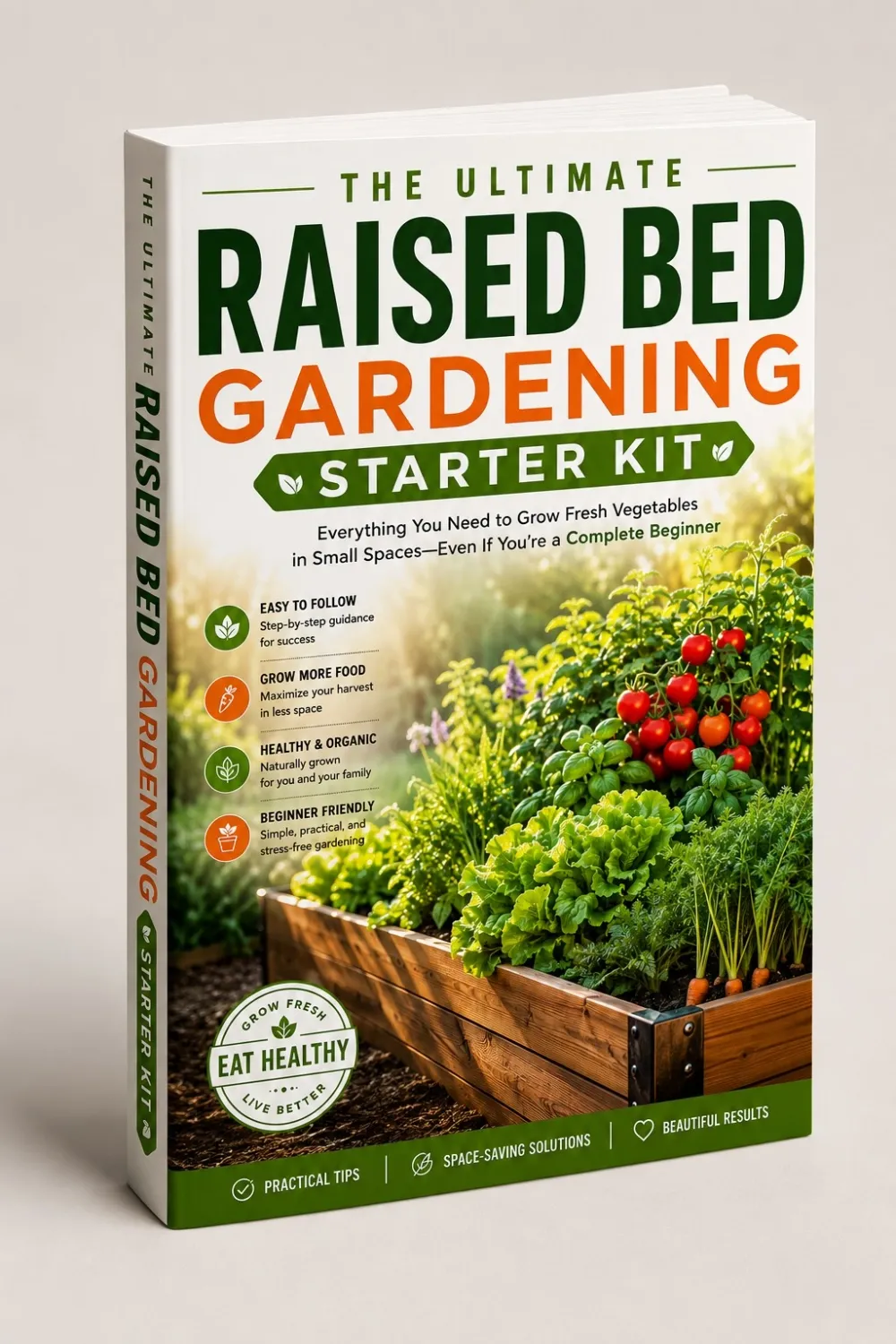
If you're starting your first raised bed, get The Ultimate Raised Bed Gardening Starter Kit for beginner-friendly help with planning your garden, choosing vegetables and preparing your growing space.
Written by:
Wren Hartley
SHARE




About me
Hi there 👋 I’m Wren Hartley, the creator of Tiny Garden Harvest. I love helping beginners grow fresh food and enjoy bigger harvests from small spaces. 🌱

Trending
learn the basics of location, soil, vegetables, spacing, watering, and care.
Grow more food in less space with raised beds, vertical gardening, and smart crop choices.
Learn an easy raised bed soil mix using topsoil, compost, and aeration material.
Free E-book
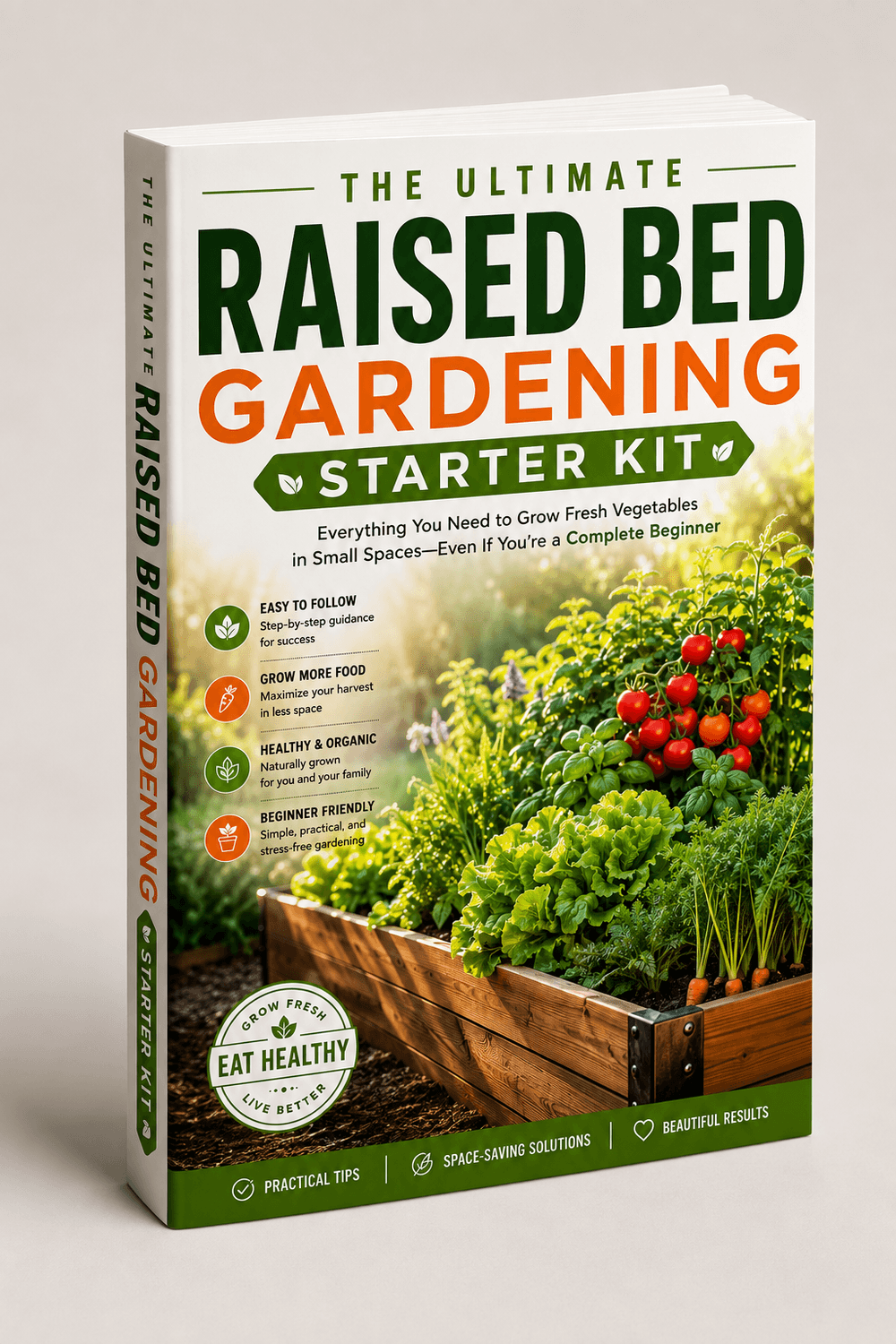
Grab your free Ultimate Raised Bed Gardening Starter kit -Ever if you've not garden before.
NEW FREE E-BOOK: Grow Fresh Vegetables in Small Spaces Even If You've Never Gardened Before