
Vegetable Plant Spacing Guide: How Far Apart to Plant Your Garden
Wondering how far apart to plant vegetables in your garden? The right spacing gives each plant enough room to access sunlight, water, nutrients and airflow without unnecessary competition.
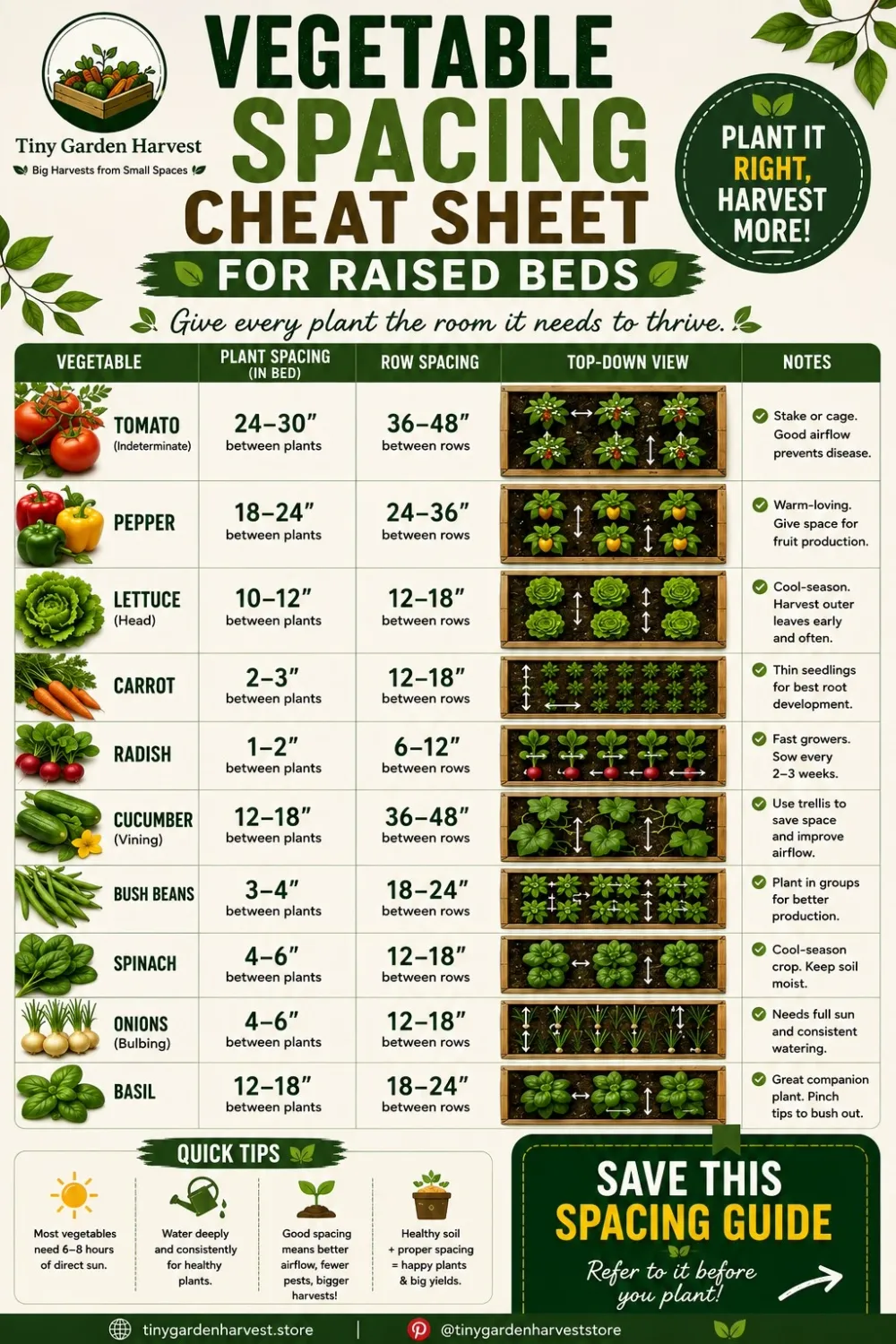
As a quick starting point, common raised-bed spacing includes about 24–30 inches between indeterminate tomato plants, 18–24 inches for peppers, 10–12 inches for head lettuce, 2–3 inches for carrots, 1–2 inches for radishes, 12–18 inches for vining cucumbers, and 3–4 inches for bush beans.
But spacing isn't simply about putting a ruler between seedlings.
You also need to consider the mature size of the plant, whether you're growing in a raised bed or traditional row garden, whether a crop grows vertically, and how much room you need to walk, water and harvest.
This vegetable plant spacing guide gives you a simple chart to use when planning your garden, plus practical tips for avoiding overcrowding.
Vegetable Plant Spacing Chart
Use this chart as a quick reference when planting common vegetables in a raised bed or garden.
These ranges come from the Tiny Garden Harvest vegetable spacing references and are intended as practical starting points. Seed packets and plant labels should take priority when they specify different spacing for a particular variety.
If you're growing in a raised bed, this raised bed spacing guide can help you plan the available space before you plant.
Why Is Vegetable Plant Spacing Important?
It's tempting to think that planting vegetables closer together means you'll get more food from the same garden.
But packing too many plants into a small area can create problems.
Plants compete for:
Sunlight
Water
Nutrients
Root space
Airflow
When plants become overcrowded, the foliage can become dense and air movement can be restricted.
The Tiny Garden Harvest gardening material emphasizes that the goal isn't to fit the greatest possible number of plants into a raised bed. The goal is to give each plant enough room to grow well.
Good spacing can also make your garden easier to inspect, water, weed and harvest.
For a beginner-friendly guide to getting started, see our raised bed gardening for beginners guide for practical tips on choosing a location, bed size, soil, vegetables, spacing, watering, and care.
How to Determine How Far Apart to Plant Vegetables
Plant spacing becomes much easier when you follow a simple process.
1. Check the Mature Size of the Plant
Don't judge spacing by the size of the seedling.
A tomato transplant may look small when you put it into the garden, but an indeterminate tomato can become a large plant that needs support and room for airflow.
The same applies to zucchini and squash, which can quickly outgrow a space that looked generous when they were seedlings.
Before planting, ask:
How large will this plant become when mature?
That question can prevent many spacing problems later.
2. Follow the Seed Packet or Plant Label
Your spacing chart is a useful starting point, but the instructions that come with your specific seed or plant should also be considered.
Different varieties can have different mature sizes and growing habits.
When the seed packet gives a specific spacing recommendation, use that information unless you have a good reason to adapt it.
3. Consider Whether You're Growing in a Raised Bed
Raised beds allow you to use space differently from traditional row gardens.
Because you don't need large walking paths between every planting row, you can often organize crops more efficiently.
However, that doesn't mean you should eliminate spacing altogether.
Roots still need room.
Leaves still need light.
Air still needs to move around the plants.
The Tiny Garden Harvest guidance specifically notes that raised beds can support efficient spacing while plants still require enough room for healthy growth.
For a practical planting plan, see our The simple raised bed soil mix guide for a clear example of how to prepare you raised beds soil for high vegetables harvest.
4. Think About Plant Height
Plant spacing isn't only about distance between plants.
Plant height matters too.
A simple approach is:
Tall crops → back or north side
Medium-height crops → middle
Short crops → front
This can reduce unnecessary shading and help more plants receive adequate sunlight.
5. Leave Room for Airflow
Good airflow is one of the reasons spacing matters.
When leaves are packed tightly together, air has less room to move through the foliage.
Good air circulation can help keep foliage drier after watering or rainfall and can make the garden environment less favorable for some fungal disease problems.
This is especially important for larger plants such as tomatoes and vining cucumbers.
Vegetable Spacing Guide by Crop
Let's look more closely at some of the vegetables beginners commonly grow.
How Far Apart to Plant Tomatoes
For indeterminate tomatoes, the Tiny Garden Harvest raised-bed spacing guide recommends approximately 24–30 inches between plants and 36–48 inches between rows.
Tomatoes also benefit from support.
Use a suitable stake, cage or other support system and allow enough room around each plant for growth and airflow.
For smaller cherry tomato varieties, the planting guide lists 18–24 inches as a practical spacing range.
Important: Tomato spacing varies with variety and growth habit, so check the plant label or seed packet.
How Far Apart to Plant Peppers
Peppers generally need more room than small leafy crops.
The raised bed spacing guide recommends approximately 18–24 inches between pepper plants and 24–36 inches between rows.
Give each plant enough room to develop its foliage and produce fruit without becoming crowded.
How Far Apart to Plant Lettuce
Head lettuce can be planted approximately 10–12 inches apart, with 12–18 inches between rows in the raised-bed spacing guide.
Another Tiny Garden Harvest planting guide gives 6–8 inches for lettuce, illustrating why variety and intended harvest size matter.
If you're growing small lettuce varieties or harvesting young leaves, your spacing may differ from spacing intended for full heads.
How Far Apart to Plant Carrots
Carrots need much less space than large fruiting crops.
The spacing guide recommends approximately 2–3 inches between plants and 12–18 inches between rows.
Because carrot seeds are small, you may sow them closer together initially and then thin the seedlings as they develop.
Thinning gives the remaining roots enough space to develop properly.
How Far Apart to Plant Radishes
Radishes are compact and fast-growing.
The raised-bed spacing guide recommends approximately 1–2 inches between plants and 6–12 inches between rows.
Their compact size makes radishes useful for small gardens and for filling space between longer-season crops.
How Far Apart to Plant Cucumbers
Vining cucumbers need more room than bushy crops unless you grow them vertically.
The raised-bed spacing guide recommends approximately 12–18 inches between plants and 36–48 inches between rows for vining cucumbers.
A trellis can change how you use that space.
Instead of allowing cucumber vines to spread across the ground, you can train them upward on a suitable support.
How Far Apart to Plant Bush Beans
Bush beans can be planted approximately 3–4 inches apart, with 18–24 inches between rows in the raised-bed spacing guide.
Because bush beans are relatively compact, they can be useful in beginner gardens where space is limited.
How Far Apart to Plant Zucchini
Zucchini needs considerably more room than carrots, radishes or beans.
The spacing guide recommends approximately 24–36 inches between plants and 36–48 inches between rows.
Don't let the small size of a zucchini seedling fool you.
The mature plant can spread widely, so plan its growing direction before planting.
Plant Spacing for a Small Raised Bed
If you're gardening in a small raised bed, you may be tempted to reduce every spacing measurement to fit more vegetables.
Instead, think about how each plant uses space.
For example:
Carrots use relatively little above-ground space.
Lettuce forms a compact leafy canopy.
Tomatoes grow much taller and wider.
Cucumbers can use vertical space with a trellis.
Zucchini needs considerable room to spread.
Bush beans remain relatively compact.
This means you can combine crops with different growth habits without treating every vegetable the same.
For practical ideas to make the most of limited growing space, see our small-space vegetable gardening guide for simple ways to grow more food in a compact garden.
How to Space Vegetables in Rows
Traditional row gardening and raised-bed gardening use spacing somewhat differently.
In a traditional garden, you need to think about the space required to walk between rows and access plants.
In a raised bed, you can organize crops more intensively because the entire growing area is usually accessible from the sides.
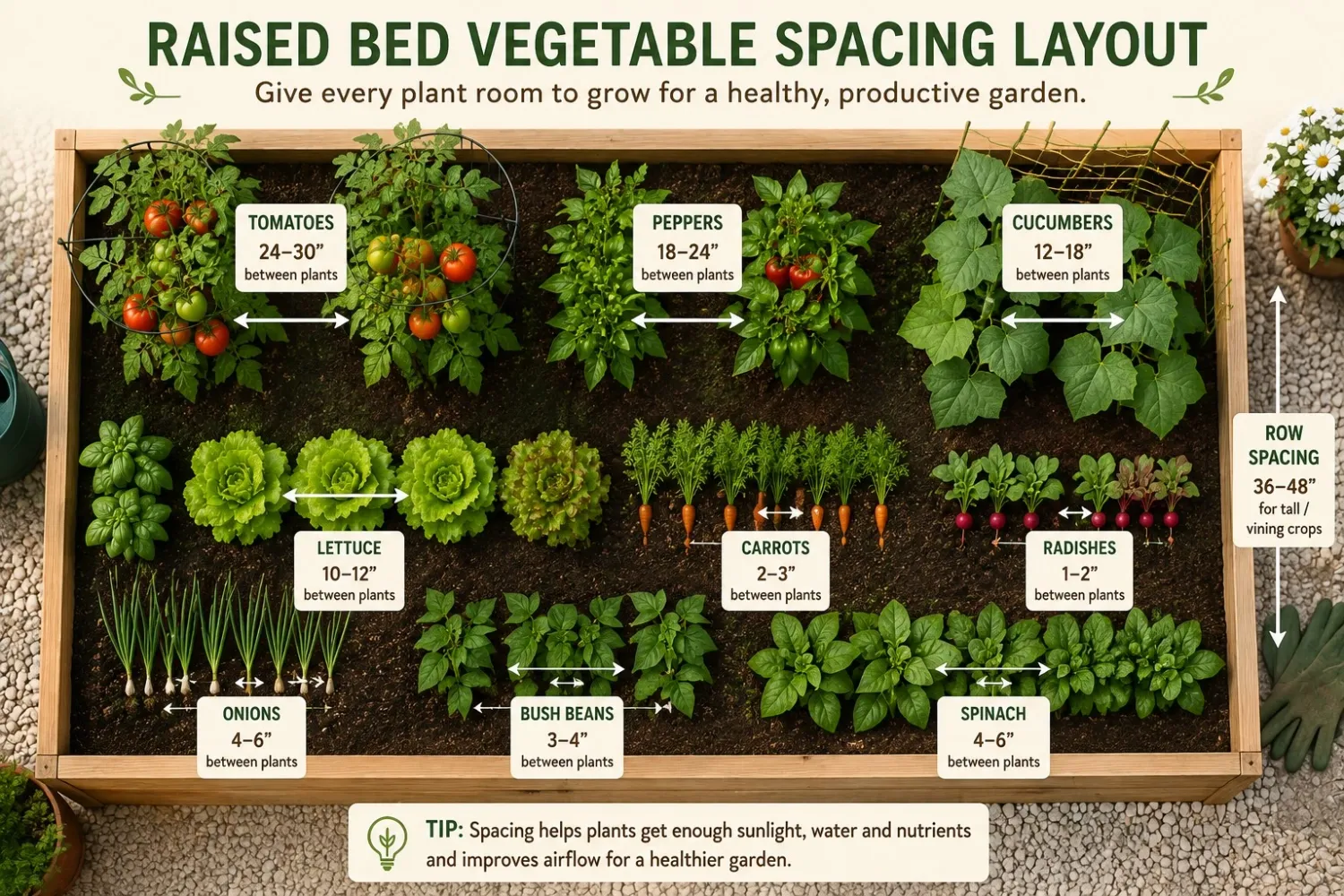
However, row spacing still matters when you're following a chart.
For example:
Carrots: 2–3 inches between plants, 12–18 inches between rows.
Radishes: 1–2 inches between plants, 6–12 inches between rows.
Bush beans: 3–4 inches between plants, 18–24 inches between rows.
Vining cucumbers: 12–18 inches between plants, 36–48 inches between rows.
The difference between plant spacing and row spacing is important:
Plant spacing = distance from one plant to the next.
Row spacing = distance from one row to the next.
Can You Plant Vegetables Closer Together in Raised Beds?
Sometimes, yes but don't assume that closer is always better.
Raised beds can make more efficient use of space because you don't need the same wide paths used in traditional row gardens.
But plants still need adequate access to:
Light
Water
Nutrients
Root space
Airflow
The goal isn't to squeeze as many plants as possible into the bed.
The goal is to create a productive planting area where plants have enough room to grow and where you can comfortably maintain and harvest the garden.
What Happens If You Plant Vegetables Too Close Together?
Overcrowding can create several problems.
1. Plants Compete for Resources
Closely planted crops may compete for sunlight, water and nutrients.
2. Airflow Can Be Restricted
Dense foliage leaves less room for air movement.
3. Harvesting Becomes More Difficult
When plants are packed together, it can become harder to reach individual crops without damaging neighboring plants.
4. Plants Can Outgrow the Garden
This is particularly noticeable with zucchini, squash, tomatoes and vining crops.
5. Thinning Becomes Important
Crops such as carrots, beets and lettuce may require thinning after germination so the remaining plants have enough room to develop.
What Happens If You Space Vegetables Too Far Apart?
Leaving too much space isn't usually as problematic as overcrowding, but it can mean you're not using your garden efficiently.
Large gaps can:
Leave valuable growing space unused
Allow weeds to establish
Reduce the number of plants you can grow
Make a small garden less productive for your goals
This is why the best approach is to use a recommended spacing range rather than guessing.
If you're unsure, start with the spacing on your seed packet or plant label and adjust your garden plan around the mature size of the crop.
Common Vegetable Spacing Mistakes Beginners Make
Mistake 1: Spacing Plants Based on Their Seedling Size
A seedling is not the finished plant.
Always consider mature size.
Mistake 2: Ignoring the Difference Between Plant and Row Spacing
These are two different measurements.
Don't mistake 12 inches between plants for 12 inches between rows.
Mistake 3: Treating Every Vegetable the Same
A radish and a zucchini obviously don't need the same amount of space.
Mistake 4: Forgetting Vertical Growing
Cucumbers and other climbing crops can use trellises to make better use of limited ground space.
Mistake 5: Skipping Thinning
If you sow small seeds too densely, thin the seedlings when appropriate instead of allowing them all to mature in the same tiny space.
Mistake 6: Crowding Plants to Get a Bigger Harvest
More plants don't automatically mean a better harvest.
The Tiny Garden Harvest gardening material specifically warns against planting too much too close together because overcrowded plants compete for light, water and nutrients.
How to Plan Vegetable Spacing in a 4×8 Raised Bed
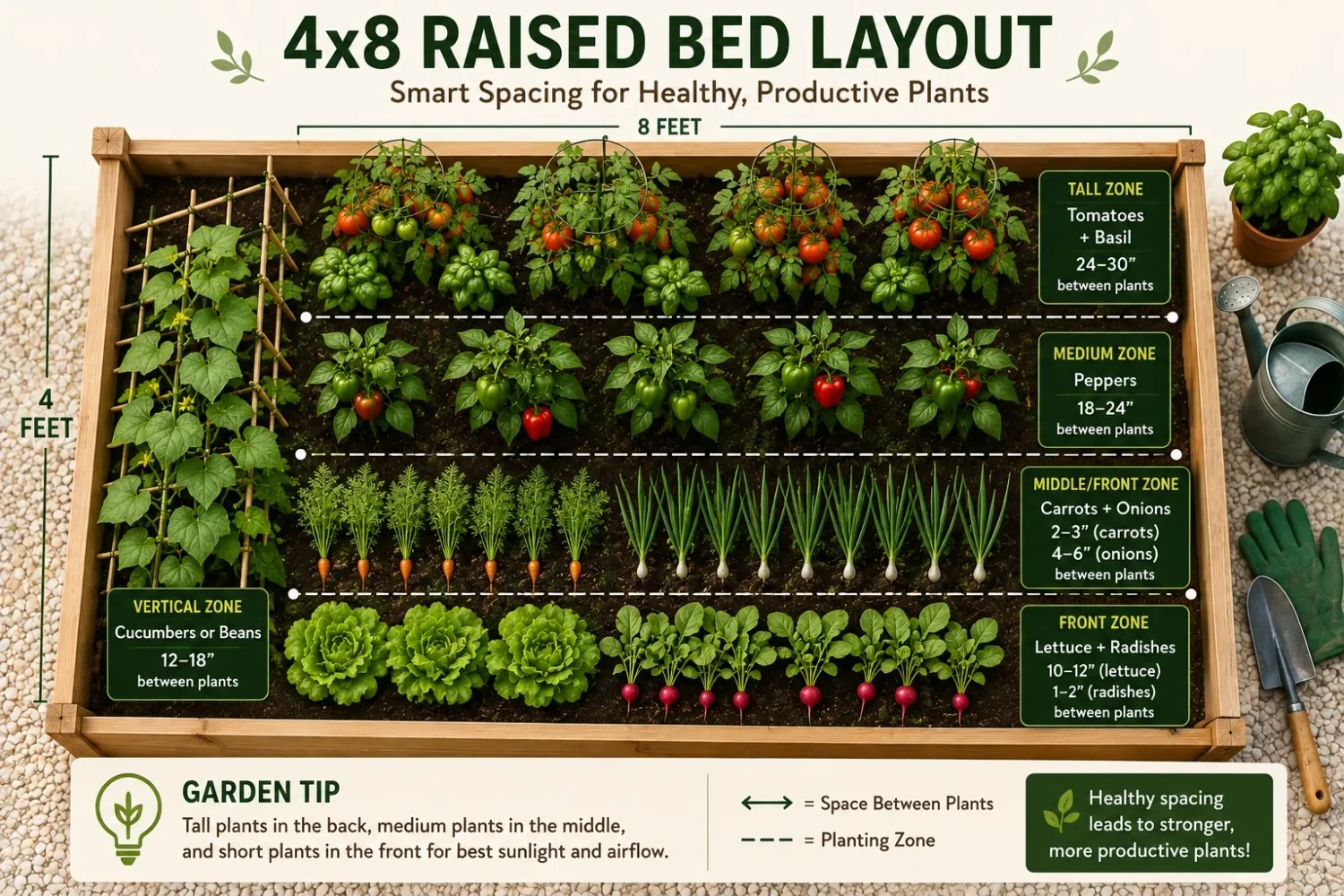
A 4×8 raised bed gives you a useful amount of growing space, but it can still become overcrowded quickly if large plants aren't planned carefully.
Start by dividing the bed into broad zones.
Back of the Bed
Place taller crops such as tomatoes where they won't unnecessarily shade shorter vegetables.
Middle of the Bed
Use medium-sized crops such as peppers.
Front of the Bed
Use lower-growing crops such as lettuce, carrots and radishes.
Vertical Zone
Place cucumbers or climbing crops near a suitable trellis.
This approach lets you think about the three-dimensional space of the garden rather than treating the bed as one flat surface.
For a complete planting arrangement, see our 4×8 raised bed vegetable garden layout for a beginner-friendly way to organize crops by height and available space.
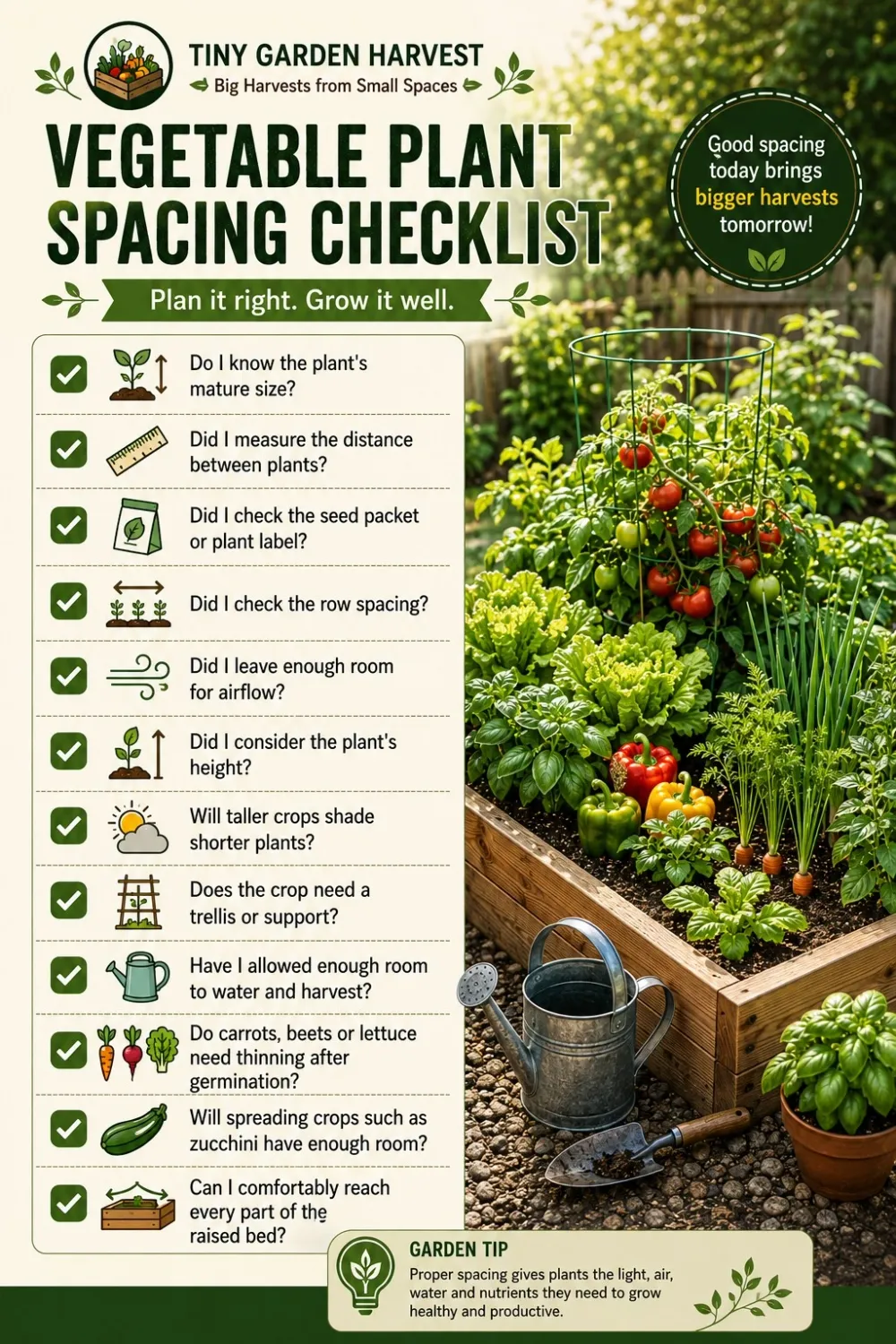
A Simple Plant Spacing Checklist
Before you finish planting, check each crop against these questions:
Do I know the plant's mature size?
Did I measure the distance between plants?
Did I check the seed packet or plant label?
Did I check the row spacing?
Did I leave enough room for airflow?
Did I consider the plant's height?
Will taller crops shade shorter plants?
Does the crop need a trellis or support?
Have I allowed enough room to water and harvest?
Do carrots, beets or lettuce need thinning after germination?
Will spreading crops such as zucchini have enough room?
Can I comfortably reach every part of the raised bed?
A few minutes of planning before planting can save you from trying to untangle an overcrowded garden later.
Frequently Asked Questions About Vegetable Plant Spacing
How far apart should vegetables be planted?
Spacing depends on the crop and variety. For example, carrots may need only 2–3 inches between plants, while indeterminate tomatoes may need about 24–30 inches in a raised-bed planting plan.
How far apart should tomatoes be planted?
For indeterminate tomatoes, the Tiny Garden Harvest raised-bed spacing guide recommends approximately 24–30 inches between plants and 36–48 inches between rows.
How far apart should peppers be planted?
The raised-bed spacing guide recommends approximately 18–24 inches between pepper plants and 24–36 inches between rows.
How far apart should carrots be planted?
Carrots can be spaced approximately 2–3 inches apart, with 12–18 inches between rows in the raised-bed spacing guide.
How far apart should lettuce be planted?
For head lettuce, the raised-bed spacing guide gives approximately 10–12 inches between plants and 12–18 inches between rows. Other lettuce varieties or harvest styles may use different spacing, so check the seed packet.
Can vegetables be planted closer together in raised beds?
Raised beds can allow efficient spacing because you don't need wide walking paths between every row. However, plants still need enough room for healthy growth, sunlight, water, nutrients and airflow.
Should I leave space between rows in a raised bed?
It depends on how you're organizing the bed. If you're using a traditional row arrangement, row spacing helps you plan access and plant distribution. In an intensively planted raised bed, you may instead organize plants in blocks or grids.
What vegetables need the most space?
Large or spreading crops such as zucchini and squash need considerably more room than compact crops such as radishes and carrots.
The Tiny Garden Harvest spacing guide lists approximately 24–36 inches between zucchini plants and 36–48 inches between rows.
Final Thoughts: Give Every Plant Enough Room to Grow
Good vegetable plant spacing isn't about filling every inch of your garden.
It's about using your available space wisely while giving each crop enough room to develop.
Start by checking the mature size of your plants, then follow the recommended spacing for your variety. Think about sunlight, plant height, airflow and whether you can comfortably reach the plants for watering and harvesting.
For a small raised bed, combine compact crops such as carrots, radishes and leafy greens with larger crops such as tomatoes, peppers and zucchini but give each one the room it needs.
Plan the spacing before you plant, and your garden will be much easier to manage throughout the growing season.
Ready to Plan Your Vegetable Garden?
If you're starting your first raised bed, get The Ultimate Raised Bed Gardening Starter Kit for beginner-friendly help with planning your garden, choosing vegetables and preparing your growing space.
Written by:
Wren Hartley
SHARE




About me
Hi there 👋 I’m Wren Hartley, the creator of Tiny Garden Harvest. I love helping beginners grow fresh food and enjoy bigger harvests from small spaces. 🌱

Trending
learn the basics of location, soil, vegetables, spacing, watering, and care.
Grow more food in less space with raised beds, vertical gardening, and smart crop choices.
Learn an easy raised bed soil mix using topsoil, compost, and aeration material.
Free E-book
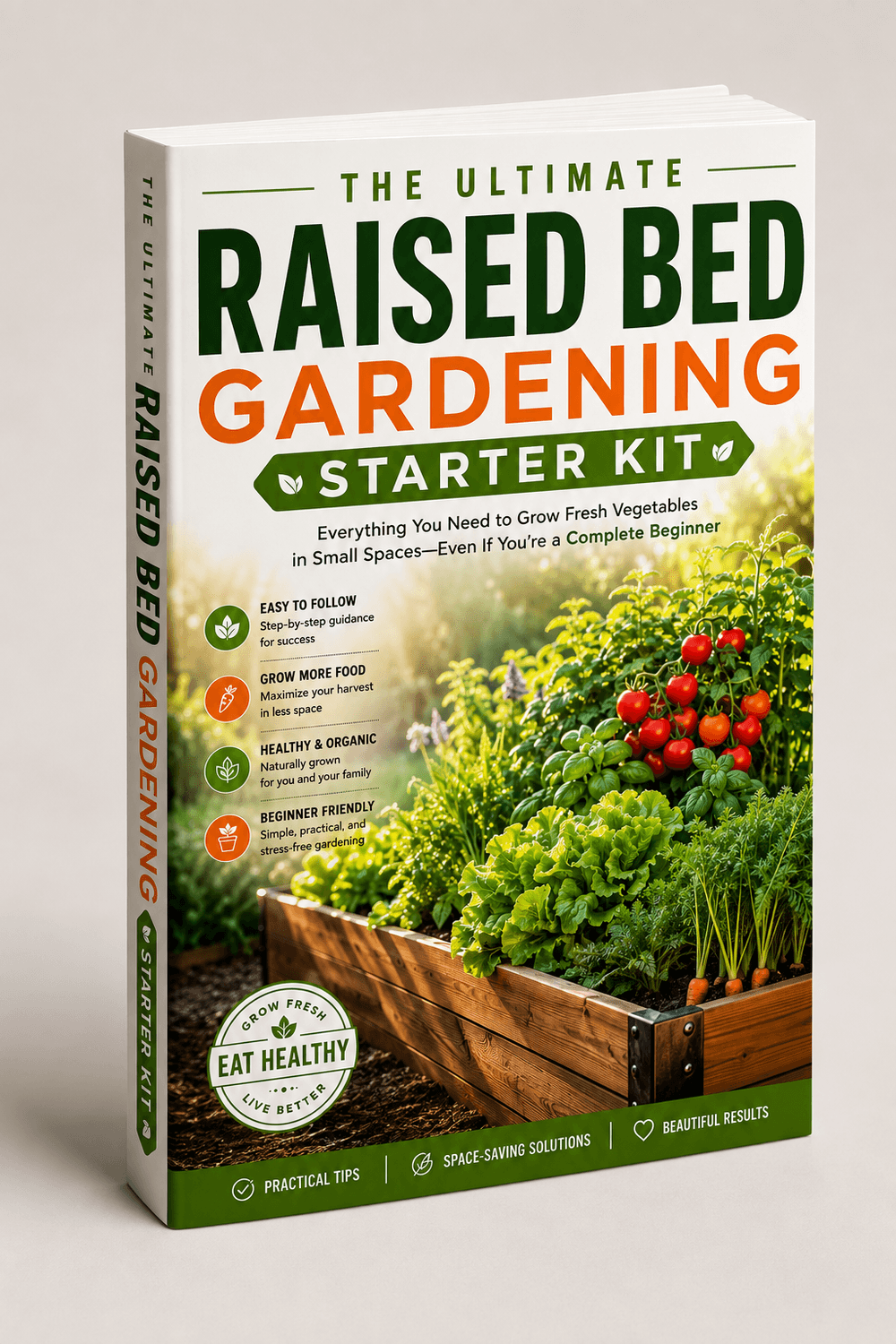
Grab your free Ultimate Raised Bed Gardening Starter kit -Ever if you've not garden before.
NEW FREE E-BOOK: Grow Fresh Vegetables in Small Spaces Even If You've Never Gardened Before