
DIY vs. Ready-Made Raised Garden Beds: Which Is Right for You?
Choosing a raised garden bed is one of the first decisions you'll make when planning a vegetable garden. But there is another question that often comes first:
Should you build your own raised bed, or buy one that's already made?
Both options can work well. A DIY raised garden bed gives you more control over the size, shape, and materials, while a ready made bed can simplify the setup and reduce the amount of construction work involved.
The best choice depends on your available space, gardening goals, preferred bed size, comfort with basic building tasks, and how quickly you want to get your garden started.
In this guide, we'll compare DIY and ready made raised garden beds, explain the advantages and considerations of each, and help you decide which option makes the most sense for your vegetable garden.
DIY vs. Ready-Made Raised Garden Beds at a Glance
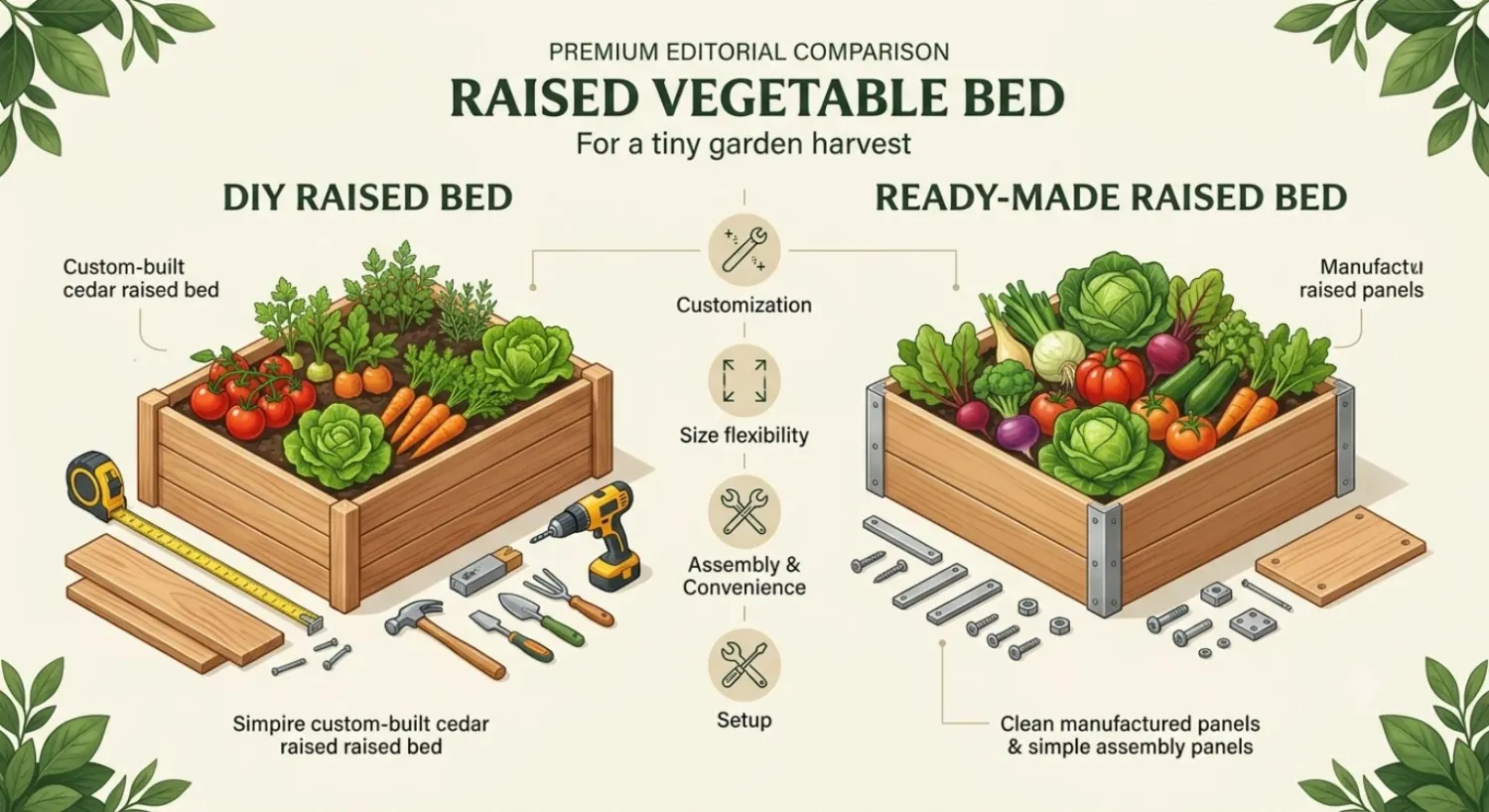
Before getting into the details, here's a simple comparison:
Neither option is automatically better.
The right choice is the one that fits your space and your ability to maintain the garden comfortably.
What Is a DIY Raised Garden Bed?
A DIY raised garden bed is one you build yourself rather than purchasing as a complete garden-bed system.
You can create the bed from materials selected for your particular garden and choose the dimensions that fit your space.
One of the biggest advantages is control.
Instead of starting with whatever sizes a manufacturer offers, you can plan the bed around your garden area, pathways, crops, and comfortable access.
For example, Tiny Garden Harvest's raised-bed planning guidance emphasizes measuring your available space, considering how easily you can reach the bed, and leaving room around it for walking, watering, weeding, harvesting, and using garden tools.
Before building your own bed, learn how to compare different raised bed sizes and choose a footprint that fits both your garden and your gardening routine.
What Is a Ready-Made Raised Garden Bed?
A ready-made raised garden bed is purchased as a manufactured or pre-prepared garden-bed product.
Instead of cutting and constructing every component yourself, you select a model and follow the manufacturer's assembly instructions.
This can make the initial setup simpler, particularly if you don't want to spend much time building the structure.
Ready-made beds are available in different designs and sizes, so you'll still need to compare the dimensions carefully before choosing one.
Don't buy based on appearance alone.
Consider:
The available space in your garden
The bed's width and length
How easily you can reach the plants
The space needed around the bed
The vegetables you plan to grow
How the bed fits your overall garden layout
DIY Raised Garden Beds: Pros and Cons
Advantages of Building Your Own Raised Bed
1. You Can Customize the Size
One of the strongest reasons to choose DIY is flexibility.
You can design the bed around your available space rather than trying to make your garden fit a standard product.
This can be especially useful for small or unusually shaped gardens.
You could plan a compact bed for a narrow area or create a larger rectangular bed when your backyard provides enough room.
2. You Control the Layout
A DIY bed can be designed around the vegetables you want to grow.
For example, your plan might include:
Taller tomatoes toward the back
Medium-height peppers in the middle
Carrots and onions in another zone
Lettuce and radishes toward the front
Cucumbers or beans growing vertically
This is similar to the zone based approach used in the Tiny Garden Harvest 4×8 raised-bed layout.
3. You Choose the Materials
With DIY construction, you can select the materials and construction approach yourself.
That means you can consider the appearance, available materials, desired dimensions, and how the bed will fit into your garden.
If you're unsure about a material, check its suitability for garden use and follow appropriate manufacturer or supplier guidance.
4. You Can Create an Unusual Shape
Your garden doesn't have to be a perfect rectangle.
A DIY approach gives you more flexibility when working around:
Paths
Existing structures
Fences
Garden corners
Other planting areas
This can be useful when you're trying to make productive use of limited outdoor space.
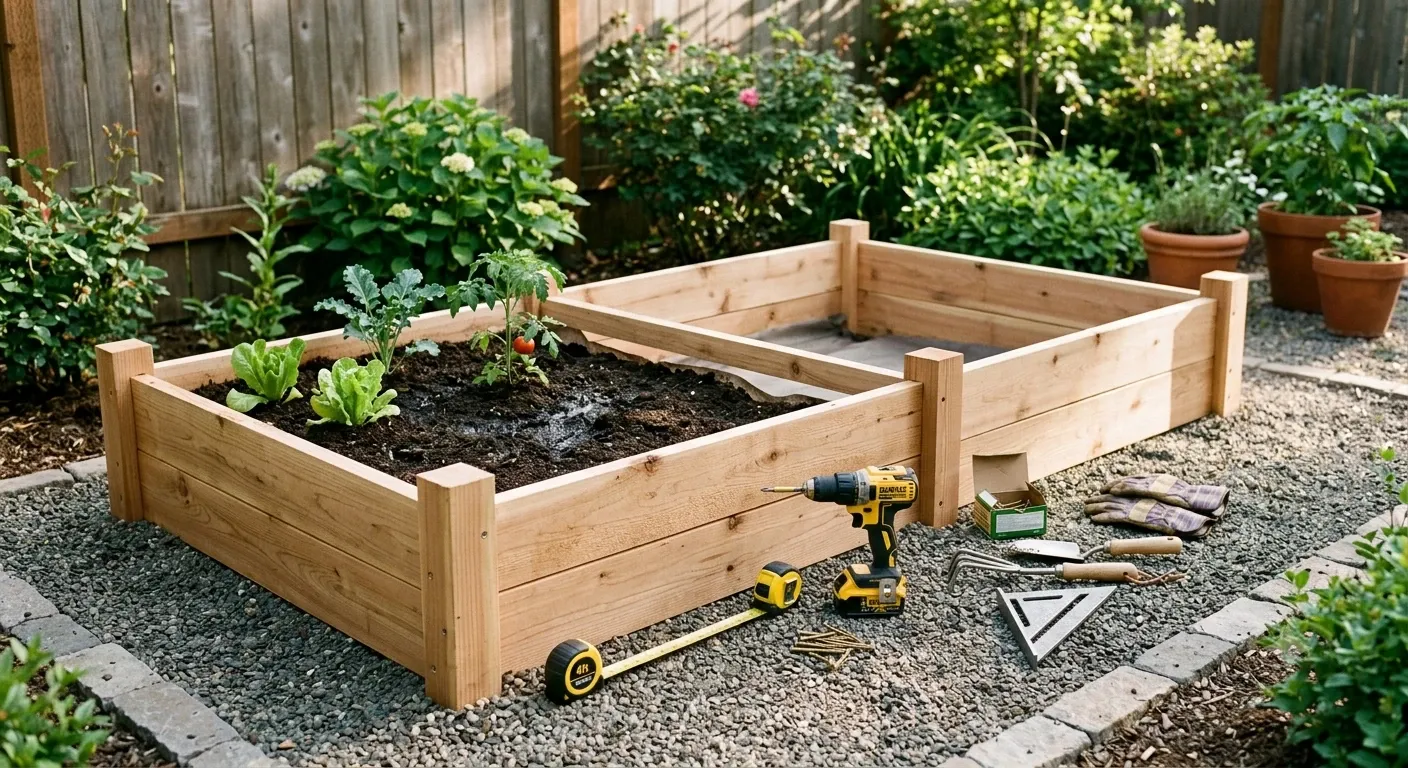
Considerations Before Building a DIY Raised Bed
DIY doesn't mean "free" or "effortless."
You'll need to think about:
Materials
Measurements
Construction
Tools
Assembly
Placement
Soil
Working space
Long-term maintenance
You also need to make sure the finished bed is stable and suitable for the location you've chosen.
The Tiny Garden Harvest raised-bed planning checklist recommends checking whether the ground is level and stable and whether there is enough surrounding space to work comfortably.
Ready-Made Raised Garden Beds: Pros and Cons
Advantages of Buying a Ready-Made Bed
1. Less Construction Work
The biggest attraction of a ready-made bed is convenience.
You don't need to design every component or cut your own boards.
Instead, you select a suitable product and assemble it according to the manufacturer's instructions.
2. Faster Garden Setup
If your main goal is to get your vegetable garden started without spending much time on construction, a ready-made option may be attractive.
You can focus more of your attention on:
Choosing your vegetables
Preparing the growing area
Planning your layout
Filling the bed
Watering
Planting
Maintaining the garden
3. Predictable Dimensions
Ready-made beds come with stated dimensions, which makes planning easier.
You can measure your available space first and then choose a bed that fits.
This is particularly useful when you're planning a compact garden.
4. Convenient for Beginners
If you're uncomfortable with construction or simply don't want another DIY project, a ready made bed can remove some of the initial building decisions.
That can make the first stage of gardening feel more manageable.
Considerations Before Buying a Ready Made Bed
A ready-made bed isn't automatically the right choice.
Before buying, check:
Size: Will it fit the space you have?
Width: Can you comfortably reach the plants?
Height: Does the bed suit your gardening needs?
Material: Is the material appropriate for outdoor garden use?
Assembly: What does the manufacturer's assembly process require?
Placement: Will you still have enough room around it?
Growing plan: Can the dimensions accommodate the vegetables you want to grow?
Remember that the bed is only one part of your garden.
Your Tiny Garden Harvest planning checklist recommends considering the available space, comfortable reach, surrounding working space, sunlight, drainage, water access, crop selection, plant spacing, and maintenance before settling on a final setup.
DIY vs. Ready-Made: Which Is Easier?
For most beginners, ready-made is generally simpler from a construction perspective, because the basic structure has already been designed and prepared.
DIY requires more involvement before planting.
However, "easier" depends on what you mean.
If you enjoy building things and want complete control over the design, DIY may actually feel easier because you can make the bed exactly the way you want.
If you prefer to skip construction and get straight to gardening, a ready-made bed may be the better fit.
DIY vs. Ready-Made: Which Gives You More Flexibility?
DIY wins for customization.
You can determine:
Length
Width
Shape
Layout
Materials
Placement
Number of beds
A ready made bed gives you less control because you're working with the manufacturer's available designs.
That doesn't make ready-made beds a poor option. It simply means convenience and customization involve different trade-offs.
Which Option Is Better for a Small Garden?
For a small-space vegetable garden, measure first and buy or build second.
A compact garden needs thoughtful planning because the bed itself isn't the only thing taking up space.
You also need room to walk around it, water plants, harvest vegetables, and perform routine maintenance.
Tiny Garden Harvest's raised-bed planning checklist specifically asks gardeners to consider whether they have enough space around the bed and whether they can reach all areas comfortably.
A DIY bed may be useful when you need a very specific footprint.
A ready made bed may be easier if you find a standard size that fits your available area.
If you're working with limited outdoor space, explore our guide to small-space vegetable gardening for more ways to make every growing area count.
What About a 4×8 Raised Bed?
A 4×8-foot raised bed is a useful example of how size and layout work together.
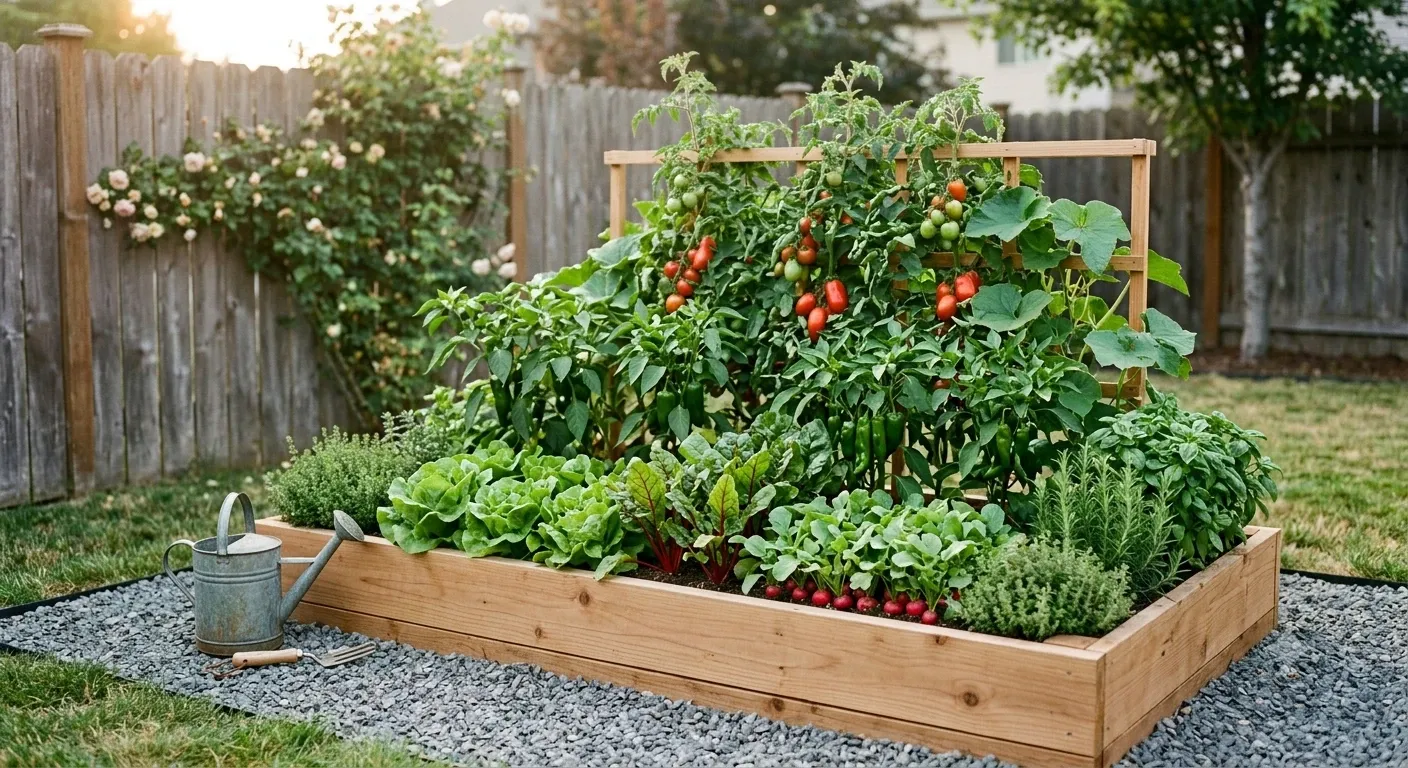
The Tiny Garden Harvest 4×8 layout divides the bed into planting zones rather than treating the entire space as one undifferentiated growing area. It places taller tomatoes and basil in the tall zone, peppers in the medium zone, carrots and onions in the middle/front zone, lettuce and radishes toward the front, and cucumbers or beans in a vertical zone.
This type of layout can be created as either a DIY bed or, if available in the appropriate dimensions, a ready-made bed.
The important thing is that the structure supports the garden plan.
If you're considering a larger rectangular bed, see our 4×8 raised bed vegetable garden layout for an example of how to organize crops by height and growing space.
Don't Choose a Bed Before Choosing Its Location
Whether you build or buy, location matters.
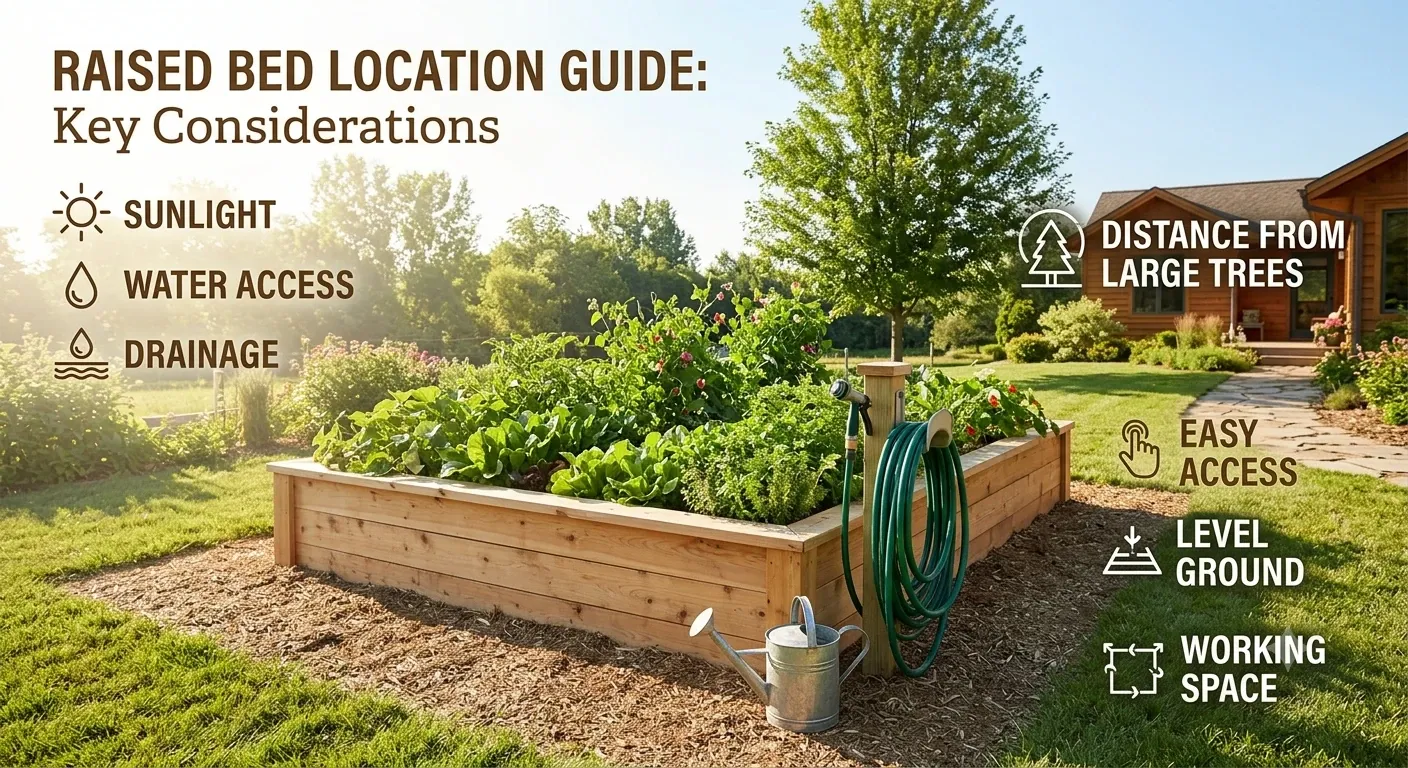
Your Tiny Garden Harvest location guidance recommends checking:
Sunlight
Drainage
Water access
Distance from large trees
Accessibility
Level ground
Working space
The raised bed should fit into the location not force you to compromise on basic garden access.
For example, a large bed may look attractive in an empty yard, but after leaving room for paths and maintenance, the available space may be smaller than expected.
The same applies to ready-made beds.
Measure the actual growing area and the surrounding working area before making your decision.
Before deciding the location of your raised beds, read our Raised beds garden location guide to see how make used of your small space.
How Plant Spacing Should Influence Your Decision
The size of your bed should also make sense for the vegetables you want to grow.
A small bed may be perfectly suitable for compact crops such as lettuce, radishes, carrots and herbs.
Larger crops need more room.
For example, the Tiny Garden Harvest spacing guide provides these general spacing examples:
These are general planning guidelines; gardeners should check the seed packet or plant label for variety specific recommendations.
Before deciding how large your bed needs to be, use our vegetable plant spacing guide to see how much room your crops may require.
DIY vs. Ready-Made Raised Beds: Which Costs Less?
There isn't a single answer because the total cost depends on what you buy, what materials you already have, the bed dimensions, and how much construction work is involved.
With DIY, you need to account for the materials and any tools or supplies required for construction.
With a ready-made bed, you're paying for the prepared product and its design, along with any additional materials required to complete your garden setup.
Rather than choosing based on price alone, compare the total project.
Ask:
What materials do I need?
Do I already have the necessary tools?
How much time will construction take?
What size do I actually need?
What will I need to fill the bed?
What additional supports or accessories will my crops require?
A cheaper bed isn't necessarily the better value if it doesn't fit your garden properly.
Which Raised Bed Should Beginners Choose?
If you're completely new to gardening, use this simple decision guide.
Choose DIY if:
You enjoy hands-on projects.
You want a custom size.
Your garden has an unusual shape.
You want control over the materials.
You have the tools and time to build.
You want the bed designed around a specific planting plan.
Choose ready-made if:
You want a simpler setup.
You don't want to construct the bed yourself.
You prefer a predetermined design.
You want to focus on gardening rather than building.
You find a size that fits your space and crop plan.
Choose either option if:
The bed fits your available space.
You can reach the plants comfortably.
There is enough room around the bed.
The location receives appropriate sunlight.
Drainage is suitable.
Water is reasonably accessible.
The bed works with your intended planting layout.
Final Verdict: DIY or Ready-Made?
So, which is right for you?
Choose DIY if customization is your priority.
Building your own raised bed gives you greater control over dimensions, shape, materials, and how the structure fits your garden plan.
Choose ready-made if convenience is your priority.
A ready-made bed can reduce the construction work and let you focus sooner on preparing, planting, watering, and maintaining your vegetables.
But don't let the DIY versus ready-made decision distract you from the bigger picture.
The most important thing is choosing a raised bed that fits your space, works with your crops, allows comfortable access, and can be maintained easily.
Before you build or buy, measure your garden area, check the sunlight and drainage, think about water access, consider your vegetable spacing, and plan enough working space around the bed.
Then choose the option that makes gardening feel manageable rather than complicated.
The best raised garden bed isn't necessarily the one you build yourself or the one you buy. It's the one that helps you create a garden you can comfortably care for.
Frequently Asked Questions
Is it cheaper to build or buy a raised garden bed?
It depends on the materials, dimensions, tools, and ready-made product you choose. Compare the total project requirements rather than assuming one option will always cost less.
Are ready-made raised garden beds good for beginners?
They can be a convenient option for beginners who want to spend less time constructing a bed and more time gardening. Always check the dimensions and assembly requirements before buying.
Is a DIY raised garden bed better?
Not necessarily. DIY is better when you value customization and are comfortable with the construction process. A ready-made bed may be more suitable when convenience is more important.
What size raised bed should I choose?
Choose a size that fits your available space, allows comfortable access, and provides enough room for the vegetables you want to grow. Your surrounding pathways and working space should be considered alongside the bed dimensions.
Can I use a ready-made bed for a 4×8 garden layout?
If the ready-made bed has suitable dimensions and provides enough access, you can use a zone-based 4×8 planting plan. The Tiny Garden Harvest 4×8 layout organizes crops by height, spacing and growing habit.
What should I check before buying or building a raised bed?
Check the available space, comfortable reach, surrounding working space, sunlight, drainage, water access, distance from large trees, ground stability, crop selection and plant spacing.
Ready to Plan Your Vegetable Garden?
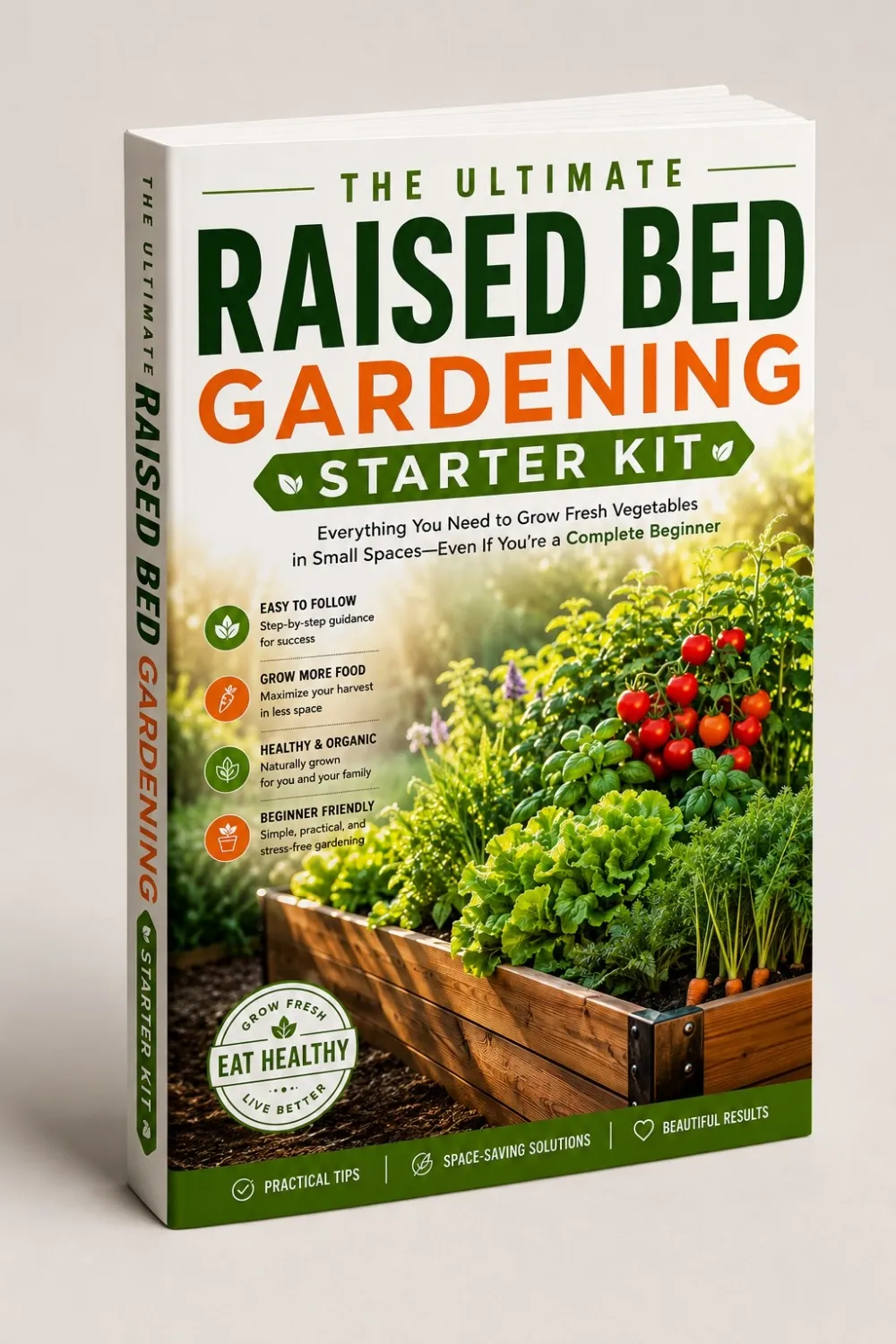
If you're starting your first raised bed, get The Ultimate Raised Bed Gardening Starter Kit for beginner-friendly help with planning your garden, choosing vegetables and preparing your growing space.
Ready to Plan Your Vegetable Garden?
Written by:
Wren Hartley
SHARE



About me

Hi there 👋 I’m Wren Hartley, the creator of Tiny Garden Harvest. I love helping beginners grow fresh food and enjoy bigger harvests from small spaces. 🌱

Trending
learn the basics of location, soil, vegetables, spacing, watering, and care.
Grow more food in less space with raised beds, vertical gardening, and smart crop choices.
Learn an easy raised bed soil mix using topsoil, compost, and aeration material.
Free E-book
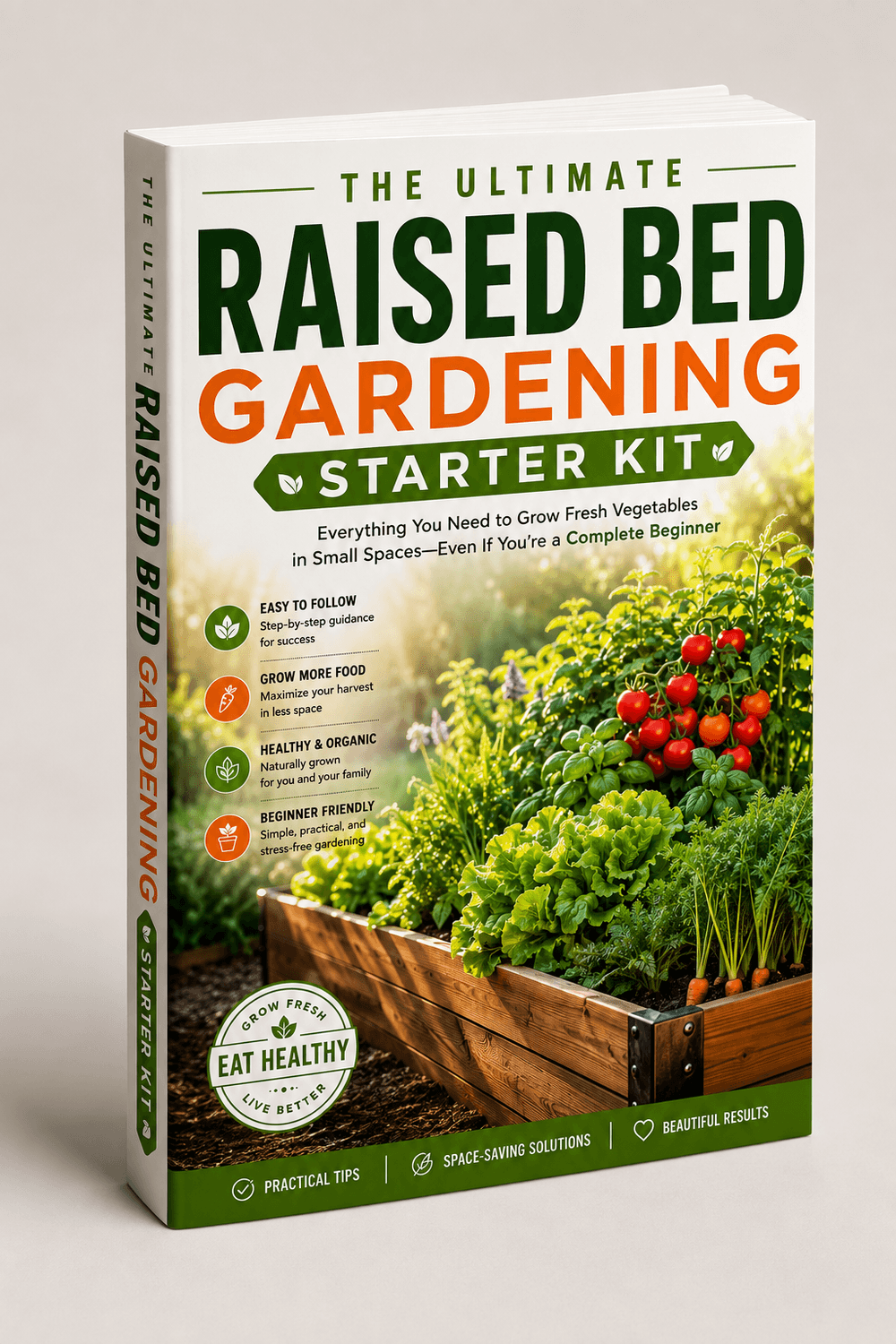
Grab your free Ultimate Raised Bed Gardening Starter kit -Ever if you've not garden before.
NEW FREE E-BOOK: Grow Fresh Vegetables in Small Spaces Even If You've Never Gardened Before