
Where to Put a Raised Garden Bed: 7 Things to Check First
Choosing where to put a raised garden bed is one of the most important decisions you’ll make before planting.
The right location can make watering, weeding, planting, and harvesting much easier. The wrong location can leave your vegetables struggling with too little sunlight, poor drainage, inconvenient watering, or competition from nearby trees.
Before you build or buy your raised bed, take some time to study your available space.
A good raised bed location should have enough sunlight, drain well, be close to water, remain easy to access, and give your plants enough room to grow.
Here are the 7 things to check first.
1. Check How Much Sunlight the Location Gets
Sunlight should be one of the first things you check when choosing a location for a raised garden bed.
Many common vegetables perform best with several hours of direct sunlight each day.
Your gardening source material uses 6–8 hours of direct sunlight as a useful guideline for full-sun crops, while some crops can tolerate less.
The important thing is not to judge a location based on one quick glance.
A spot that looks sunny at 9 a.m. may become shaded by a building, fence, tree, or wall later in the day.
How to check sunlight
Choose two or three possible locations and observe each one throughout the day.
Check:
Early morning
Late morning
Midday
Afternoon
Evening
Record approximately how long each area receives direct sunlight.
Also look for objects that create moving shadows, including:
Trees
Buildings
Fences
Walls
Utility structures
Shadows can change as the position of the sun changes throughout the year, so avoid choosing a location based on a single observation.
What if your yard doesn't get much sun?
You can still grow vegetables.
If your available space receives strong sunlight, crops such as tomatoes, peppers, cucumbers, beans, and squash may be suitable.
For areas receiving less sunlight, consider crops such as lettuce, spinach, kale, parsley, or mint.
If you're new to raised beds, start with this raised bed gardening guide for beginners to learn the basics.
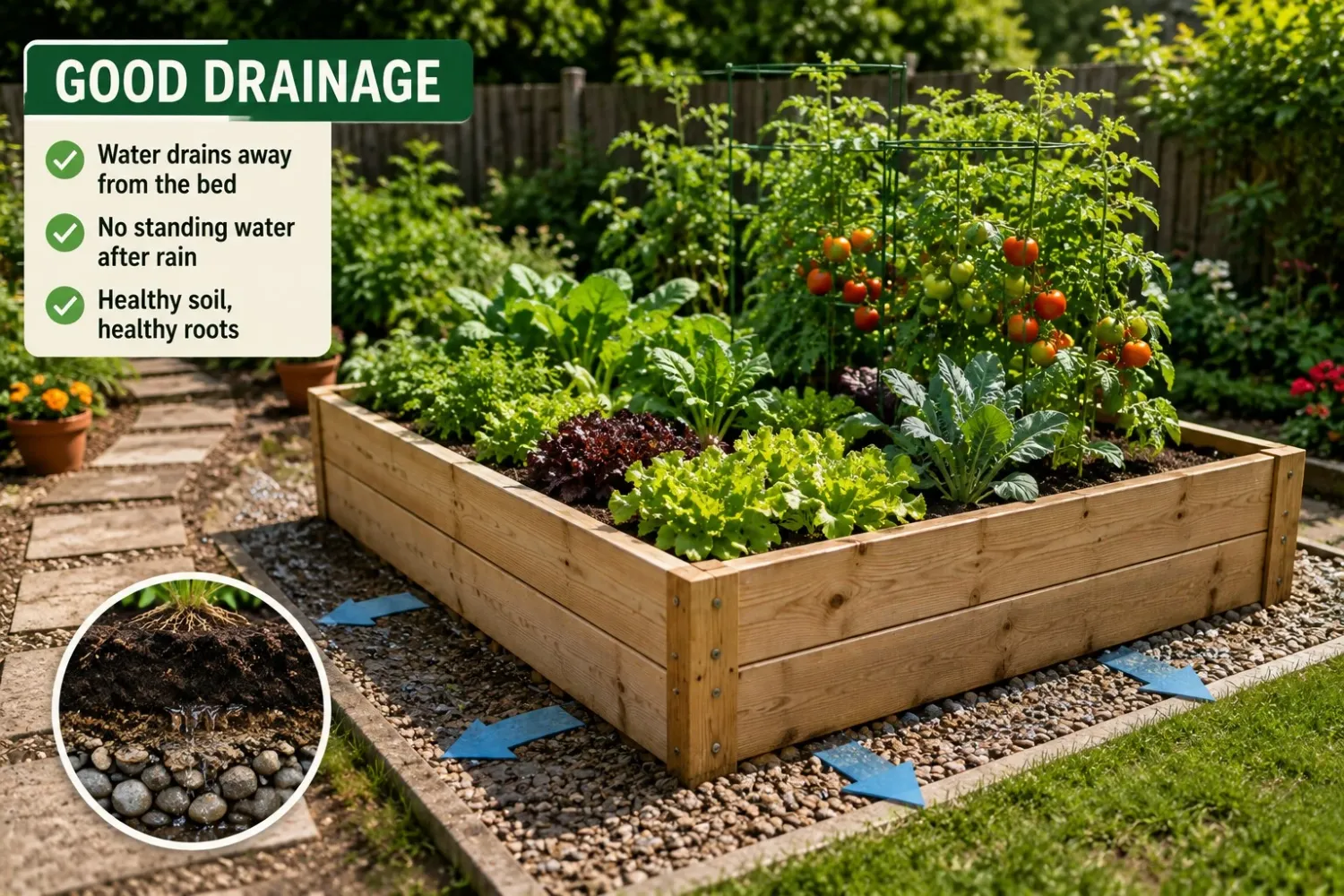
2. Check the Drainage Before You Build
A raised bed does not automatically solve every drainage problem.
Look carefully at the ground where you plan to place it. Does water disappear reasonably quickly after rain, or does the area remain wet and muddy?
Avoid locations where water naturally collects.
If water remains around the area for hours after rainfall, you may have a drainage problem.
Why drainage matters
Vegetables need water, but their roots also need access to air. Constantly wet conditions can create an unhealthy growing environment for roots.
Before building your raised bed, visit the area after rainfall and look for:
Standing water
Muddy ground
Water flowing toward the proposed bed
Areas that stay wet longer than surrounding ground
If the location repeatedly collects water, consider improving drainage or choosing another location.
Beginner tip: Don't choose a location simply because it looks convenient when the weather is dry. Rain can reveal problems that are otherwise easy to miss.
3. Make Sure Water Is Easy to Reach
Your raised bed should be close enough to a water source that regular watering doesn't become a chore.
A garden located far from an outdoor tap may seem fine when you're building it, but carrying watering cans across the yard repeatedly can become tiring.
Ideally, place your bed within easy reach of:
A garden hose
An outdoor tap
A watering system
Another practical water source
Think about your normal gardening routine.
If watering requires walking a long distance every time, you may eventually avoid doing it as consistently as your plants need.
This is particularly important during hot or dry periods when your plants may need closer monitoring.
4. Keep Your Raised Bed Away From Large Trees
That empty space underneath a large tree may look like the perfect place for a raised bed.
Usually, it isn't.
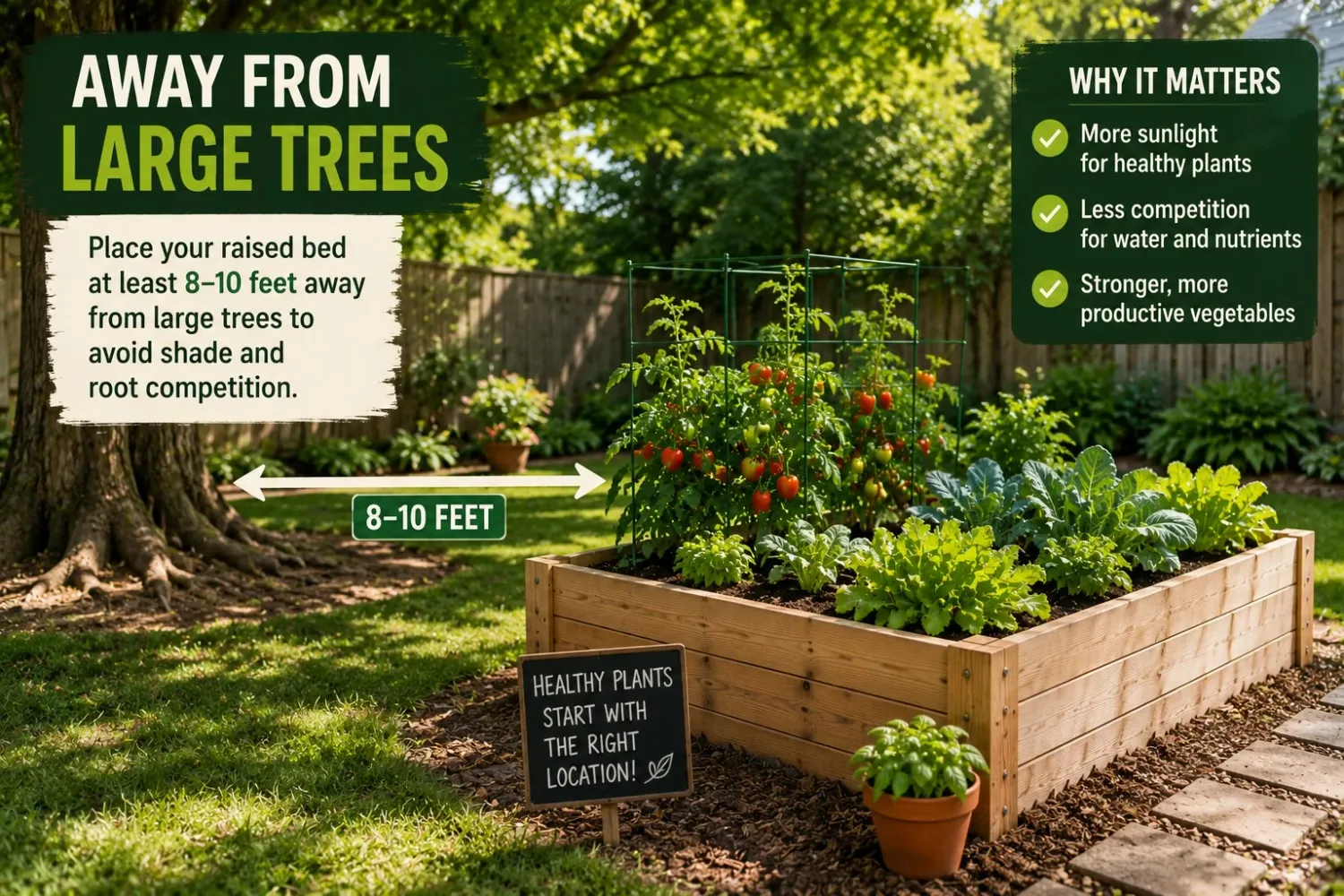
Large trees can create two major problems: shade and root competition.
Tree roots can compete with vegetables for water and nutrients, while branches and leaves can reduce the amount of sunlight reaching your plants.
Your source material recommends aiming for at least 8–10 feet of separation from large trees where possible.
That doesn't mean every tree automatically makes a location unusable. The important thing is to consider the size of the tree, the shade it creates, and the extent of its root system.
Watch for these warning signs
Avoid placing your bed:
Directly beneath a large tree canopy
Where heavy shade lasts most of the day
Where large roots are already visible
Where tree roots are likely to compete strongly with your vegetables
A sunny, open location is usually a better starting point.
5. Choose a Location You Can Easily Reach
A garden should not be hidden so far away that you forget about it.
Accessibility matters because a productive raised bed needs regular attention.
You will need to:
Check your plants
Water them
Pull weeds
Inspect for problems
Harvest vegetables
Add compost or other amendments
Support climbing plants when necessary
A garden close to your normal routine is easier to remember.
A location near your kitchen, entrance, patio, or another frequently used area can make daily observation more natural.
Your source material makes an important point: the best garden location isn't simply where plants can grow it is also somewhere you will actually enjoy caring for them.
Ask yourself:
Would I be willing to walk to this garden several times each week?
If the answer is no, consider a more convenient location.
6. Look for Level, Stable Ground
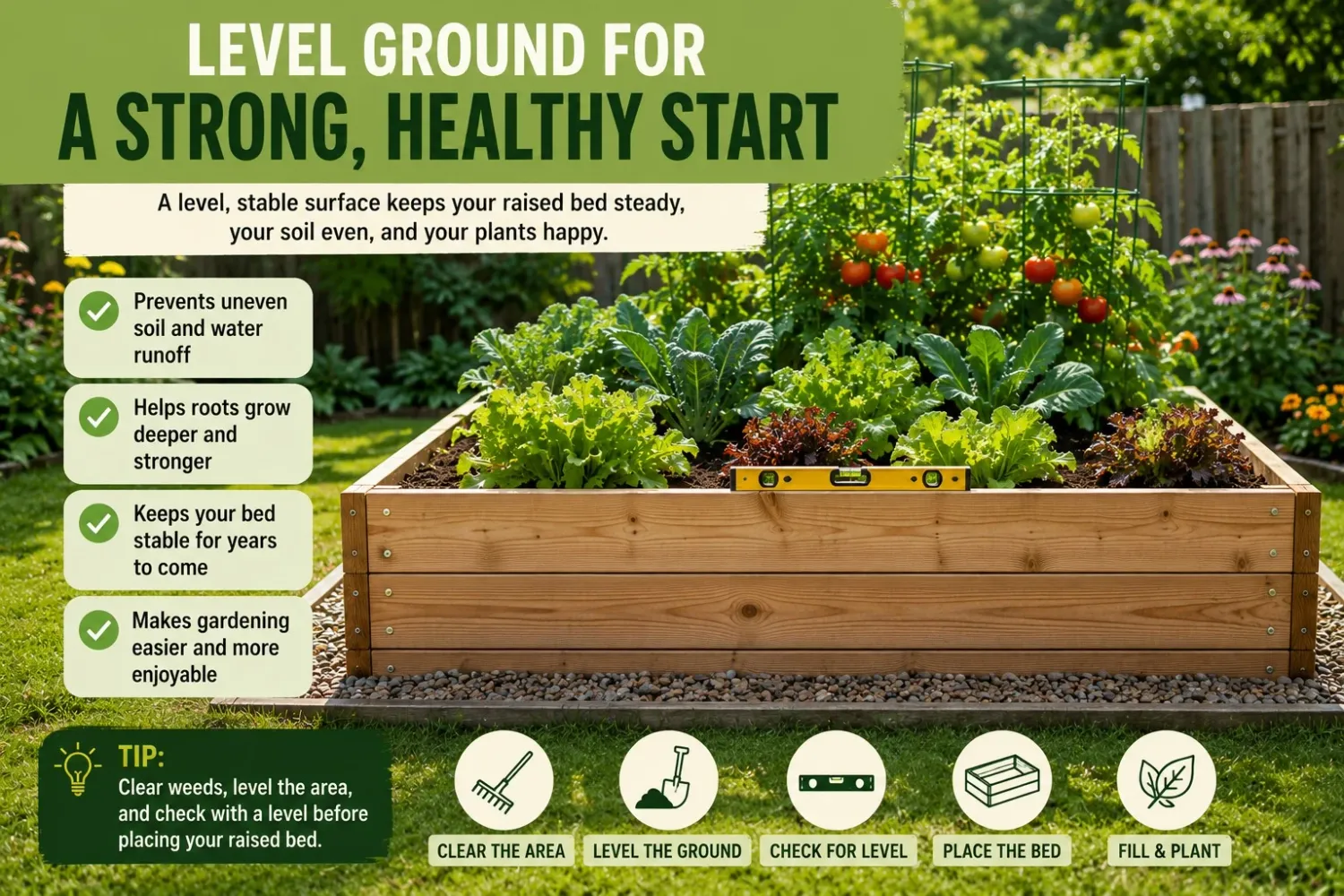
Your raised bed doesn't need to sit on a perfectly engineered surface, but the ground should be reasonably level and stable.
An uneven location can cause the bed to sit at an angle. Water and soil may settle unevenly, and soil can wash toward one side during watering or heavy rain.
Before installing the bed:
Remove weeds and unwanted vegetation.
Clear obvious debris.
Level uneven areas where practical.
Make sure the structure is stable before filling it with soil.
Check that the bed sits evenly on the ground.
A level location makes the bed easier to build and helps create more even growing conditions.
7. Check the Space Around the Bed
Don't measure only the raised bed itself.
Measure the whole working area.
A 4 × 8-foot bed may fit into an empty section of your yard, but you also need room to walk around it, reach the plants, carry supplies, and harvest comfortably.
Before deciding on the final location, consider:
The length and width of the bed
Walking space around the bed
Access to each side
Nearby fences and walls
Doorways and pathways
Where tools and watering equipment will be stored
Future expansion if you want another bed later
This is especially important in a small garden where every square foot matters.
You don't want to save space by pushing the bed against an obstacle, only to discover that you cannot comfortably reach half of the plants.
Leave room for your future garden
If you're starting with one raised bed, don't necessarily use every available inch.
Leaving some space around your first bed gives you flexibility to:
Add another bed later
Install a trellis
Create a walking path
Store gardening equipment
Make harvesting easier
A successful small garden is not about filling every available space. It's about using your available space wisely.
Planning a raised bed? Use this 4×8 raised bed vegetable garden layout to organize your crops and make the most of your growing space.
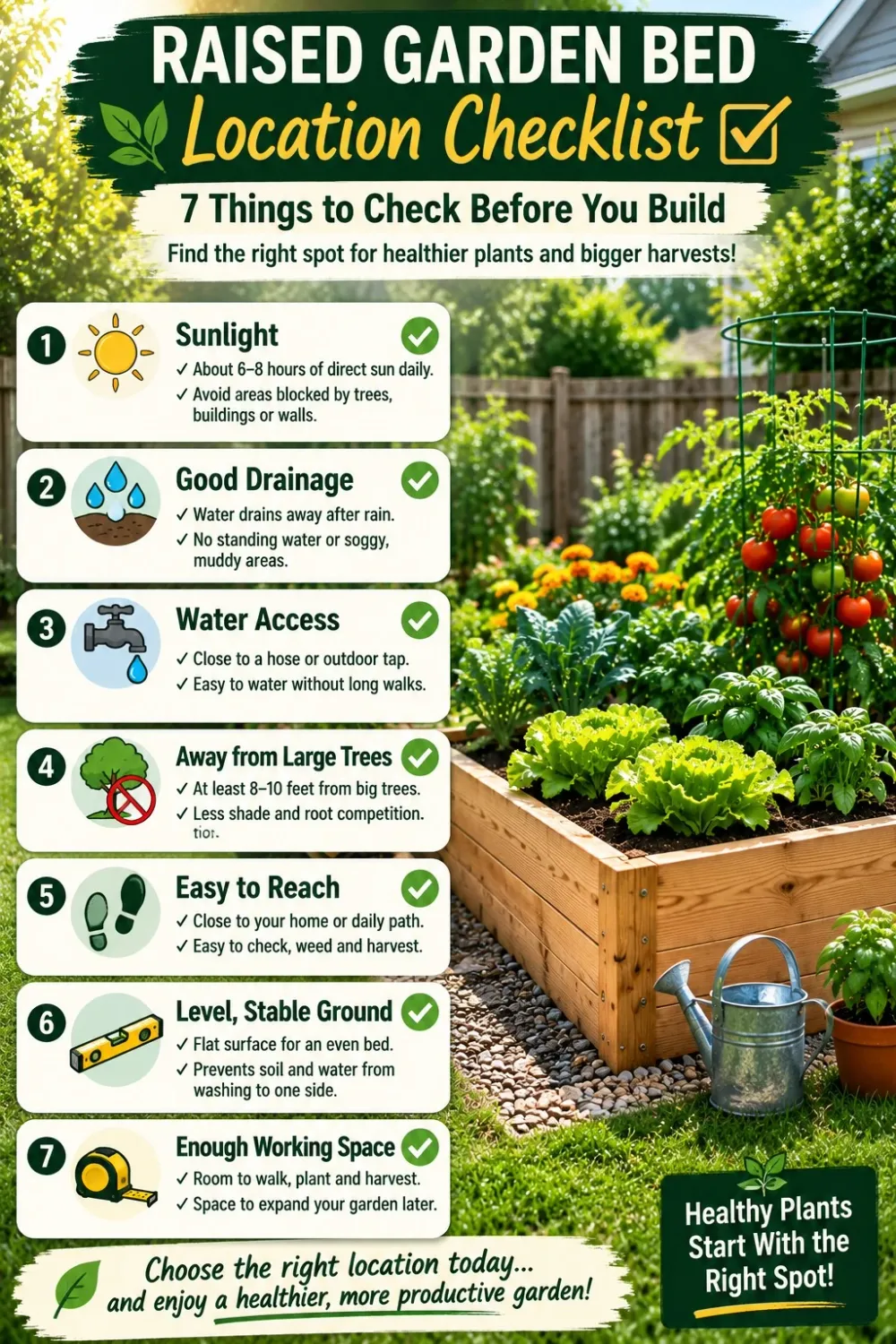
The Best Raised Garden Bed Location at a Glance
Before you build, use this quick checklist.
Where Should You NOT Put a Raised Garden Bed?
Sometimes it is easier to identify a bad location by looking for warning signs.
Avoid placing a raised bed:
Under heavy tree shade
In an area that regularly holds standing water
Far from your water source
Where it blocks a frequently used pathway
In a difficult-to-reach corner
On significantly uneven ground
Where large tree roots are likely to compete with your crops
In a location that doesn't provide enough sunlight for the crops you want to grow
One of the biggest mistakes beginners make is building first and observing later.
Take time to study the space before spending money on lumber, soil, compost, seeds, or other supplies.
A few hours of planning can prevent weeks of frustration.
A Simple 10-Minute Raised Bed Location Test
Not sure which of two locations is better?
Give both locations a quick score.
For each possible spot, give yourself:
2 points = Excellent
1 point = Acceptable
0 points = Problem
The higher-scoring location isn't automatically the winner.
Use the score to identify which factors need more attention.
For example, a location with excellent sunlight but terrible drainage may need improvement before it becomes suitable.
What If You Have a Very Small Yard?
You don't need a huge backyard to find a useful raised bed location.
Look beyond the obvious garden area.
Potential spaces may include:
A sunny side yard
A narrow strip beside a house
A small courtyard
A sunny corner near a fence
A suitable patio area
Another unused outdoor space
The important question isn't simply:
“Where do I have empty space?”
Instead, ask:
“Where can plants receive what they need to grow successfully?"
Your gardening space needs to balance sunlight, water availability, drainage, accessibility, protection, and available room.
In a small garden, thoughtful planning can make a bigger difference than having more square footage.
Learn practical ways to grow more vegetables in a small space using raised beds, vertical gardening, and smart crop choices.
Frequently Asked Questions
What is the best location for a raised garden bed?
The best location is generally a sunny, well-drained, level area that is close to water, easy to access, away from large trees, and large enough to provide comfortable working space.
Can I put a raised garden bed next to a fence?
You can, but check how much sunlight the fence blocks and make sure you can still reach the plants and maintain the bed comfortably. A fence may also create changing shadows during the day.
Should a raised garden bed be in full sun?
For many common vegetables, a location receiving about 6–8 hours of direct sunlight is a useful target. However, crops differ in their light requirements, so choose crops that match the amount of sunlight your location actually receives.
How far should a raised bed be from a large tree?
Your source material recommends aiming for 8–10 feet of separation from large trees where possible. The exact distance you need can vary depending on the tree and your site.
Can I put a raised bed on uneven ground?
It's better to choose or prepare a reasonably level location. A stable, level surface helps the bed remain even and makes watering and soil management easier.
Does a raised bed need to be close to the house?
It doesn't have to be, but convenient access is helpful. A bed that you naturally pass every day is easier to monitor, water, weed, and harvest.
Final Thoughts: Choose the Location Before You Build
Where you put your raised garden bed can influence almost everything that happens afterward.
Before building, check these seven things:
Sunlight
Drainage
Water access
Distance from large trees
Accessibility
Level ground
Working space
You don't need a perfect yard.
You need a location that gives your plants the conditions they need and makes gardening easy enough for you to maintain consistently.
So before you buy lumber or fill a bed with soil, take a walk around your outdoor space.
Observe it.
Measure it.
Watch how the sunlight moves.
Look for wet areas.
Check where the water source is.
Think about how you'll move around the bed.
A little planning now can save you a lot of work later and help you turn even a small space into a productive garden.
Ready to Plan Your Vegetable Garden?
If you're starting your first raised bed, get The Ultimate Raised Bed Gardening Starter Kit for beginner-friendly help with planning your garden, choosing vegetables and preparing your growing space.
Written by:
Wren Hartley
SHARE




About me
Hi there 👋 I’m Wren Hartley, the creator of Tiny Garden Harvest. I love helping beginners grow fresh food and enjoy bigger harvests from small spaces. 🌱

Trending
learn the basics of location, soil, vegetables, spacing, watering, and care.
Grow more food in less space with raised beds, vertical gardening, and smart crop choices.
Learn an easy raised bed soil mix using topsoil, compost, and aeration material.
Free E-book
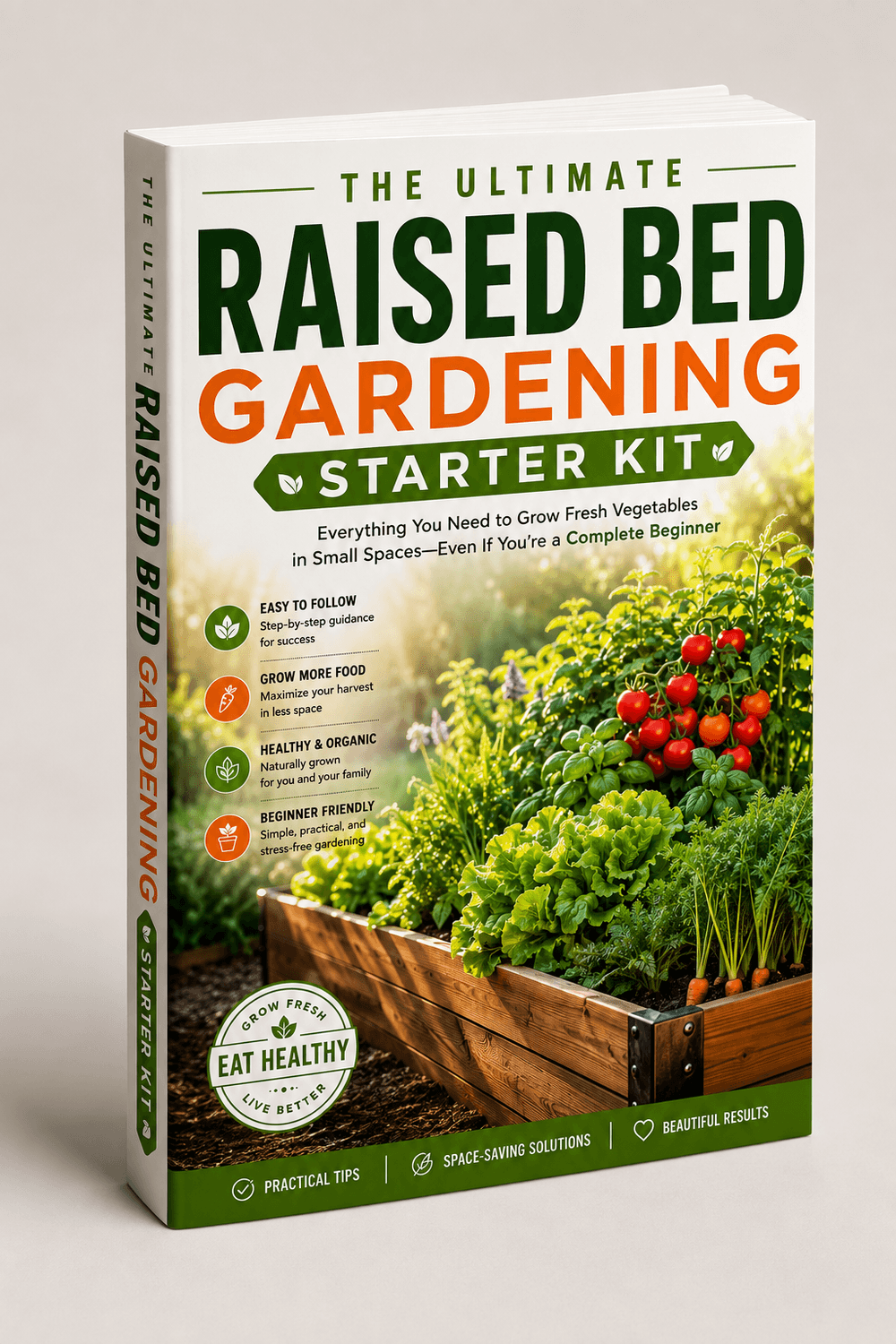
Grab your free Ultimate Raised Bed Gardening Starter kit -Ever if you've not garden before.
NEW FREE E-BOOK: Grow Fresh Vegetables in Small Spaces Even If You've Never Gardened Before