
How to Water Raised Beds: A Beginner's Guide to Watering Vegetables
If you're new to raised bed gardening, watering can seem surprisingly confusing.
Should you water every day? How much water do vegetables actually need? Is it better to use a watering can, hose, soaker hose or drip irrigation?
The short answer is: don't rely on a fixed watering schedule alone. Check the soil, consider the weather and plants, then water slowly enough for the moisture to reach the root zone.
Raised beds can dry out faster than in-ground soil, so consistent monitoring matters. University of Minnesota Extension notes that containerized raised beds can dry more quickly, while NC State Extension recommends adjusting watering according to rainfall and checking how deeply moisture has reached the soil.
Here's how to build a simple watering routine that works for a beginner vegetable garden.
How Often Should You Water a Raised Bed?
There isn't one watering schedule that works for every raised bed.
Your watering needs can change with:
Temperature
Rainfall
Wind
Soil type
Mulch
Bed depth
Plant size
Crop type
Growing stage
Amount of sunlight
For example, sandy or fast-draining soil may need water more frequently than soil that holds moisture well. Mulch can also reduce moisture loss.
So instead of saying "water every day," use this simple rule:
Check the soil first. Water when the root zone is becoming dry, then adjust your routine according to conditions.
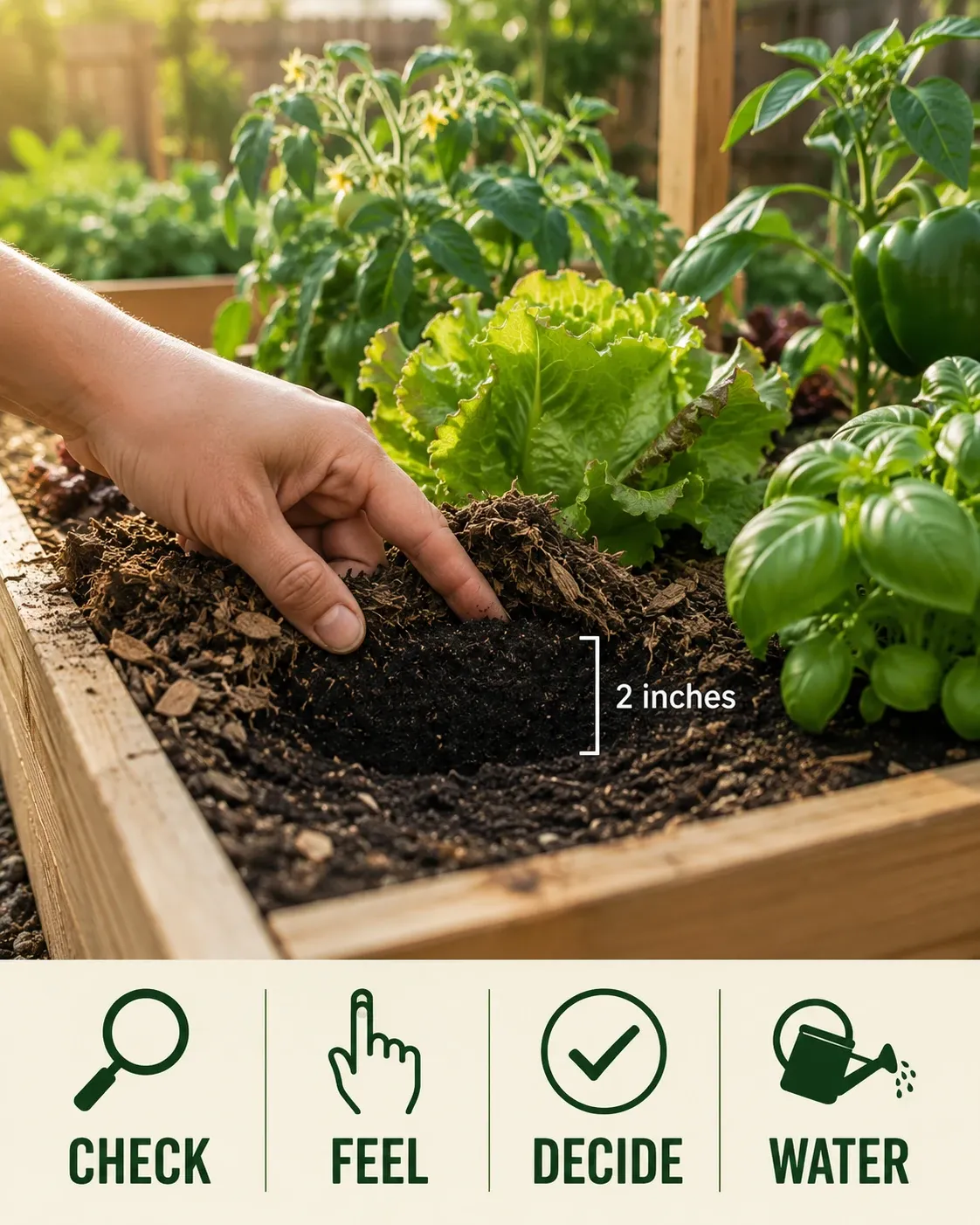
University of Minnesota Extension suggests checking about 2 inches below the surface; if the soil is dry at that depth, it is time to water.
If you're still setting up your first garden, start with this complete guide to raised bed gardening for beginners before fine-tuning your watering routine.
How to Tell When Your Raised Bed Needs Water
The easiest beginner-friendly method is to check the soil rather than guessing from the calendar.
Step 1 — Check below the surface
Move aside any mulch and feel the soil approximately 2 inches below the surface.
Oregon State University Extension recommends checking soil moisture about 2 inches below the surface to help determine whether plants need water.
If it is still moist, you may not need to water yet.
If it feels dry, the bed may need watering.
Step 2 — Look at the plants
Plants can also give you clues.
Wilting can indicate water stress, although plant symptoms should be considered alongside soil moisture and weather rather than used alone.
Don't wait for severe wilting before developing a watering routine.
Step 3 — Consider the weather
A rainy week and a hot, windy week can require very different watering decisions.
That's why a calendar saying "water every Tuesday and Friday" isn't reliable for every garden.
Watering on a fixed schedule even when the soil is already wet is one of the common raised bed gardening mistakes beginners can avoid.
How Much Water Do Raised Bed Vegetables Need?
A useful general benchmark is around 1 inch of water per week from rainfall and irrigation combined, but this is a starting point rather than a universal rule.
NC State Extension gives 1 inch per week as an average vegetable-garden guideline and explains that the actual amount depends on rainfall and soil conditions.
University of Minnesota Extension similarly uses 1 inch per week as a general vegetable-garden benchmark while explaining that soil type changes how frequently water should be applied.
What does 1 inch of water mean?
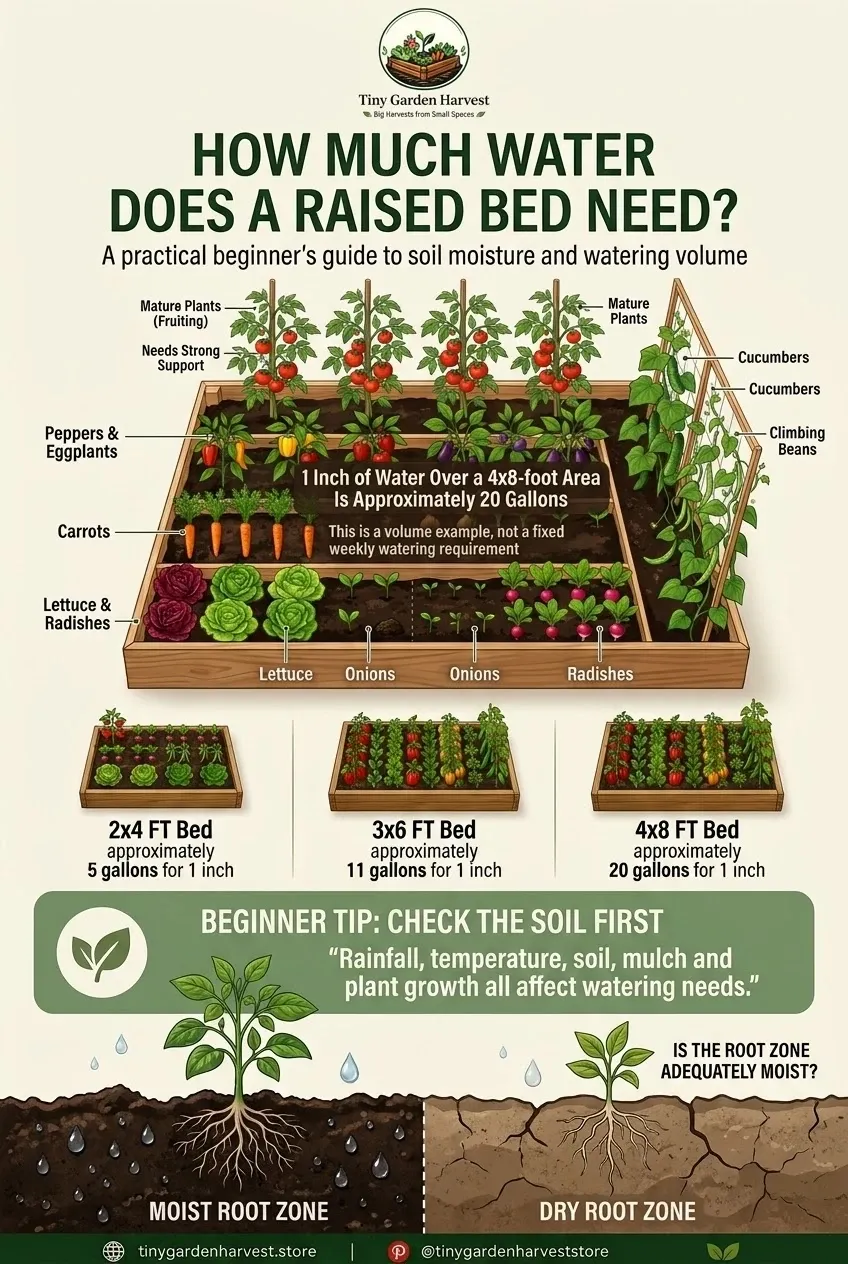
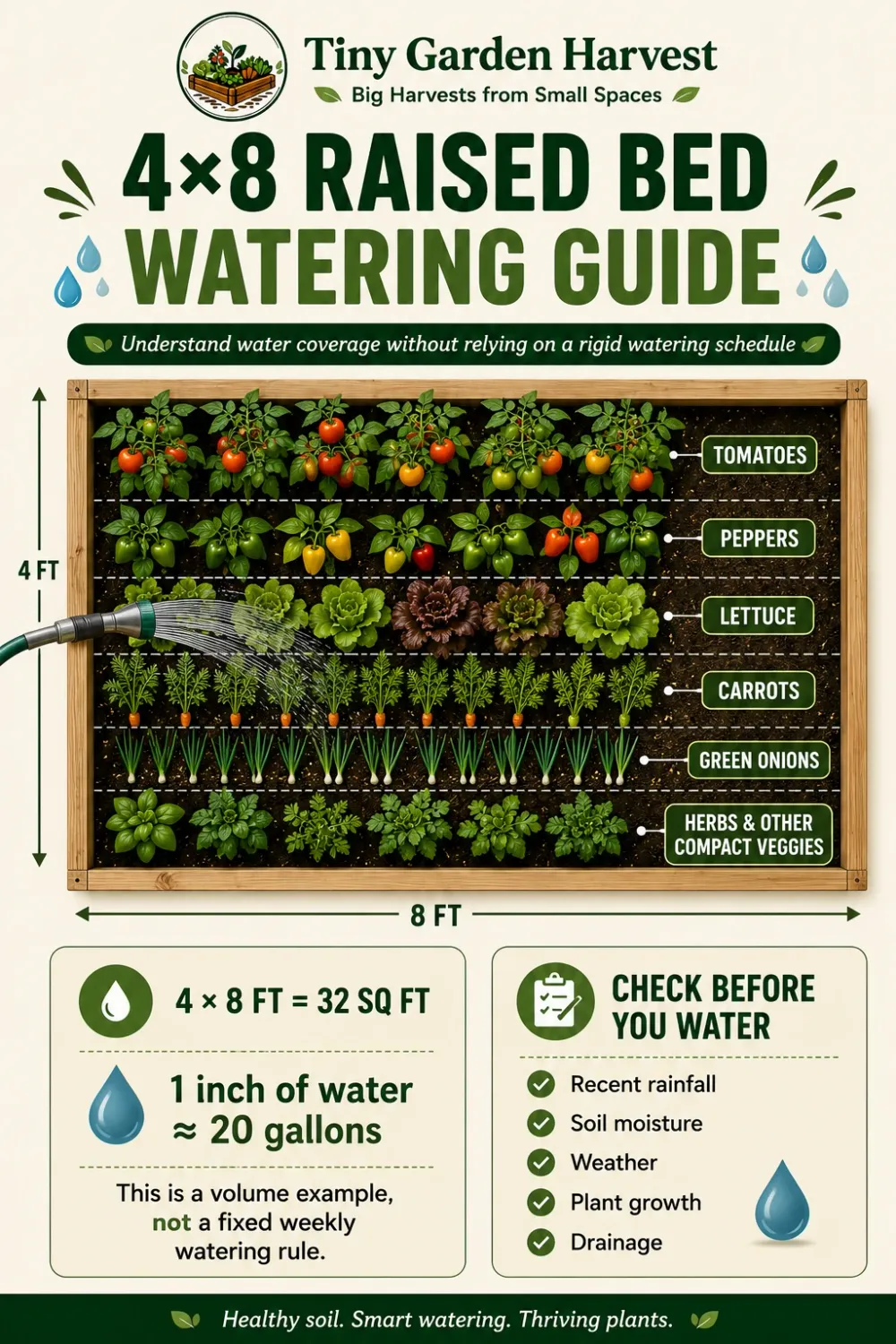
For a 4×8-foot raised bed, 1 inch of water is roughly 20 gallons.
That's a useful way to understand how much water is involved but it doesn't mean every 4×8 bed should automatically receive 20 gallons every week.
Rainfall, soil moisture, temperature, crop size and other conditions still matter.
Quick calculation
A simple formula is:
Length × width × 0.623 = gallons for 1 inch of water
For example:
Treat these as planning figures, not a mandatory weekly watering schedule.
The Best Way to Water Vegetables in a Raised Bed
For most home gardeners, the goal is simple:
Get water into the soil around the roots without unnecessarily wetting the foliage or washing soil away.
University Extension guidance recommends directing water toward the soil around the base of plants and applying it slowly enough to soak into the soil rather than run off.
A simple hand-watering technique is:
Aim the water at the soil.
Start with a gentle flow.
Allow water to soak in.
Move gradually across the bed.
Check whether the soil is becoming moist at the appropriate depth.
Stop if water begins pooling or running off.
The Tiny Garden Harvest garden planning materials also emphasize water access and good drainage when choosing a raised-bed location.
Should You Water Vegetables at the Leaves or the Soil?
For routine watering, direct the water toward the soil rather than deliberately soaking the leaves.
The roots are where the plant takes up water.
Water splashing from soil onto foliage can also contribute to some disease problems, which is one reason university extension guidance recommends keeping routine irrigation close to the soil surface.
This doesn't mean leaves can never get wet. Rain and certain irrigation systems naturally wet foliage.
The practical takeaway for a beginner is simply:
When watering by hand, aim for the soil around the plant rather than spraying the entire plant from above.
What Is the Best Time of Day to Water a Raised Bed?
Morning is generally a good time to water.
The air is usually cooler and there is often less wind, giving plants time to use the water before the hottest part of the day. Early watering can also give foliage time to dry.
But don't turn "morning watering" into an absolute rule.
If your plants are clearly experiencing water stress and the soil is dry, water when they need it rather than waiting until the next morning. University of Minnesota Extension makes the same distinction: early watering is preferable, but stressed plants should not be left waiting.
Three Ways to Water a Raised Bed
You don't need an expensive irrigation system to grow vegetables successfully.
Choose the method that fits the size of your garden and the amount of time you want to spend watering.
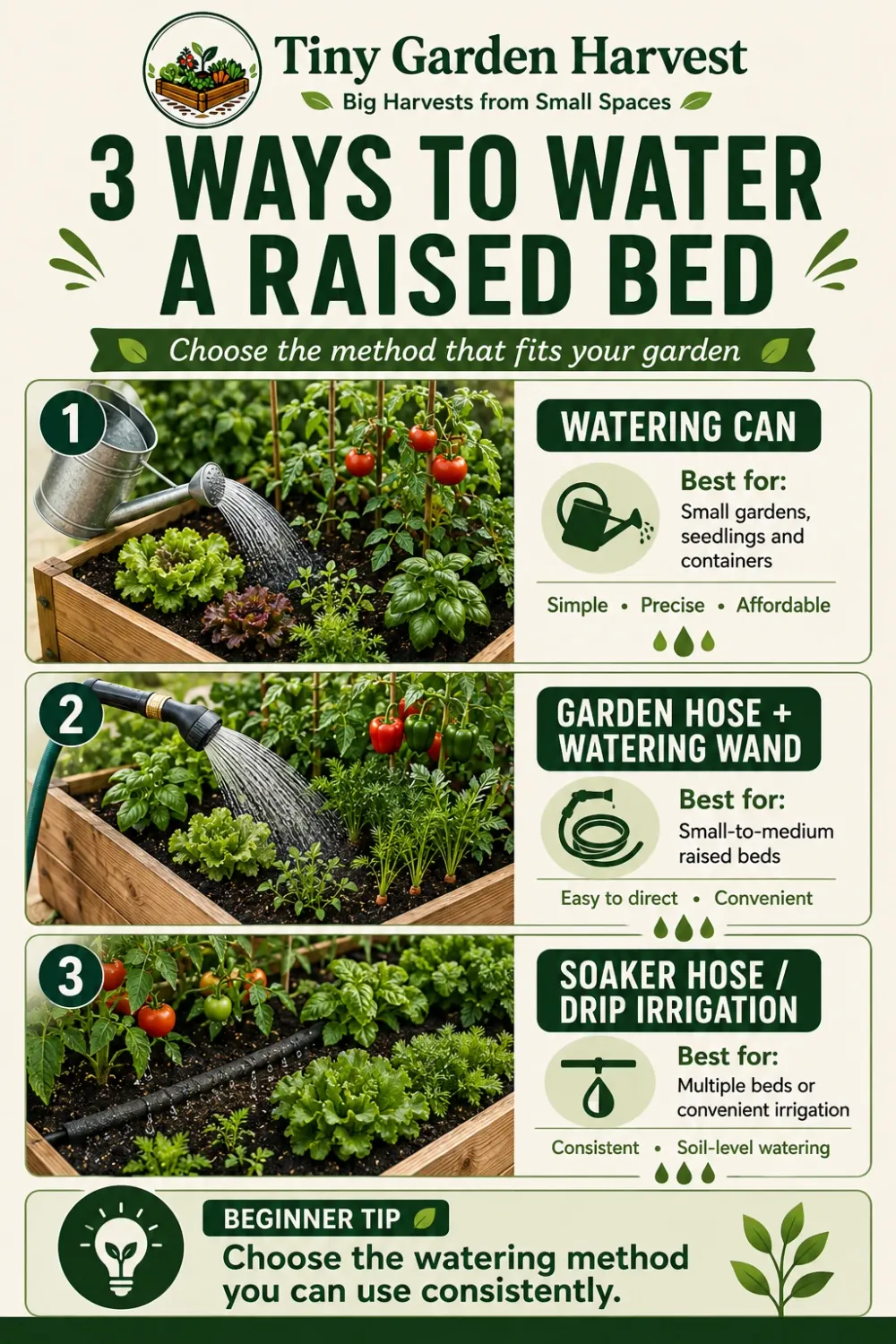
1. Watering Can
A watering can is one of the simplest options for a small raised bed.
Best for:
Small gardens
Seedlings
Containers
Gardeners who want close control
Advantages:
Simple
Inexpensive
Easy to direct water precisely
Limitation:
A large garden can require many trips to the water source.
2. Garden Hose or Watering Wand
A hose with a gentle watering attachment can make watering larger beds easier.
Keep the flow low enough that water can soak into the soil without washing it away.
A hose is especially convenient when the raised bed is located close to a water source one reason the Tiny Garden Harvest location guidance recommends considering water access when positioning a raised bed.
3. Soaker Hose or Drip Irrigation
Soaker hoses and drip systems apply water close to the soil surface.
They can be particularly useful when you have multiple beds or want a more consistent watering system.
University Extension guidance lists drip, trickle and soaker systems among suitable irrigation options for vegetable gardens.
For a beginner with one small raised bed, however, you don't need to install irrigation simply because it sounds more advanced.
Start with the method you can use consistently.
How to Water Newly Planted Raised Beds
Newly planted vegetables need particular attention because seedlings and young plants have smaller root systems.
The goal is to prevent the planting area from becoming excessively dry while the roots are becoming established.
Pay particular attention after:
Sowing seeds
Transplanting seedlings
Planting new vegetables
Extended periods without rain
Hot or windy weather
Don't assume that because you watered yesterday, today's soil automatically has enough moisture.
Check the soil and the plants.
Young seedlings may also need more frequent attention than established plants because their roots occupy a smaller area.
How Watering Changes as Vegetables Grow
A plant's water needs don't stay exactly the same throughout its life.
Young seedlings
Focus on maintaining appropriate moisture around the developing root zone.
Established plants
As roots develop, the plant can draw water from a larger volume of soil.
Flowering and fruiting crops
Crops producing fruits can have significant water needs during important growth periods. OSU Extension notes that vegetable crops generally need more water during early growth, after transplanting and during flowering and fruit development.
This is another reason to avoid a rigid calendar.
Your watering routine should change as the plants, weather and soil conditions change.
How Mulch Can Help With Watering
Mulch can help reduce moisture loss from the soil surface.
Organic mulches such as straw, leaves or suitable compost-based materials can help conserve moisture, while the exact choice should suit the crop and garden conditions. University of Minnesota Extension notes that mulched soil retains water better and may require less frequent watering.
The key is not to use mulch as a substitute for checking the soil.
Think of it as part of the watering system:
Healthy soil + appropriate mulch + sensible watering + observation
How to Avoid Overwatering Raised Beds
More water isn't automatically better.
Vegetable roots need both water and oxygen in the soil.
When soil becomes saturated, the amount of air available to roots can decrease. Excess moisture can contribute to root problems and disease.
Watch for signs such as:
Soil remaining constantly wet
Water pooling on the surface
Poor drainage
Yellowing or declining plants
A persistently soggy planting area
If water remains around the bed after watering or rain, don't simply increase watering frequency.
Check the drainage first.
Raised Bed Watering Mistakes Beginners Should Avoid
Watering on a rigid calendar
A schedule can be useful as a reminder, but it shouldn't replace checking the garden.
Giving a little water every day without checking the soil
Frequent shallow watering isn't automatically better.
Apply water slowly enough to reach the root zone when the soil actually needs it.
Ignoring rainfall
Rain counts.
If your garden has received substantial rainfall, you may not need to add the same amount of irrigation.
Watering only the visible soil surface
The surface can look wet while deeper soil remains dry or the surface can look dry while moisture remains below.
Check below the surface.
Forgetting drainage
A raised bed needs appropriate drainage as well as water.
Using too much water too quickly
Fast water application can cause runoff instead of soaking into the soil.
Assuming every vegetable needs exactly the same amount
Different crops, growth stages and growing conditions can change water needs.
A Simple Raised Bed Watering Routine for Beginners
If all of this sounds complicated, simplify it.
Use this five-step routine:
1. Look
Check your plants and the garden conditions.
2. Feel
Check the soil below the surface.
3. Consider
Think about recent rain, temperature, wind, soil and mulch.
4. Water
If the soil needs water, apply it slowly around the root zone.
5. Recheck
Make sure water is soaking into the soil rather than simply running away.
That's it.
You don't need to memorize a complicated watering schedule.
A Simple Weekly Watering Check
Instead of writing "water every Monday, Wednesday and Friday," create a simple garden check.
This gives you a repeatable decision process without pretending every garden has identical watering needs.
What About a 4×8 Raised Bed?
A 4×8 raised bed contains 32 square feet of growing area.
Using the general 1-inch benchmark, that area would require approximately 20 gallons of water to equal 1 inch of rainfall.
But remember: this is a way to understand volume, not a recommendation to automatically add 20 gallons every week.
If the bed already received rain, the soil remains moist and the plants are healthy, additional water may not be needed.
If conditions are hot and dry, the bed may need additional irrigation.
This is a natural place to link to your 4×8 raised bed vegetable garden layout, because readers who are thinking about water volume for a 4×8 bed may also need help planning the crop arrangement.
How Soil and Raised Bed Design Affect Watering
Watering doesn't happen in isolation.
The soil inside the bed affects how quickly water enters, moves through and remains available to plants.
The Tiny Garden Harvest Gardening Knowledge Base specifically identifies soil, compost, aeration, drainage and mulching as related raised-bed considerations.
Your bed design also matters.
For example:
A shallow bed may dry differently from a deeper bed.
Fast-draining soil may require more frequent checks.
Mulch can slow moisture loss.
Poor drainage can leave soil excessively wet.
A bed in a sunny, windy location may dry faster.
This is why the best watering routine is based on observation rather than a universal timer.
If your bed dries out unusually quickly or stays wet for too long, the problem may begin with the growing medium. Learn more about choosing the right raised bed soil mix before changing your watering routine.
When Should You Change Your Watering Routine?
Adjust your approach when conditions change.
Water more often when:
Weather becomes hot and dry
Wind increases moisture loss
Rainfall decreases
Plants become larger
The soil dries faster than usual
Newly planted crops need closer attention
Water less often when:
Regular rainfall is supplying moisture
Soil remains moist below the surface
Temperatures are cooler
Mulch is reducing moisture loss
Plants are using less water
The important word is adjust.
A good watering plan isn't a fixed number on a calendar. It's a routine that responds to the garden.
Frequently Asked Questions
How often should I water a raised bed?
Check the soil rather than following a fixed schedule. Soil type, weather, rainfall, mulch, plant size and crop requirements all affect how often watering is necessary.
Should I water raised beds every day?
Not necessarily. Daily watering may be appropriate under some hot, dry conditions, particularly for certain plants or newly established beds, but it should not be treated as a universal rule.
Is it better to water raised beds in the morning?
Morning is generally a good time because conditions are often cooler and less windy. However, don't delay watering a plant that is already experiencing significant water stress.
Should I water the leaves or the soil?
For routine hand watering, direct water toward the soil around the base of the plants. This puts moisture closer to the roots and helps avoid unnecessary foliage wetting.
How do I know if my raised bed is too wet?
Look for persistently soggy soil, standing water or poor drainage. Excessively wet soil can reduce oxygen available to roots and contribute to plant problems.
Is drip irrigation necessary for a raised bed?
No. A watering can or hose can work perfectly well for a small garden. Drip or soaker systems become more useful when you want more consistent or convenient irrigation across larger or multiple beds.
Final Thoughts
Learning how to water raised beds isn't about finding one perfect watering schedule.
It's about learning to read your garden.
Check the soil.
Pay attention to rainfall.
Watch the weather.
Consider your plants.
Water slowly at the soil level.
Make sure excess water can drain away.
Then adjust as conditions change.
For a beginner, that simple habit is more useful than memorizing a rigid number of watering days.
Your raised bed doesn't need the same amount of water every day of the season. It needs the right amount of attention.
Ready to plan the rest of your raised bed?
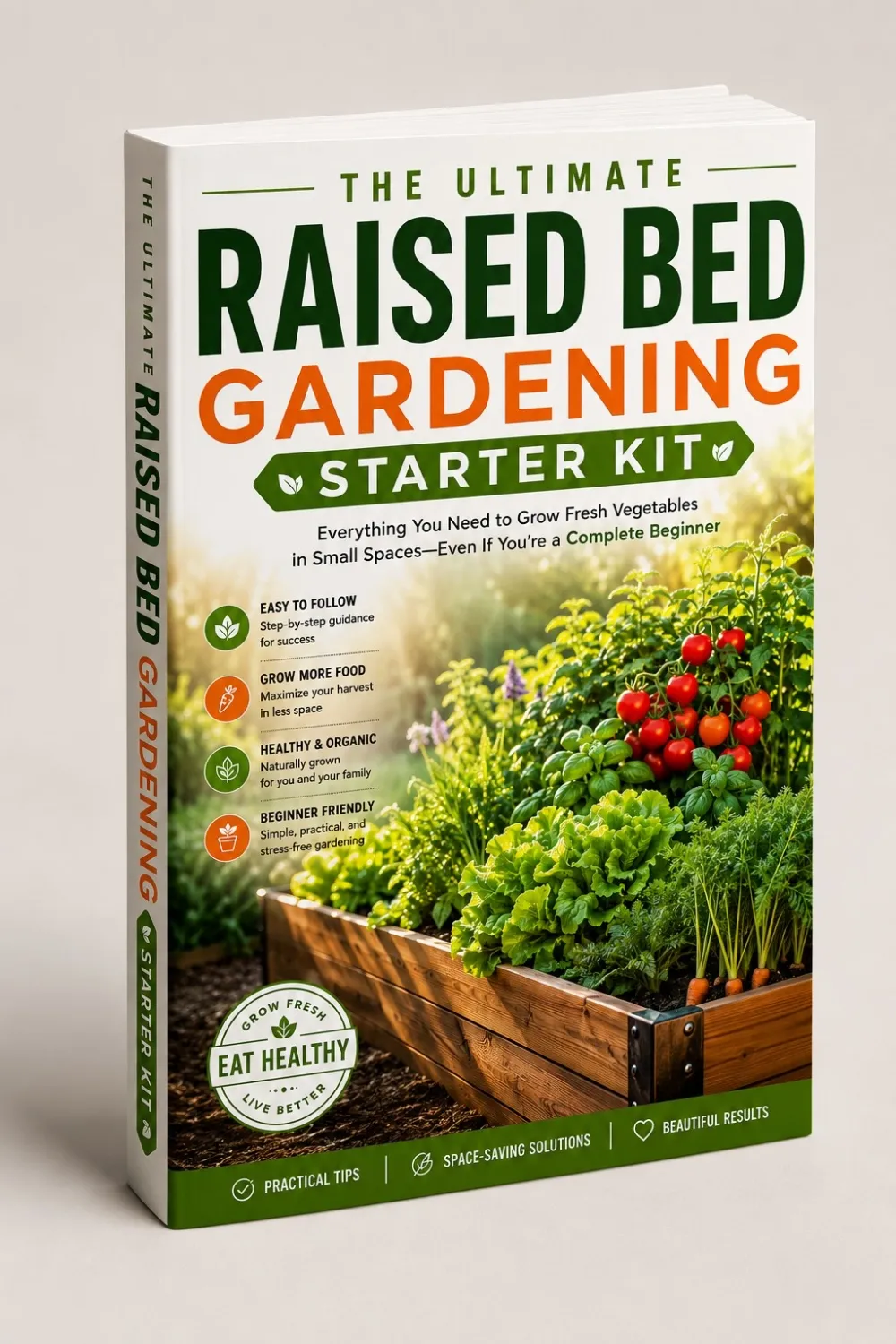
Watering is only one part of creating a productive small-space garden. The Ultimate Raised Bed Gardening Starter Kit brings together beginner guidance on raised bed planning, soil, vegetables, spacing, watering, fertilizing, pests, and maintenance.
Written by:
Wren Hartley
SHARE




About me

Hi there 👋 I’m Wren Hartley, the creator of Tiny Garden Harvest. I love helping beginners grow fresh food and enjoy bigger harvests from small spaces. 🌱

Trending
learn the basics of location, soil, vegetables, spacing, watering, and care.
Grow more food in less space with raised beds, vertical gardening, and smart crop choices.
Learn an easy raised bed soil mix using topsoil, compost, and aeration material.
Free E-book
Grab your free Ultimate Raised Bed Gardening Starter kit -Ever if you've not garden before.
NEW FREE E-BOOK: Grow Fresh Vegetables in Small Spaces Even If You've Never Gardened Before