
7 Raised Bed Gardening Mistakes Beginners Should Avoid
Raised bed gardening can make growing vegetables easier, especially when you're working with a small space.
But a raised bed doesn't automatically guarantee healthy plants or a big harvest.
Many problems beginners experience come from a few simple mistakes made before or shortly after planting.
The good news is that most of them are easy to prevent.
Here are 7 common raised bed gardening mistakes to avoid so you can give your vegetables a healthier start.
Mistake #1: Planting Too Much, Too Close Together
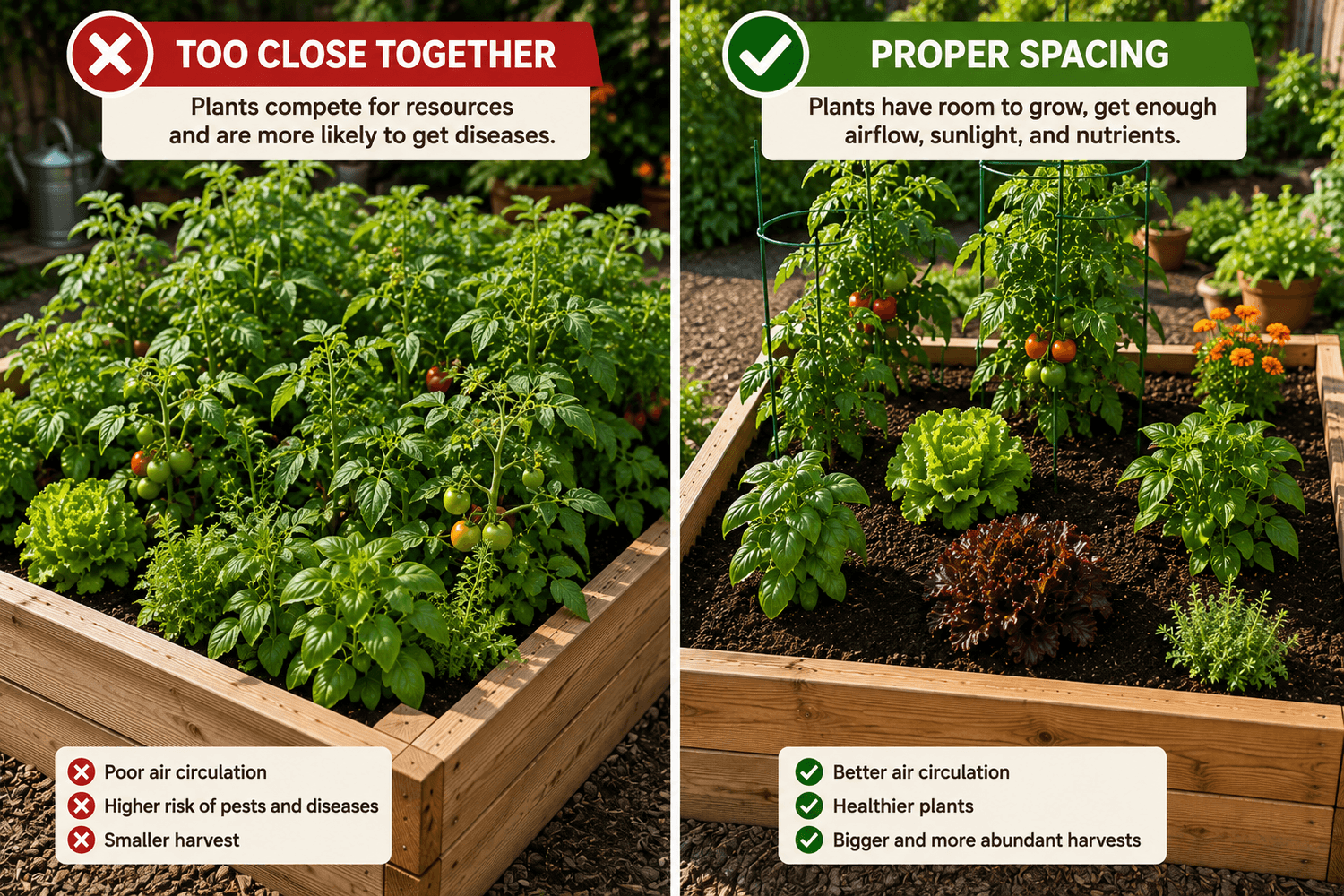
It can be difficult to imagine how large a tiny seedling will eventually become.
That small tomato plant you put into your raised bed may grow into a large plant that needs considerable room, sunlight and airflow.
When vegetables are planted too closely, they may compete for:
Sunlight
Water
Nutrients
Root space
Crowded foliage can also reduce airflow around plants.
What to Do Instead
Check the recommended spacing for the specific crop and variety before planting.
Plan your garden according to the plants' mature sizes not how small they look when you buy them.
Beginner Tip: Efficient spacing is good. Overcrowding isn't.
Mistake #2: Watering on a Fixed Schedule
You may hear advice such as:
“Water your raised bed every day.”
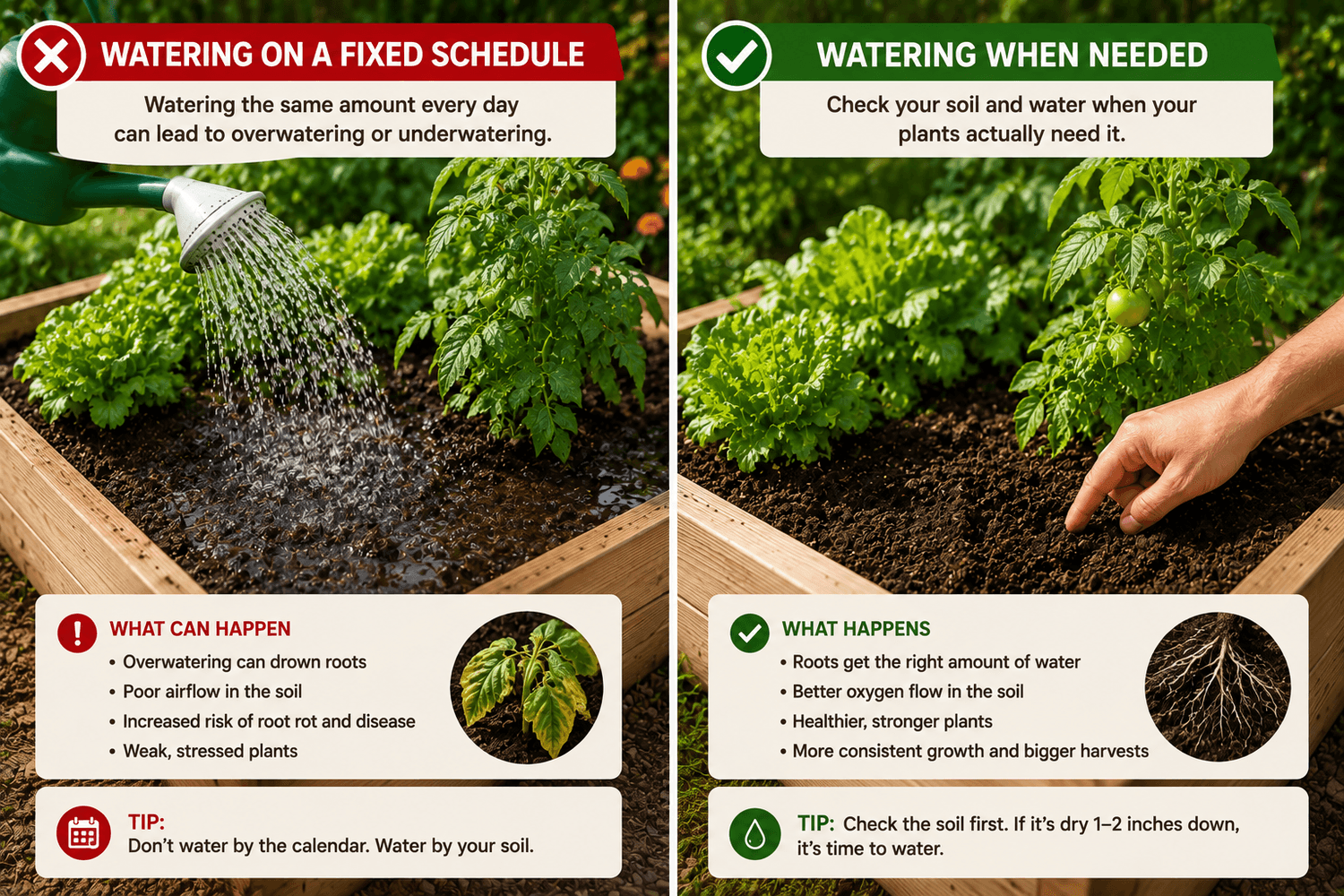
The problem is that your garden doesn't need exactly the same amount of water every day.
Weather, rainfall, temperature, wind, soil, mulch and plant size all affect how quickly the soil dries.
Watering automatically without checking the soil can lead to too much or too little water.
What to Do Instead
Check your soil before watering.
Feel below the surface to see whether the root zone is beginning to dry.
When watering is needed, water thoroughly enough to moisten the root zone rather than giving plants frequent tiny splashes.
Mistake #3: Ignoring Sunlight Requirements
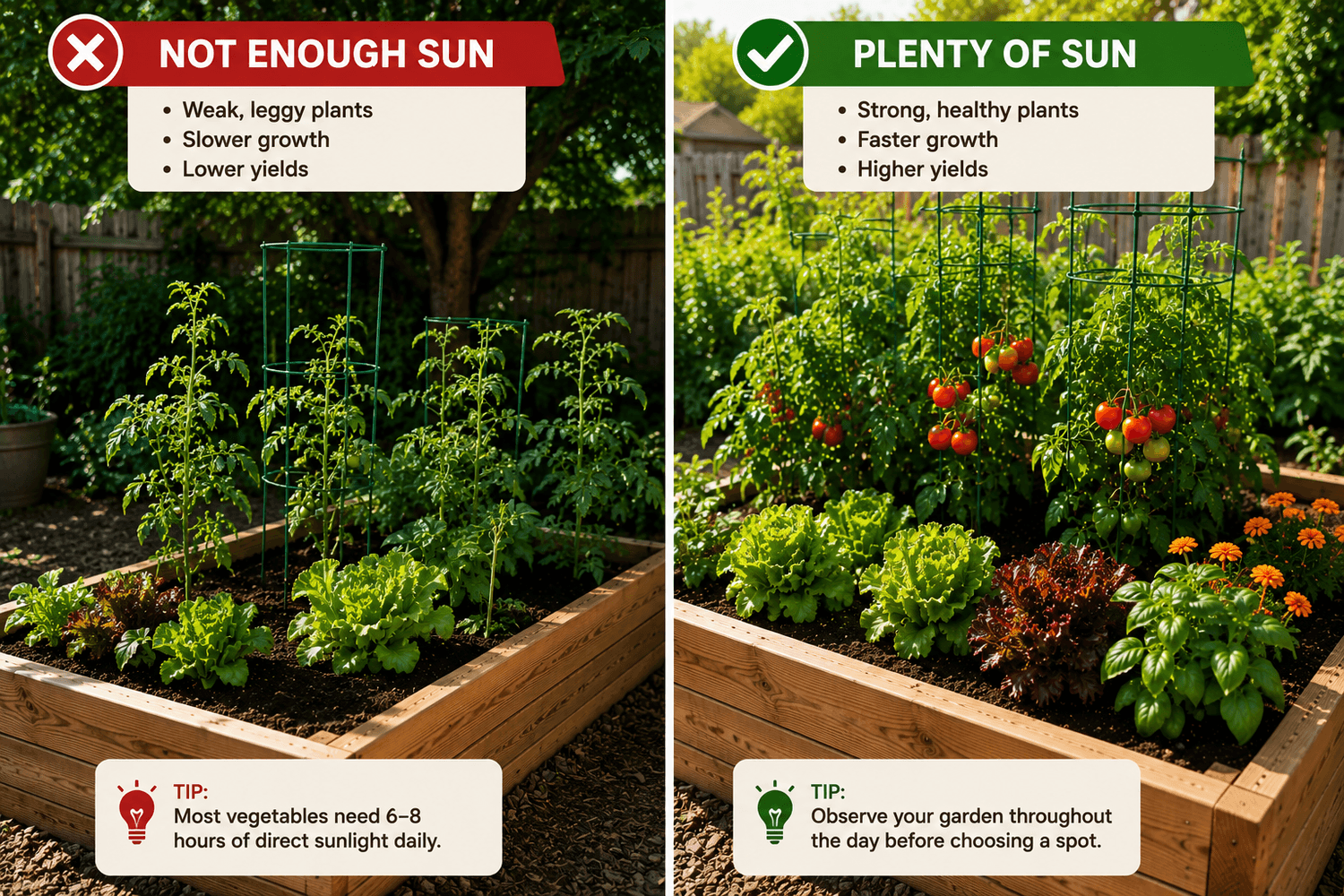
A beautiful raised bed in the wrong location can become frustrating very quickly.
Many popular vegetable crops need plenty of direct sunlight to grow and produce well.
Tomatoes, peppers, cucumbers and beans generally prefer sunny conditions.
What to Do Instead
Observe the proposed location before installing your raised bed.
Check it:
Morning → Midday → Afternoon
Pay attention to shade from houses, fences, trees and other structures.
If your garden receives less sunlight, consider crops that can tolerate somewhat lower light conditions rather than forcing sun-loving crops into an unsuitable location.
Mistake #4: Skipping Soil Preparation
This is one of the biggest raised bed gardening mistakes beginners can make.
Your vegetables depend on the soil for water, nutrients, oxygen and physical support.
Dropping seedlings into poor-quality, compacted or unsuitable soil can make the entire growing season more difficult.
What to Do Instead
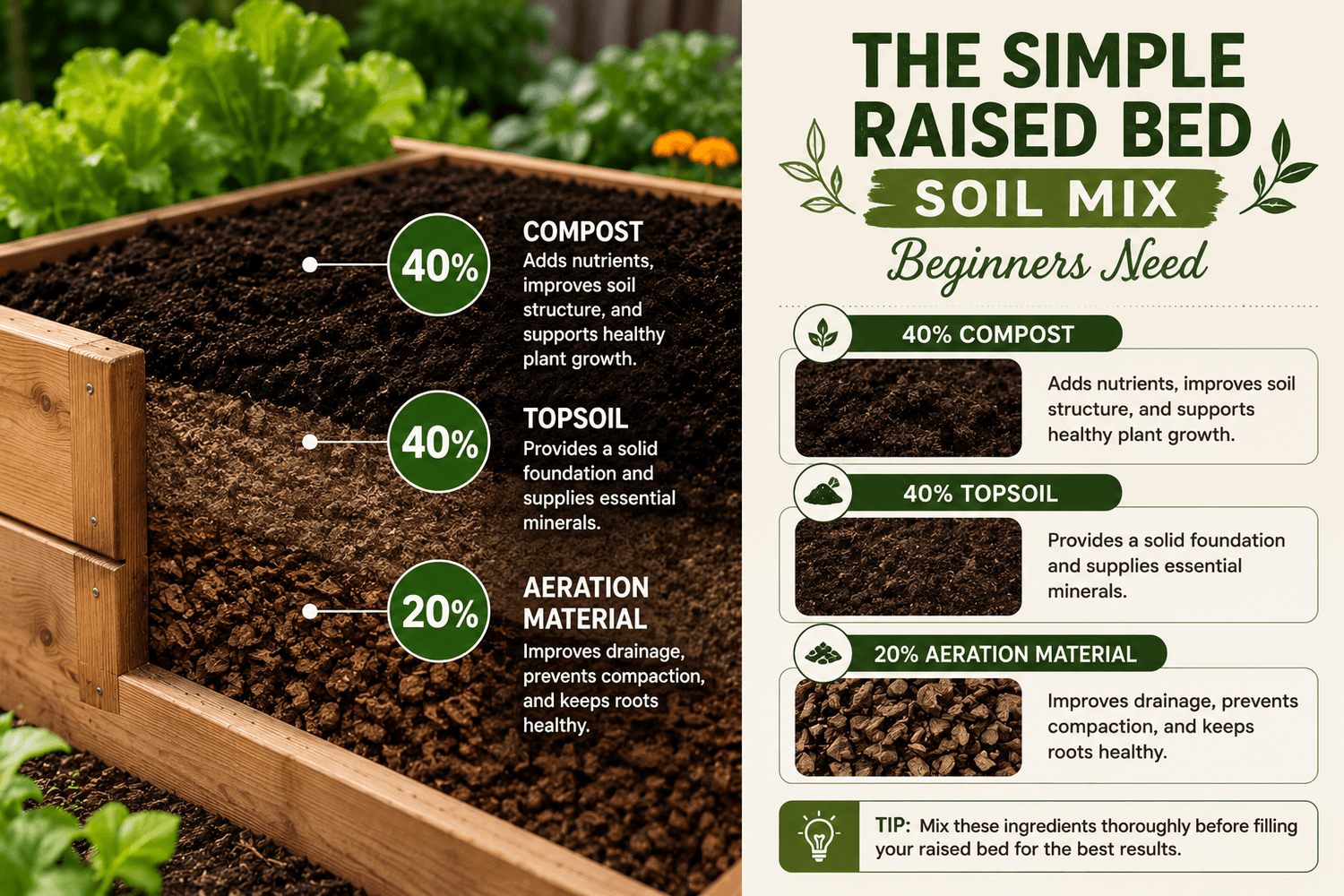
Start with a balanced raised-bed growing mix.
A simple beginner framework is:
40% Topsoil
40% Finished Compost
20% Aeration Material
The goal is to create soil that retains useful moisture while still allowing drainage and air movement around plant roots.
You can also add compost over time to replenish organic matter.
Mistake #5: Not Thinning Seedlings
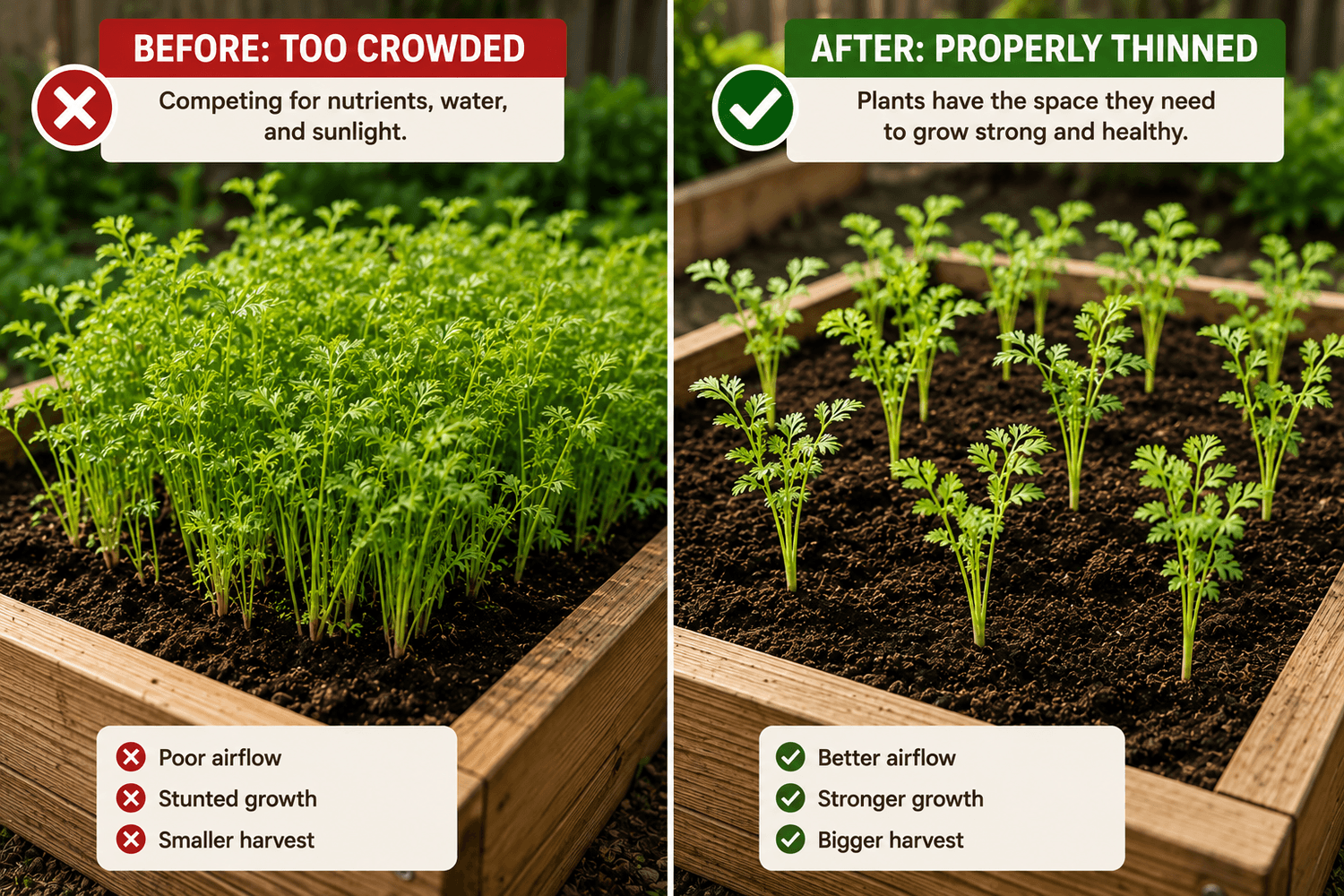
Planting seeds directly into a raised bed often produces several seedlings close together.
Beginners sometimes hesitate to remove any of them.
It feels wasteful.
But leaving too many seedlings packed together can create competition for light, water, nutrients and growing space.
This is especially important with crops such as carrots, radishes and other directly sown vegetables.
What to Do Instead
Follow the spacing guidance for the crop you're growing.
Once seedlings are established enough to handle, thin them as recommended so the remaining plants have adequate room to develop.
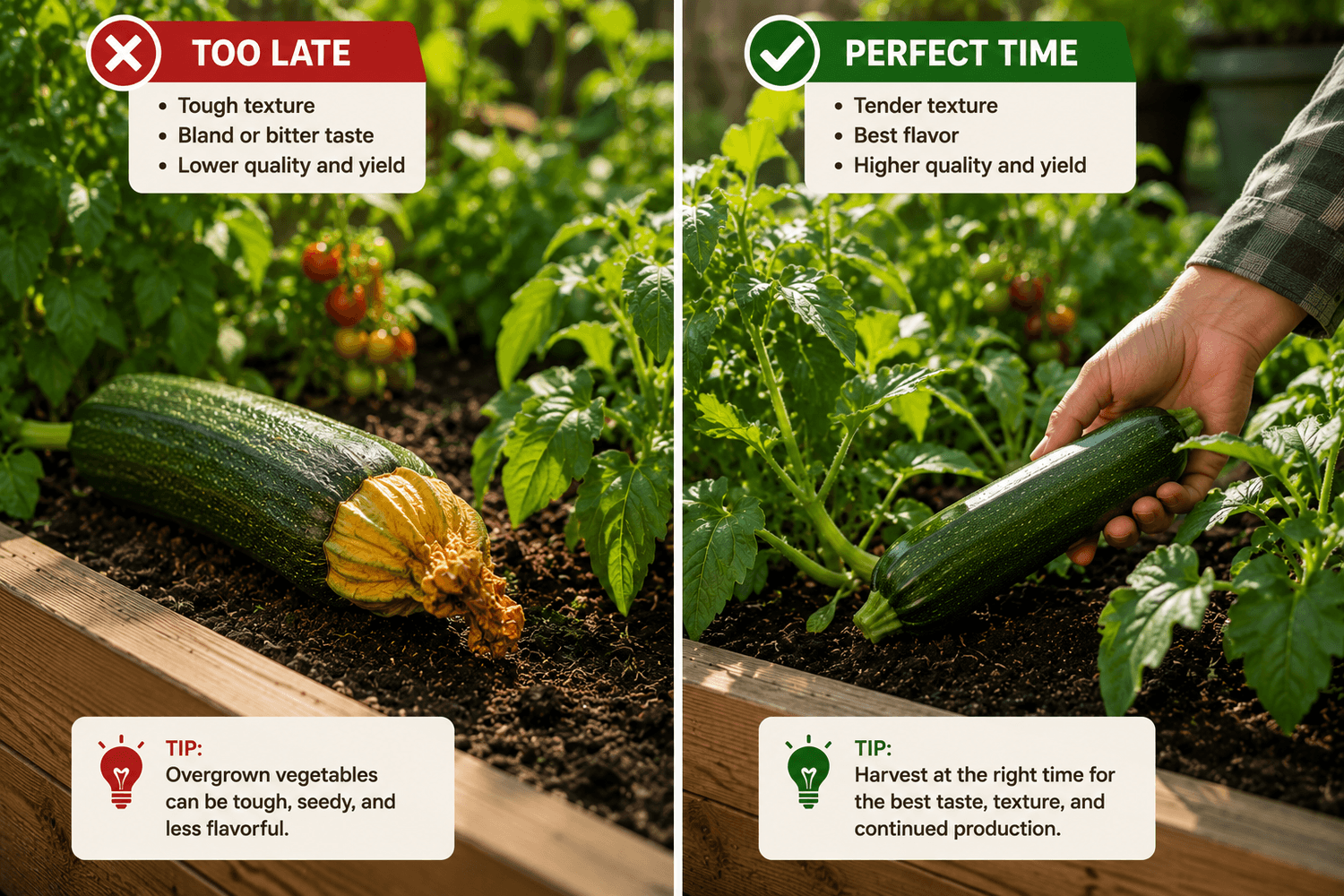
Mistake #6: Harvesting Too Late or Not at All
Growing vegetables is only half the job.
You also need to harvest them.
Beginners sometimes wait because they expect vegetables to become as large as possible before picking them.
But bigger doesn't always mean better.
Some vegetables can become tough, bitter, seedy or overmature when left too long.
What to Do Instead
Learn the harvest signs for every crop you grow.
Depending on the crop, look at:
Size
Color
Firmness
Days to maturity
Overall appearance
Regular harvesting can also encourage continued production from certain crops.
Beginner Tip: Check your garden frequently once vegetables begin approaching maturity.
Mistake #7: Giving Up After One Pest or Disease Problem
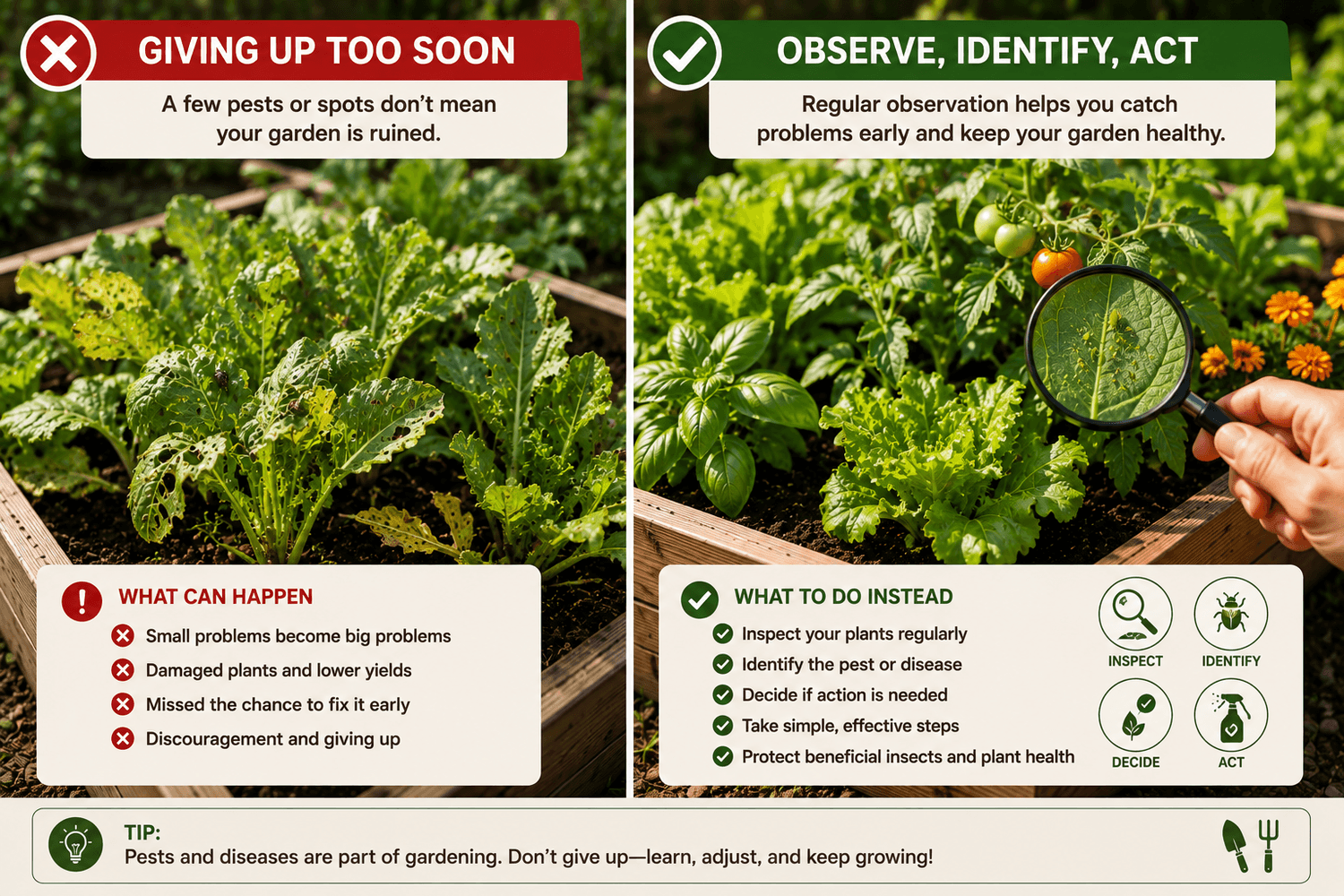
You walk outside one morning and discover holes in your lettuce.
Or your tomato has discolored leaves.
Don't assume your entire garden has failed.
Pests and plant diseases are part of gardening.
What to Do Instead
First, identify the problem.
Look closely at:
Tops and undersides of leaves
New growth
Stems
Fruits
Soil around the plant
Then determine whether intervention is actually necessary.
A small amount of damage doesn't always require treating the entire garden.
Regular observation helps you catch problems before they become severe.
Quick Raised Bed Mistakes Checklist
Before you plant, save this checklist:
Don't overcrowd your vegetables.
Understand your garden's sunlight.
Check the soil instead of watering automatically.
Prepare good-quality soil before planting.
Thin seedlings when necessary.
Harvest vegetables at the appropriate stage.
Don't give up when you encounter your first pest problem.
Give Your First Raised Bed a Better Start
You don't have to garden perfectly to grow fresh vegetables.
Most successful gardeners learn by planting, observing, adjusting and trying again.
Avoiding these seven raised bed gardening mistakes simply gives you a stronger starting point.
Start with a manageable garden.
Choose vegetables you actually enjoy eating.
Give them adequate soil, sunlight, water and space.
Then pay attention to what your garden teaches you.
Written by:
Wren Hartley
SHARE




About me
Hi there 👋 I’m Wren Hartley, the creator of Tiny Garden Harvest. I love helping beginners grow fresh food and enjoy bigger harvests from small spaces. 🌱

Trending
learn the basics of location, soil, vegetables, spacing, watering, and care.
Grow more food in less space with raised beds, vertical gardening, and smart crop choices.
Learn an easy raised bed soil mix using topsoil, compost, and aeration material.
Free E-book
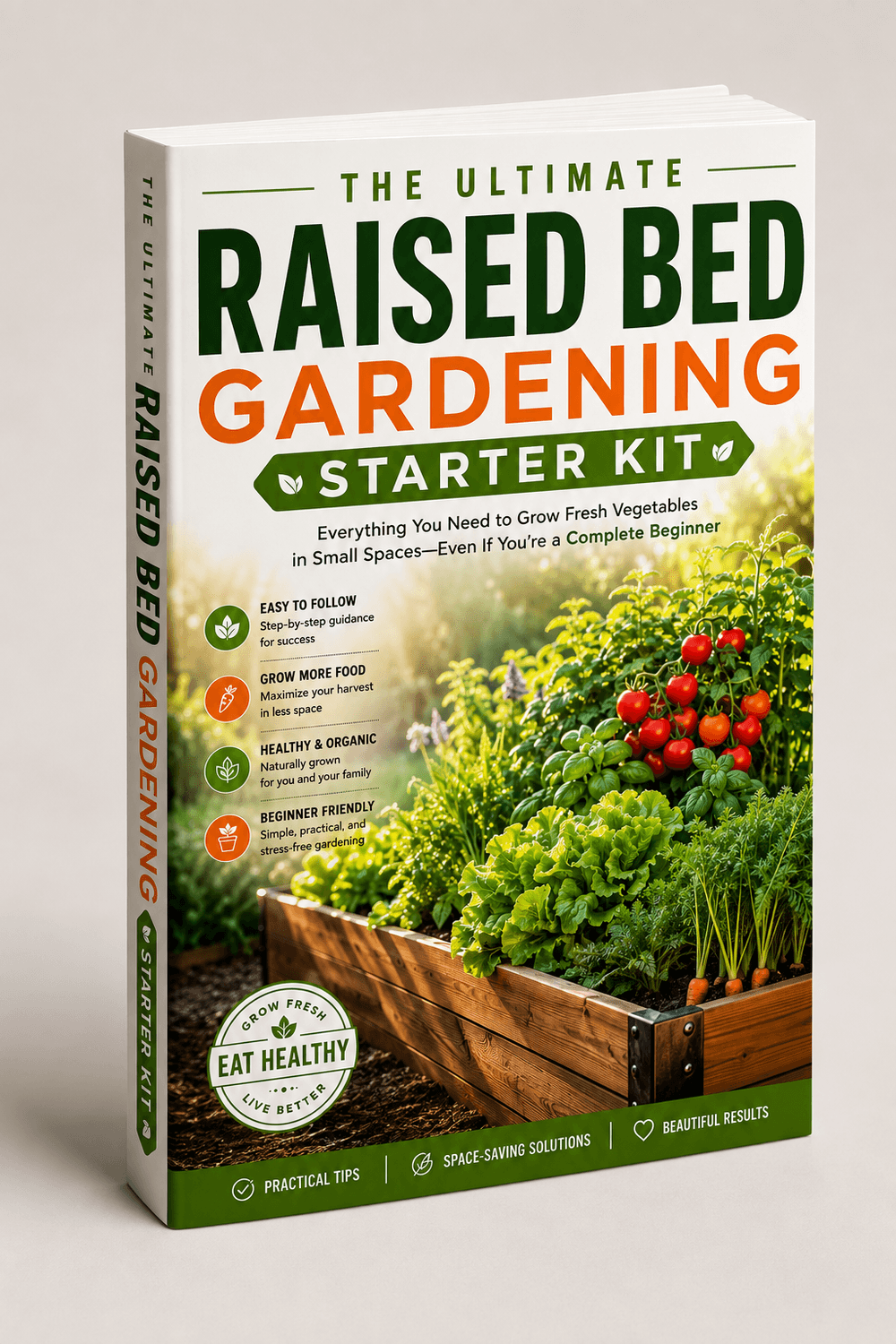
Grab your free Ultimate Raised Bed Gardening Starter kit -Ever if you've not garden before.
NEW FREE E-BOOK: Grow Fresh Vegetables in Small Spaces Even If You've Never Gardened Before