
Tomato Companion Plants That Improve Growth and Flavor
Creating a thriving vegetable patch is more than just soil and water. Adding specific plants to your tomato garden boosts productivity, especially when you plan the bed carefully. If space is limited, our small-space vegetable gardening guide offers practical ideas for making better use of the growing area. These plants help manage pests and attract beneficial insects.
Grouping plants wisely uses your space well. Some plants act as living mulch or support, making gardening easier.
Some think basil or borage can make tomato flavor better. But, flavor improvement depends on many factors. These tomato companion plants are a helpful addition, not a complete solution.
In this guide, we'll look at the best plant pairings for your garden. We'll also share layout tips, maintenance advice, and common mistakes to avoid for a great season.
Key Takeaways
Strategic grouping helps manage garden pests naturally.
Beneficial insects are attracted to diverse vegetable beds.
Flavor improvements are secondary to proper sunlight and soil care.
Companion species help maximize your available growing space.
Consistent maintenance remains essential for a healthy harvest.
Why Companion Planting Matters for Tomato Plants
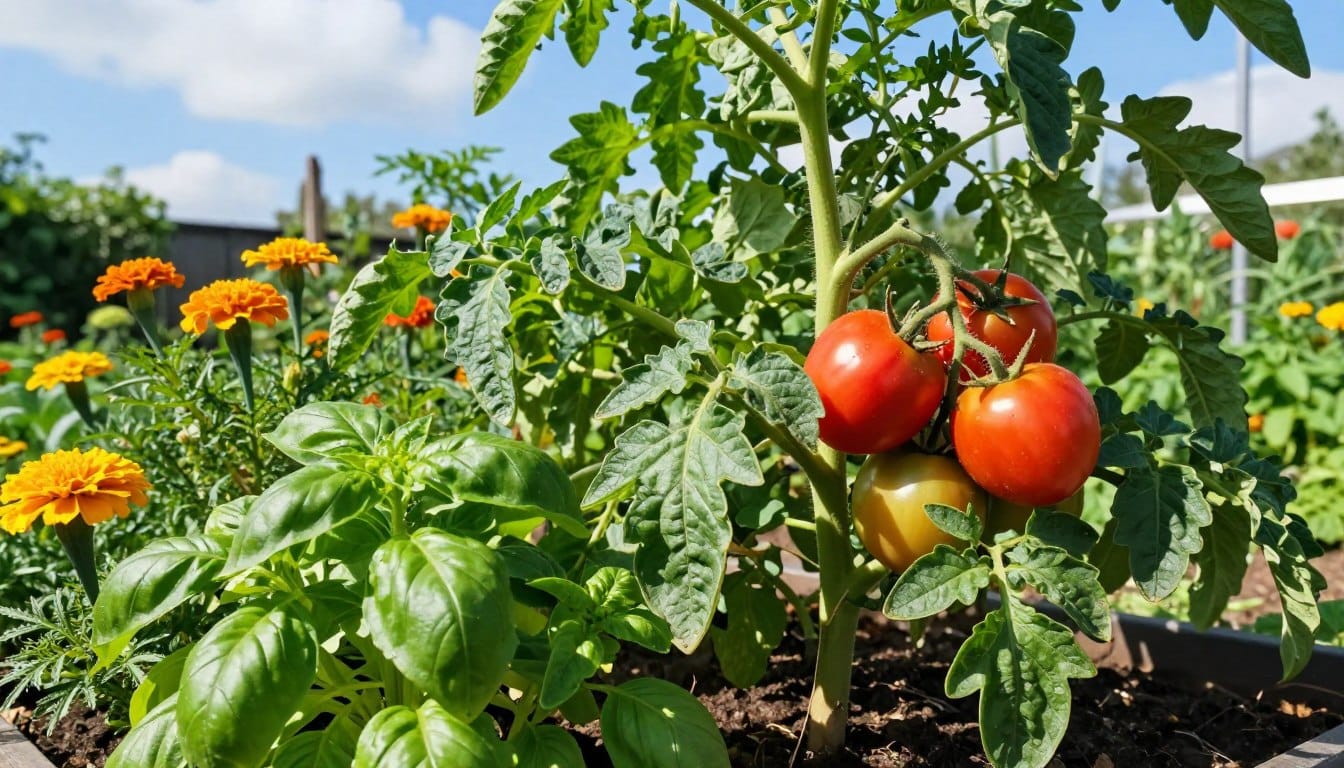
Adding different plants to your garden can help create a more diverse growing environment. This approach, often called companion planting, can support space efficiency and beneficial insects. It supports stronger, more resilient crops.
How Nearby Plants Can Influence Growth and Vigor
Choosing the right plants for your garden can make a big difference. Some plants act like living mulch, keeping the soil moist and weed-free. This helps your tomatoes grow steadily by keeping the soil cool and hydrated.
Other plants have deep roots that improve soil aeration and water absorption. This is key for healthy growth. By picking plants that grow well together, you use your garden space wisely.
Ways Companion Plants Help Manage Pests Naturally
Companion planting can also help control pests. Aromatic herbs and flowers can hide the scent of tomatoes from insects. This can reduce the need for pesticides.
Flowering plants also attract beneficial insects. These insects help control pests like aphids. This creates a balanced garden ecosystem.
What Companion Planting Can and Cannot Do for Flavor
Many think that certain plants can make tomatoes taste better. But, there's not much scientific proof for this. Flavor improvements usually come from healthier plants.
Healthy plants, not stressed by pests or poor growing conditions, are more likely to perform well. Remember, good gardening practices like sunlight, water, and nutrients are key. For tomato-specific guidance on sunlight, soil, watering, and support, see University of Minnesota Extension's guide to growing tomatoes. Companion planting can enhance these, but it's not a replacement for basic care.
Best Tomato Companion Plants for Healthier Harvests
Choosing the right plants for your tomatoes can make your garden thrive. The right neighbors help your tomatoes grow strong and healthy. They also help solve common garden problems and use space well.
Basil for Flavor, Pollinators, and Insect Support
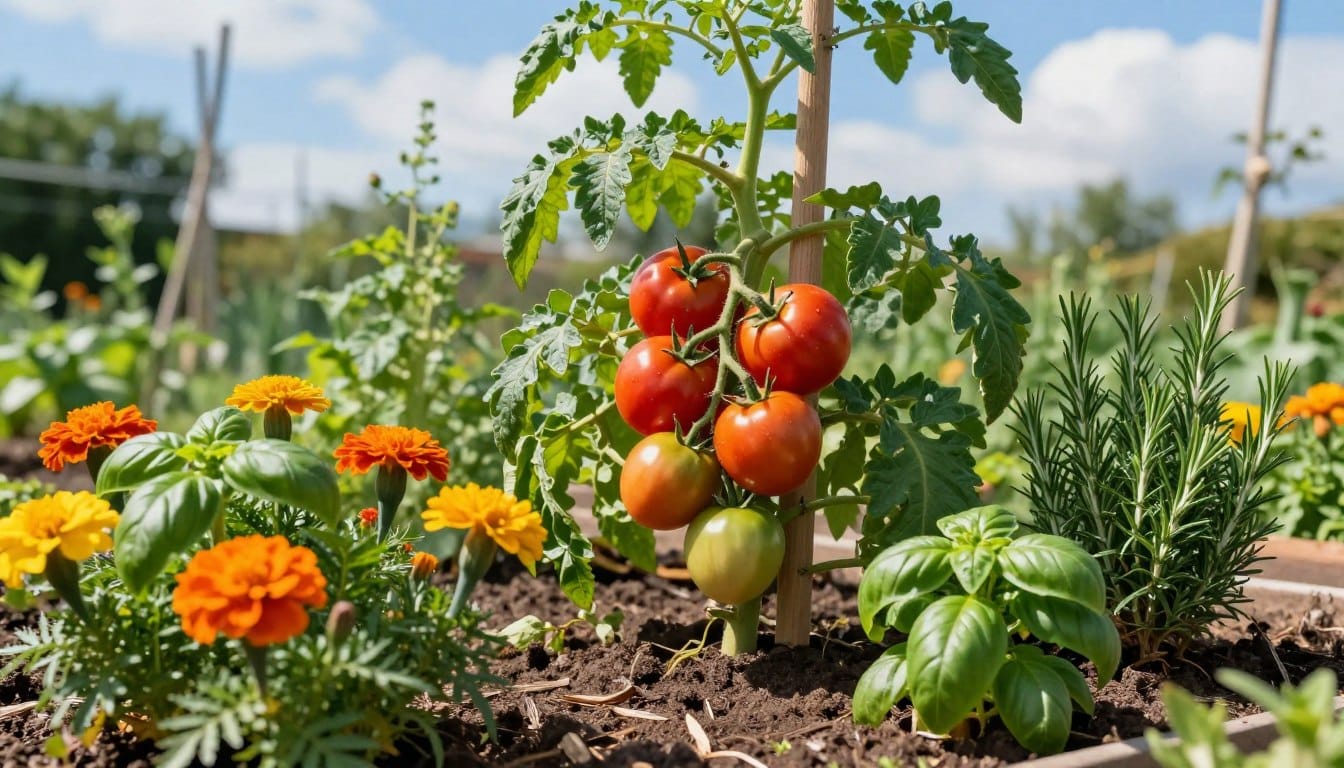
Basil is a top choice for tomatoes. It's believed to make tomatoes taste better. It also attracts pollinators and keeps pests away, making it a great companion.
Marigolds for Managing Nematodes and Garden Pests
Marigolds are great for controlling nematodes in the soil, though the research is more nuanced than the folklore suggests. According to Clemson Cooperative Extension, the nematode-suppressing effect comes from growing a solid planting of French or African marigolds as a rotation crop for at least two months before the vegetable goes in, not from tucking a few marigolds beside an established tomato plant. Even so, their scent can still help mask tomatoes from some above-ground pests.
Nasturtiums as Trap Crops for Aphids
Nasturtiums are perfect for keeping aphids away from tomatoes. These flowers attract pests, letting your tomatoes grow safely. They're a natural way to control pests.
Borage for Pollinators and Beneficial Insects
Borage attracts bees and other pollinators. These insects are key for tomato flowers to set fruit. This leads to a better harvest all season.
Chives, Green Onions, and Garlic for Pest Deterrence
Chives, green onions, and garlic keep pests away with their smell. They fit well in small spaces, protecting your tomatoes.
Parsley and Cilantro for Beneficial Insects
Parsley and cilantro attract beneficial insects when they flower. These insects help control pests. These herbs add flavor and help your garden.
Carrots, Lettuce, and Spinach for Efficient Garden Spacing
Carrots, lettuce, and spinach grow well under tomatoes. They don't compete for space or light. This way, you use your garden space better.
Tomato Companion Plants That Support Growth and Flavor
Choosing the right plants to grow with tomatoes can make your garden better. By picking plants that grow in different layers, you use space well. This also helps your tomatoes grow stronger and taste better.
Herbs That Complement Tomato Flavor and Harvest Timing
Many gardeners grow herbs with tomatoes for a better garden. Some think basil or borage near tomatoes makes tomatoes taste better. But, this isn't always true.
These herbs are great because they help plants grow strong. They also make the garden smell nice. Here are some good herb choices:
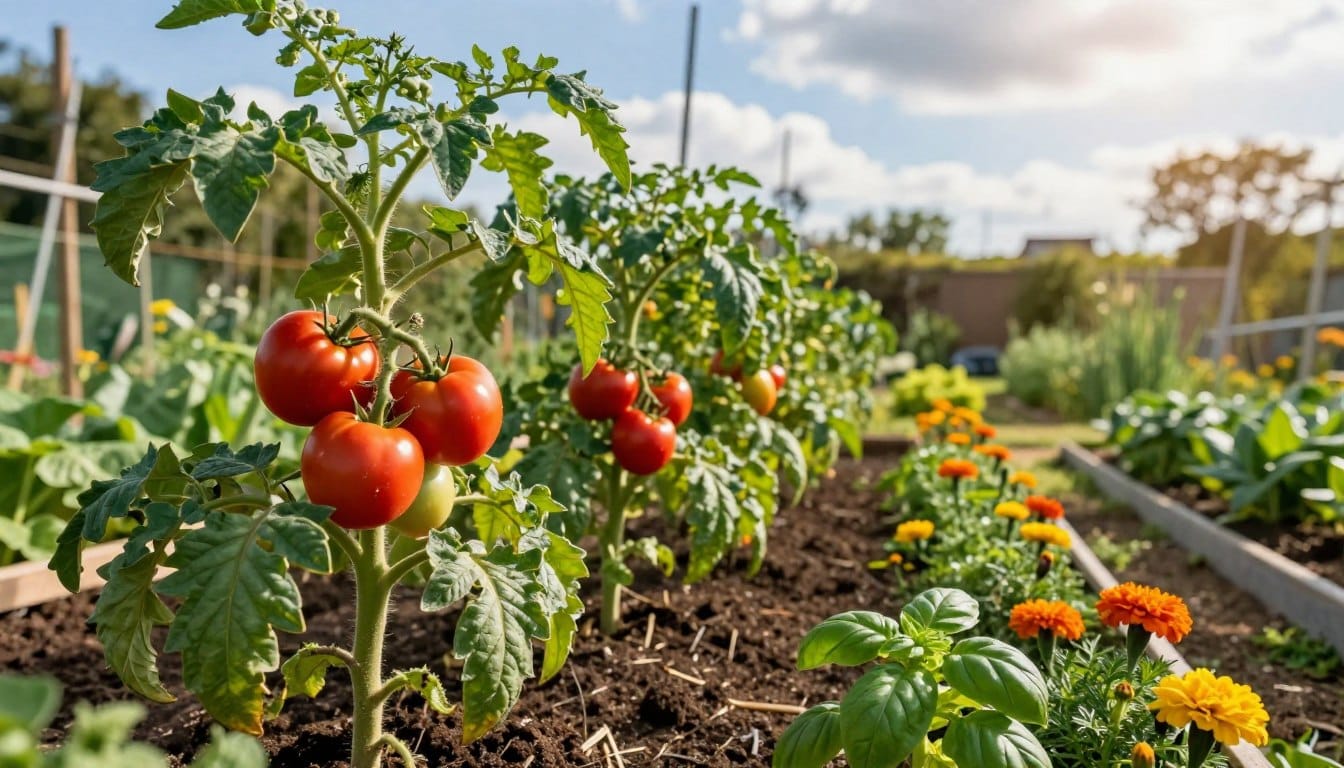
Basil: Often planted to provide a living mulch that shades the soil.
Borage: Known for attracting bees and potentially deterring certain garden pests.
Parsley: A versatile herb that fits well in small gaps between larger plants.
Low-Growing Crops That Protect Soil and Conserve Moisture
It's important to space plants well in a garden. Small plants act like a mulch, keeping the soil cool and moist. This helps your tomatoes grow well.
These plants cover the ground, stopping weeds from growing. They also save water and nutrients for your tomatoes. Good choices include:
Lettuce and Spinach: These leafy greens do well in the shade of tomato vines.
Thyme: A hardy, low-growing herb that creates a dense mat to protect the soil surface.
Cilantro: Useful for filling empty spots while providing quick harvests before the heat of summer peaks.
Flowering Plants That Increase Beneficial Insect Activity
Adding flowers to your garden helps attract more insects. These insects are key for a good harvest.
Why Better Pollination Can Improve Fruit Set
When bees and other insects visit tomato flowers, they help with fertilization. This is very important, as it can lead to more tomatoes.
Plants like calendula, chives, and borage attract these helpful insects. By keeping them around, you help your tomatoes grow better.
This means you'll likely get more tomatoes throughout the season.
Companion Plants for Tomato Pest and Disease Management
Adding specific plants to your garden can help control pests naturally. These plants offer nectar, pollen, and shelter. They attract predators that keep harmful insects away.
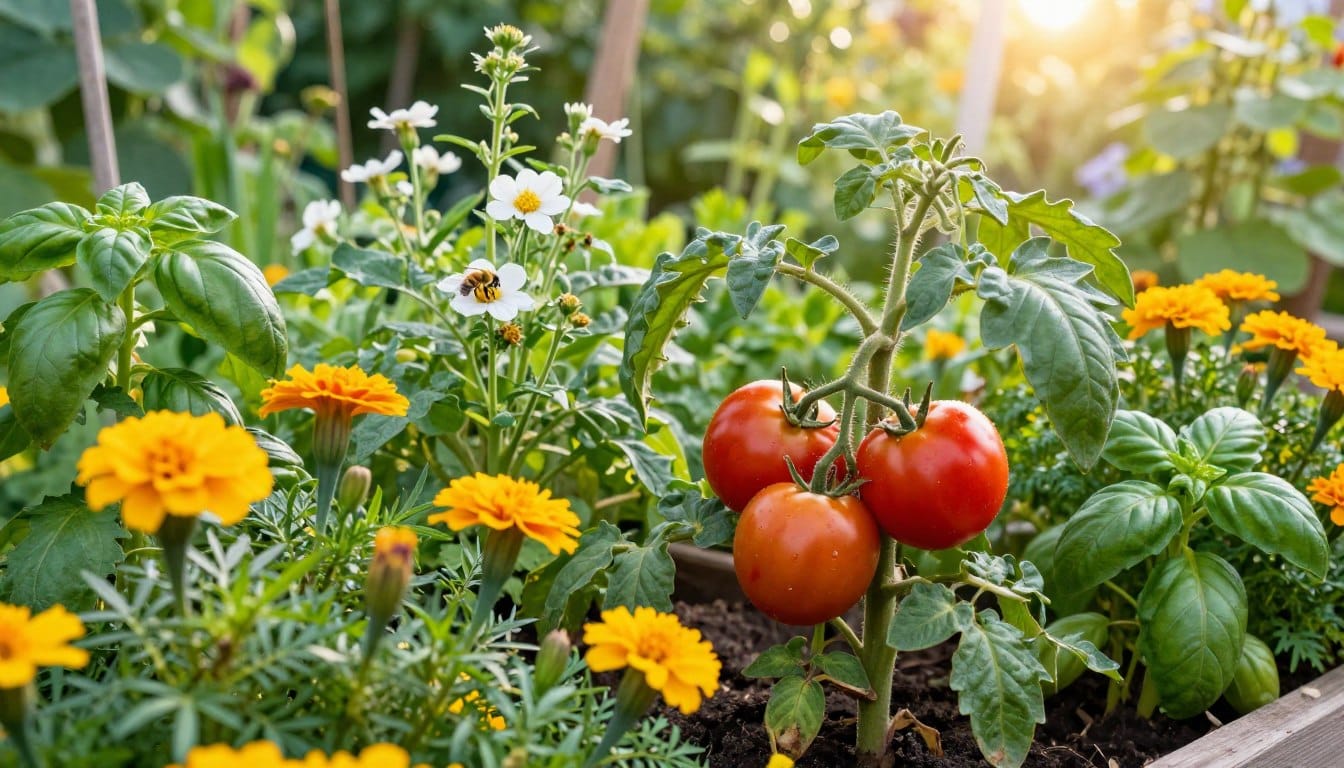
Plants That Attract Ladybugs, Lacewings, and Parasitic Wasps
Many beneficial insects need nectar from flowers to survive. Planting dill, fennel, or sweet alyssum near tomatoes attracts ladybugs and lacewings.
These insects eat aphids.
Parasitic wasps are also important. They lay eggs inside pests, stopping infestations. A variety of flowering plants keeps these helpers in your garden all season.
Trap Crops That Draw Aphids Away From Tomatoes
Trap crops lure pests away from your vegetables. Nasturtiums are a favorite of aphids.
Watch these plants closely to prevent aphid outbreaks. If the trap crop gets too many aphids, remove it. This stops pests from going back to your tomatoes.
Why Plant Diversity Can Slow Pest Spread
Planting only one crop makes it easy for pests to spread. Mix tomatoes with herbs and flowers. This creates a barrier that slows pests.
This mix confuses insects, making it harder for them to find their target. While not foolproof, it greatly slows damage in your garden.
How Airflow, Spacing, and Sanitation Slow Disease Spread
Even with good companions, garden hygiene is key. Good air circulation keeps plants dry and prevents fungus.
Make sure plants have enough space for air to flow. Remove diseased leaves and keep tools clean. This stops diseases from spreading.
Limits of Using Plants as a Substitute for Disease Control
Companion planting is not a replacement for disease control. While helpful, it's not enough for severe diseases.
Use companion planting with good watering and garden monitoring. These habits are the best way to protect your tomatoes.
Plants to Avoid Growing Near Tomatoes
Knowing which plants to avoid near tomatoes is key to a healthy harvest. Some plants can stress or risk your tomato garden. Understanding these interactions helps keep your garden productive and vibrant.
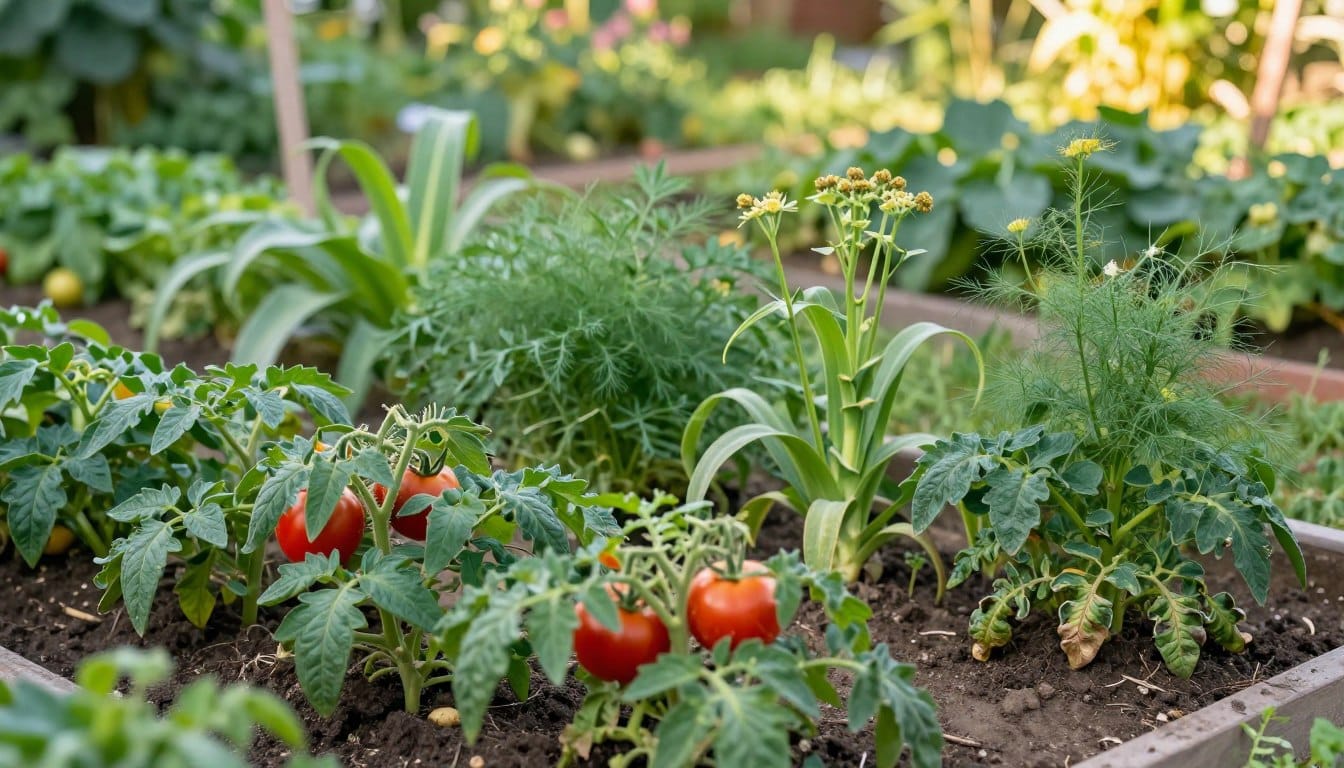
Why Corn Can Increase Competition and Pest Pressure
Corn and tomatoes face the same pest, the corn earworm, also known as the tomato fruitworm. Growing them together can let pests move between them easily. Tall corn can also shade tomatoes, reducing sunlight they need.
How Potatoes Share Disease Risks With Tomatoes
Potatoes and tomatoes are in the same nightshade family. They share many diseases. Growing them together increases disease spread, especially late blight, which West Virginia University Extension notes can move quickly between related plants growing nearby. It's best to keep them apart to avoid disease.
Why Brassicas May Compete for Space and Nutrients
Brassicas like broccoli and cabbage need a lot of nutrients. When near tomatoes, they compete for space and nutrients. This can stunt tomato growth and lower yields.
When Walnut Trees and Allelopathic Plants Create Problems
Black walnut trees release a chemical called juglone that harms many plants, including tomatoes. This can slow growth and even kill plants. Avoid planting tomatoes near these trees to prevent damage.
How to Evaluate Claims About Fennel and Other Incompatible Plants
There's mixed advice on plants like fennel and mature dill. Some say they harm tomato growth, while others see no issues. It's best to test these claims in your garden based on your soil and plant health.
How to Arrange Tomato Companion Plants in the Garden
Placing companion plants wisely can make your tomato patch thrive. Knowing how your plants grow helps you arrange them for beauty and productivity.
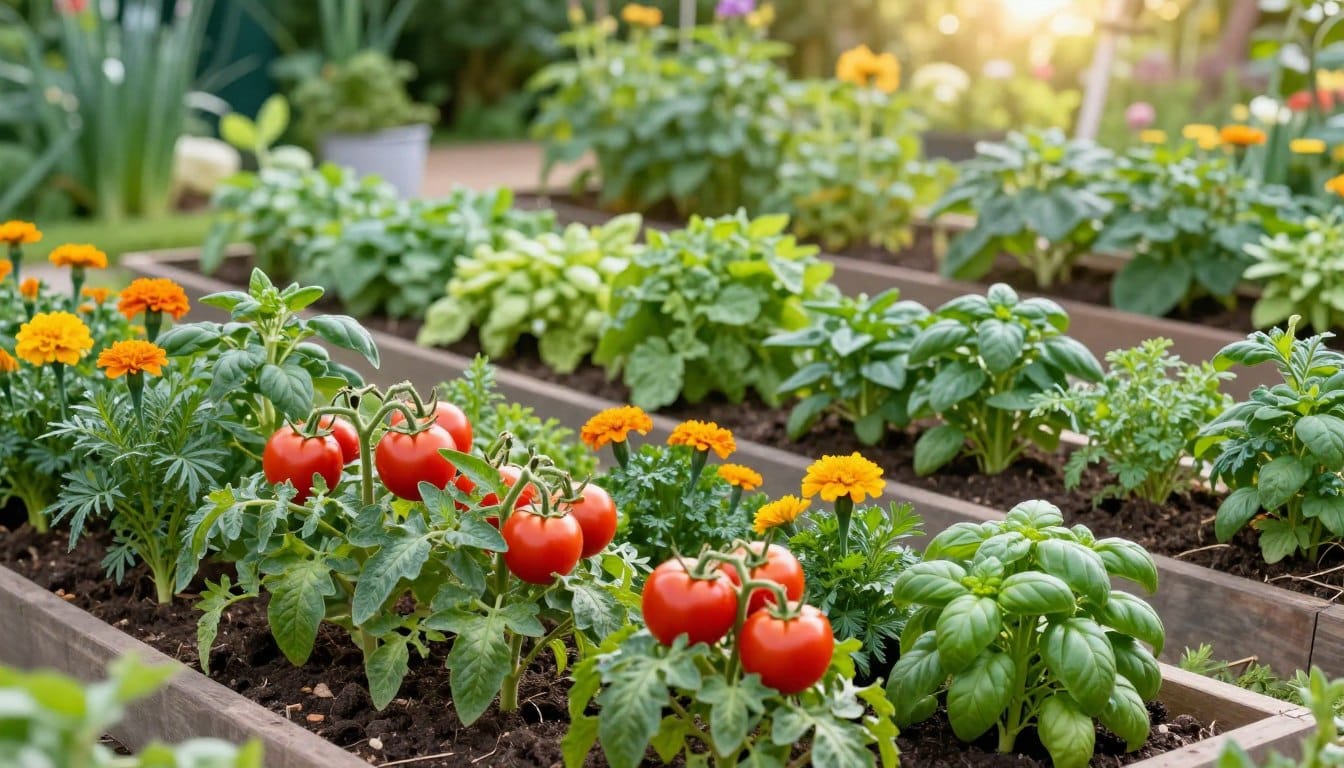
Pairing Tall Tomatoes With Low-Growing Companions
Tall tomatoes cast a lot of shade, which is good for plants that don't like heat. You can plant herbs or leafy greens under them. These plants like the shade.
Use a triangle pattern to make the most of your soil. This lets you plant smaller plants like lettuce near the base of tomatoes. It's great for using every inch of space in raised beds.
Placing Flowers and Herbs Around Garden Edges
Flowers and herbs make great borders for your garden. Garlic, onions, and marigolds keep pests away and make the center easy to reach.
These plants also guide your garden paths. Keeping them on the edges helps avoid disturbing the main crops when you harvest.
Leaving Enough Space for Air Circulation and Harvesting
It's important to space plants right to keep them healthy. Too close together can cause humidity and fungal problems.
Good air circulation helps plants dry fast after rain. This reduces disease risks. Make sure you can walk between rows or reach into the beds easily.
Spacing Considerations for Caged, Staked, and Trellised Tomatoes
The support you choose affects how much space plants need. Caged plants spread out more than those on stakes.
Caged tomatoes need at least 24 to 30 inches of space between centers.
Caged tomatoes need at least 24 to 30 inches of space between centers.
Trellised systems using cattle panels allow for vertical growth, saving horizontal space for low-growing companions.
Using Containers for Tomatoes and Compatible Companion Plants
Containers are great for keeping plants separate. They let you move plants to follow the sun or protect them from bad weather.
Pots are perfect for aggressive plants like mint or those with special soil needs like fennel. This way, they don't compete with tomatoes for resources while benefiting from each other's company.
Planting and Care Tips for Successful Companion Planting
To get a great tomato harvest, you need more than just planting seeds. You must pick the right plants to grow with them. This way, you create a garden that is balanced and healthy for a long time.
Choosing Companion Plants for the Local Growing Season
Your local weather decides which plants will grow well with tomatoes. Always check the frost dates and summer temperatures in your area. Cool-season crops like lettuce or spinach do best early in spring.
Planting these crops early lets your tomatoes grow without competition. This way, your garden stays productive all year.
Matching Sunlight, Soil, Water, and Fertility Needs
Grouping plants with similar needs is key to successful companion planting. Tomatoes need lots of sun and water. So, pair them with herbs that like bright light and dry soil. Don't put plants that need a lot of water next to those that don't.
It's also important to manage the soil's fertility. For a practical starting point, see our simple raised bed soil mix guide, then adjust the mix to suit your plants and local conditions. This way, both tomatoes and their companions get the nutrients they need without too much synthetic fertilizer.
Timing Seeds and Transplants Around Tomato Growth
Timing is everything in a garden. Start fast-growing herbs or flowers with your tomato transplants. For slower-growing plants, start them in containers and move them when tomatoes are big enough.
Mulching, Watering, and Feeding Plants Without Overcompetition
Watering regularly is key to a good garden. Use organic mulch to keep the soil moist and stop weeds. This keeps the roots cool and helps prevent disease.
Preventing Overcrowding in Small Garden Beds
In small spaces, overcrowding is a big problem. Make sure to know how big your plants will get. If a plant is shading your tomatoes or blocking air, trim it or remove it.
Use containers for aggressive growers like mint. Watch your garden closely and adjust as needed. This keeps your tomatoes healthy and productive.
How to Choose the Right Companions for Your Tomato Garden
Choosing the right plants can make a big difference in your garden. Instead of following a list, think about what your garden needs. This way, you can create a space that is both strong and productive.
Selecting Plants for Pest Control or Pollinator Support
If you want to keep pests away, pick plants that deter them. Garlic, chives, marigolds, and nasturtiums can do this. They create a barrier that keeps pests from reaching your tomatoes.
If you want more tomatoes, focus on attracting pollinators. Borage, parsley, and calendula attract bees and other helpful insects. This leads to more tomatoes for you.
Combining Annual Herbs, Flowers, and Vegetable Crops
A mix of plants can make your garden better. Adding herbs, flowers, and vegetables to your soil is smart. This mix supports plant health and makes your garden look good.
Think about how each plant grows when planning your garden. Tall herbs can shade smaller plants, while low-growing flowers act as a mulch. This way, all plants get the space they need.
Adapting Companion Planting to Raised Beds and Containers
The size of your garden affects your choices. Raised beds give you room to try different plants. If you're still planning your first bed, our raised bed gardening for beginners guide covers bed size, spacing, soil, watering, and layout. You can change them up each season to keep the soil healthy.
Container gardens need a simpler approach. Choose just a few plants that won't take up too much space. This keeps your container garden healthy and productive.
Begin by picking a few plants to see how they do. Watch how your crops grow and change your garden as needed. Gardening is a journey of learning and improvement.
Conclusion
Creating a lively tomato garden is more than just soil and water. Adding tomato companion plants makes your garden balanced. It helps control pests and increases biodiversity.
Basil, marigolds, and nasturtiums are great for your tomatoes. Borage, alliums, and cool-season veggies offer special benefits. They help your plants grow well. It's important to see them as part of a bigger plan, not just a quick fix.
Good planning helps you avoid problems. Stay away from planting potatoes, corn, walnuts, and fennel near your tomatoes. They can compete and spread disease. Make sure to leave enough space and air for your tomatoes to thrive.
Use these planting tips with regular care like keeping your garden clean and managing nutrients. Your hard work will pay off with a bountiful harvest. Begin planning your garden today to see how these natural friends can change your backyard.
FAQ
How does companion planting improve the overall productivity of a tomato garden?
Companion planting makes your garden more diverse. It attracts beneficial insects and improves soil health. This helps tomatoes grow better by creating a balanced ecosystem.
Can planting basil or borage really improve the flavor of my tomatoes?
Some gardeners believe that basil and borage can make tomatoes taste better. But, there's no solid science backing this up. The best way to get great tomatoes is to choose the right variety, give them lots of sunlight, and water them well.
Which plants are most effective at managing tomato pests naturally?
Marigolds can fight root-knot nematodes. Nasturtiums draw aphids away from tomatoes. Garlic and chives can also help by masking the scent of tomatoes. Adding plants that attract beneficial insects is key to keeping pests away.
What are the best low-growing crops to plant under tomato canopies?
Lettuce, spinach, and carrots are great for the lower layers of your garden. They grow well in the shade and don't compete with tomatoes for resources. This layering helps keep the soil moist and reduces weeds.
Are there specific plants that should never be grown next to tomatoes?
Yes, some plants can harm tomatoes. Potatoes and nightshades can spread disease. Corn attracts pests that also harm tomatoes. Also, avoid planting near Black Walnut trees because their chemical can harm tomatoes.
How can flowering herbs like parsley and cilantro support my tomato harvest?
Herbs like parsley and cilantro attract pollinators and wasps when they flower. This can help tomatoes set fruit, even when it's not ideal. These flowers feed beneficial insects, keeping your garden balanced.
Does companion planting replace the need for traditional disease control?
No, companion planting is just a help. It doesn't replace the need for good air circulation, spacing, and watching for diseases. Use clean tools, rotate crops, and water right to keep tomatoes healthy. University of Minnesota Extension also emphasizes crop rotation and sanitation as important parts of tomato disease prevention.
How should I arrange companion plants in a small raised bed or container?
In small spaces, use triangles or vertical supports to save room. Place garlic and onions at the edges. In containers, pair a tomato with a few herbs. Keep aggressive plants like mint separate to avoid competition.
How do local climate and seasonal timing affect companion selection?
Plant companions based on your local weather and frost dates. Cool-season crops like carrots do well before or after tomatoes. Make sure the needs of your companions match those of your tomatoes.
Ready to Plan Your Vegetable Garden?
If you're starting your first raised bed, get The Ultimate Raised Bed Gardening Starter Kit for beginner-friendly help with planning your garden, choosing vegetables and preparing your growing space.
Written by:
Wren Hartley
SHARE



About me
Hi there 👋 I’m Wren Hartley, the creator of Tiny Garden Harvest. I love helping beginners grow fresh food and enjoy bigger harvests from small spaces. 🌱

Trending
learn the basics of location, soil, vegetables, spacing, watering, and care.
Grow more food in less space with raised beds, vertical gardening, and smart crop choices.
Learn an easy raised bed soil mix using topsoil, compost, and aeration material.
Free E-book
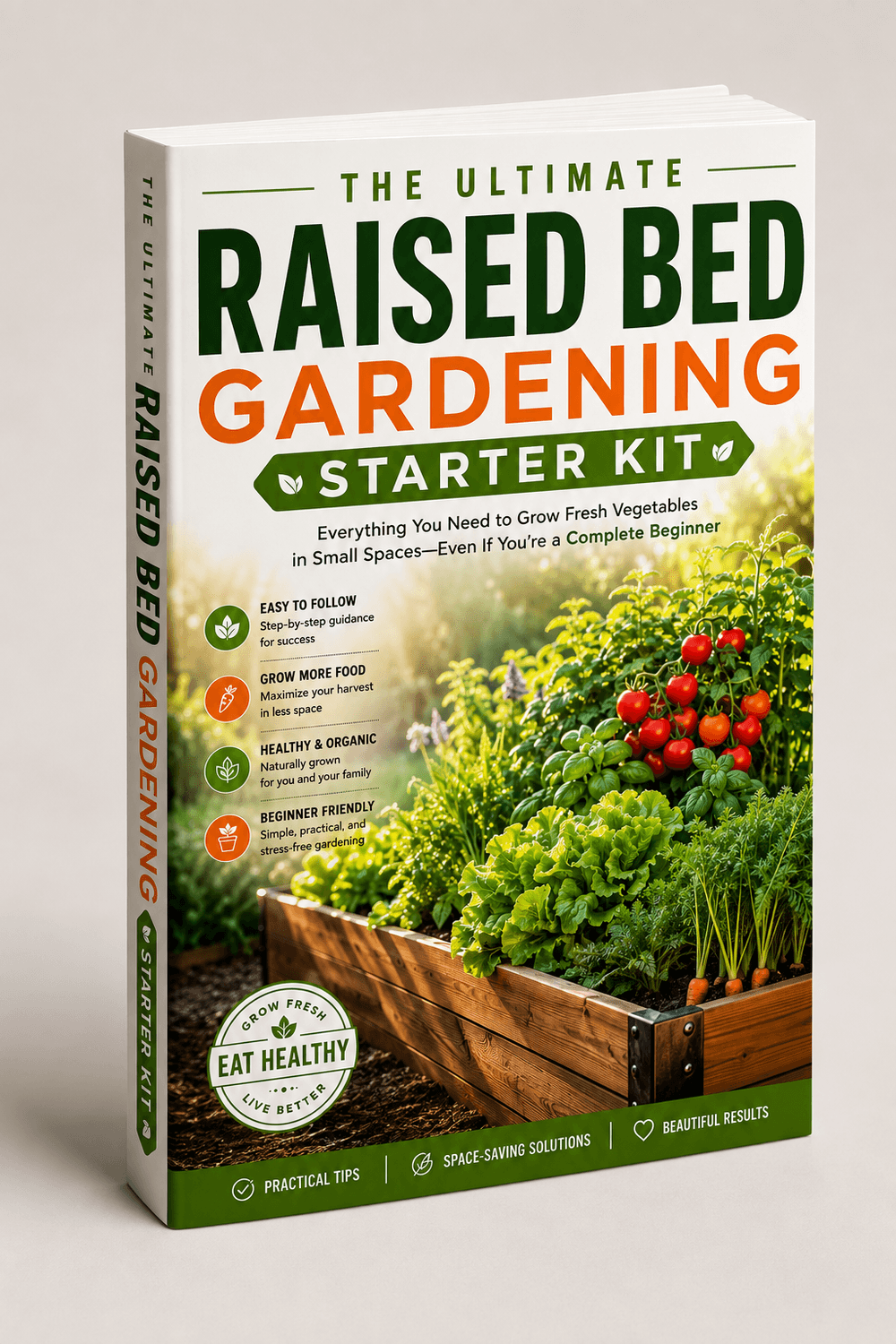
Grab your free Ultimate Raised Bed Gardening Starter kit -Ever if you've not garden before.
NEW FREE E-BOOK: Grow Fresh Vegetables in Small Spaces Even If You've Never Gardened Before